Forest context
The DRC hosts approximately 155.5 million hectares of forest, covering about 67% of its territory and representing one of the world’s largest tropical forest areas. These forests play a critical role in local livelihoods, biodiversity conservation, and climate regulation. However, forest governance remains weak.
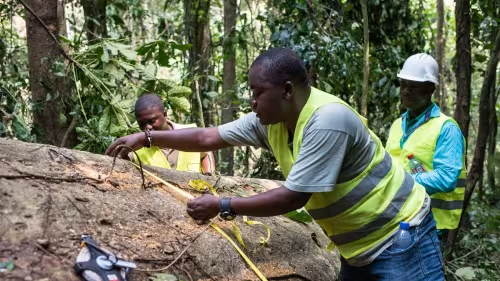
Forest dynamics are shaped mainly by subsistence agriculture, artisanal logging, fuelwood use, and informal timber markets. Illegal logging dominates the sector, accounting for an estimated 90% of timber production, largely driven by small scale operators. Limited law enforcement capacity, governance challenges, and weak traceability systems contribute to widespread illegality, revenue losses, and forest degradation.
Timber remains economically important, particularly for domestic markets and regional trade. Ongoing national reform processes, supported by international partners, seek to improve forest management, strengthen legality verification, and promote more sustainable and community-based forest use systems.
Our approach
EFI works closely with the Ministry of Environment (MEDD NEC), civil society organisations, the private sector, and community forestry actors to support forest governance reforms in the DRC. Interventions are aligned with national priorities and international commitments, including reform processes supported by the Central African Forest Initiative (CAFI).
EFI’s support focuses on:
- Strengthening accountability through independent forest monitoring, improved timber traceability systems (TRABOIS), and support to artisanal logging organisations.
- Enhancing transparency and access to information to better track forest activities and compliance with legal requirements.
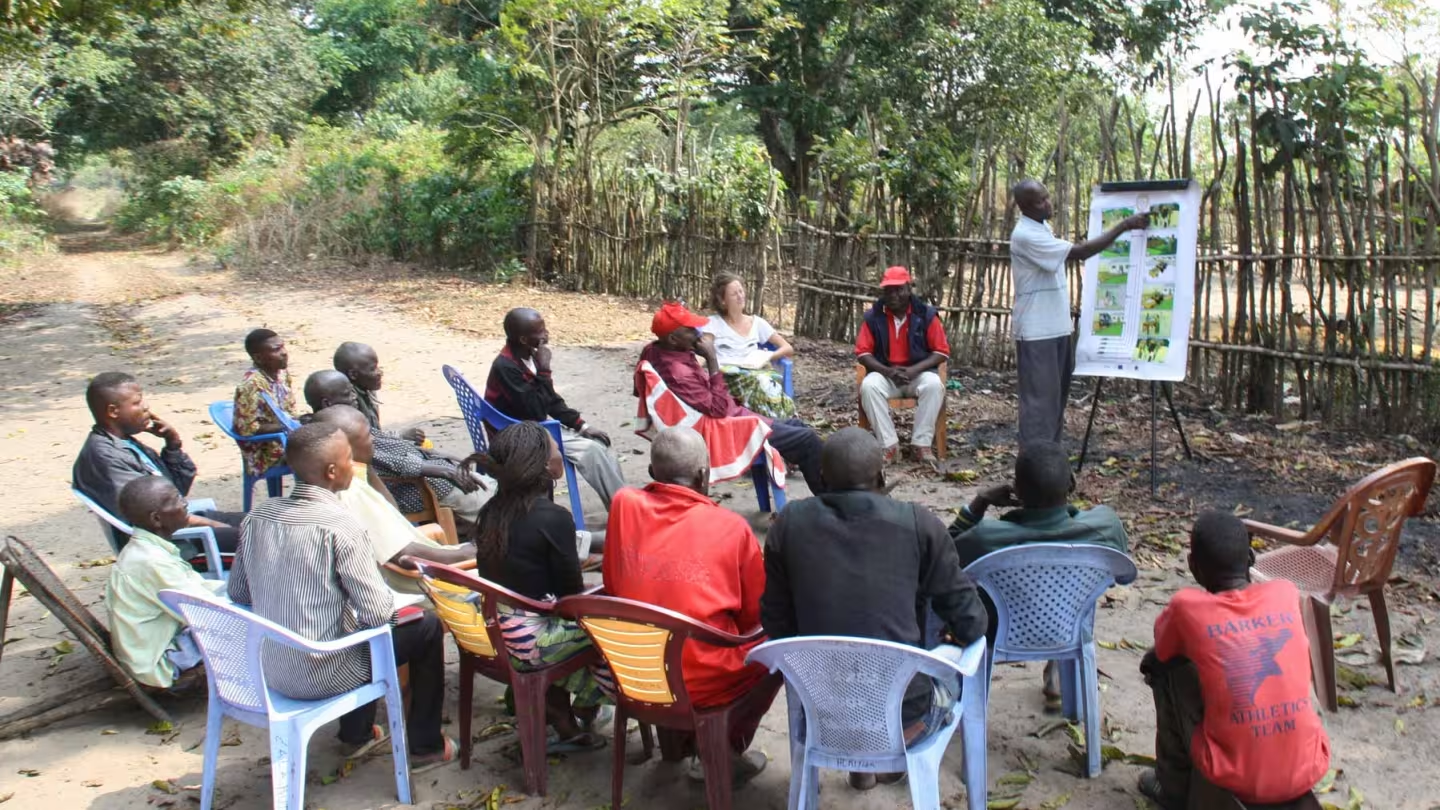
- Supporting inclusive and participatory forest policy reform processes, including the development of the National Forest Policy Document and the revision of the Community Forestry Strategy.
- Promoting stakeholder dialogue and coordination to ensure that civil society, the private sector, and local communities contribute effectively to policy development.
- EFI also facilitates learning exchanges and technical studies to strengthen institutional capacities and support evidence-based decision making within the forest sector.
Projects in DRC
EFI Rapid Response Programme
We support countries to strengthen forest governance and address land-use and climate challenges.
- Inclusive governance
EU REDD Facility
We supported partner countries improve land-use to combat deforestation, and EU efforts to stop developing country deforestation.
- Inclusive governance
EU FLEGT Facility
We supported the EU and timber-producing countries in the implementation of the FLEGT Action Plan with a focus on Voluntary Partnership Agreements.
- Inclusive governance