Forest context
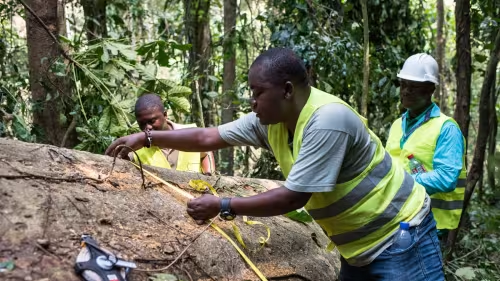
Guyana is characterised by extensive tropical forest landscapes that cover the majority of the country and support biodiversity, ecosystem services, and rural and indigenous livelihoods. The country has one of the lowest deforestation rates in the world; however timber production, mining and agricultural conversion are placing increasing pressures on Guyana’s forests. National policy frameworks, guided by the Low Carbon Development Strategy 2030, place the forest at the centre of national development by incentivising low-carbon economic growth while upholding climate and biodiversity protections. In addition, Guyana is in the implementation phase of a Forest Law Enforcement, Governance and Trade (FLEGT) Voluntary Partnership Agreement (VPA) with the European Union to support forest governance and curb illegal logging.
Our approach
EFI supports Guyana in strengthening forest governance, traceability and transparency in the timber sector, in line with evolving market and regulatory requirements. Our work focuses on operationalisation of the Guyana Timber Legality Assurance System (GTLAS), strengthening information systems for improved land-use decision making, and supporting policy reviews through multistakeholder engagement.
EFI works with government agencies, civil society and the private sector to support a legal, transparent Guyanese timber sector. Through technical assistance and institutional support, EFI contributes to sustainable land-use outcomes, resilient rural economies and long-term forest stewardship in Guyana.
Projects in Guyana
EFI Rapid Response Programme
We support countries to strengthen forest governance and address land-use and climate challenges.
- Inclusive governance

VPA Africa - Latin America Facility
We worked with partners in Africa and Latin America engaged in FLEGT Voluntary Partnership Agreements.
- Inclusive governance
EU FLEGT Facility
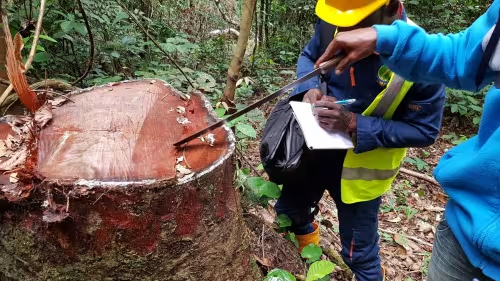
We supported the EU and timber-producing countries in the implementation of the FLEGT Action Plan with a focus on Voluntary Partnership Agreements.
- Inclusive governance