Forest context
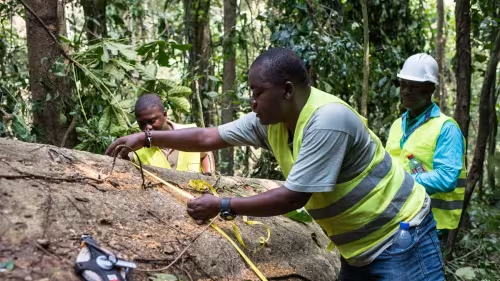
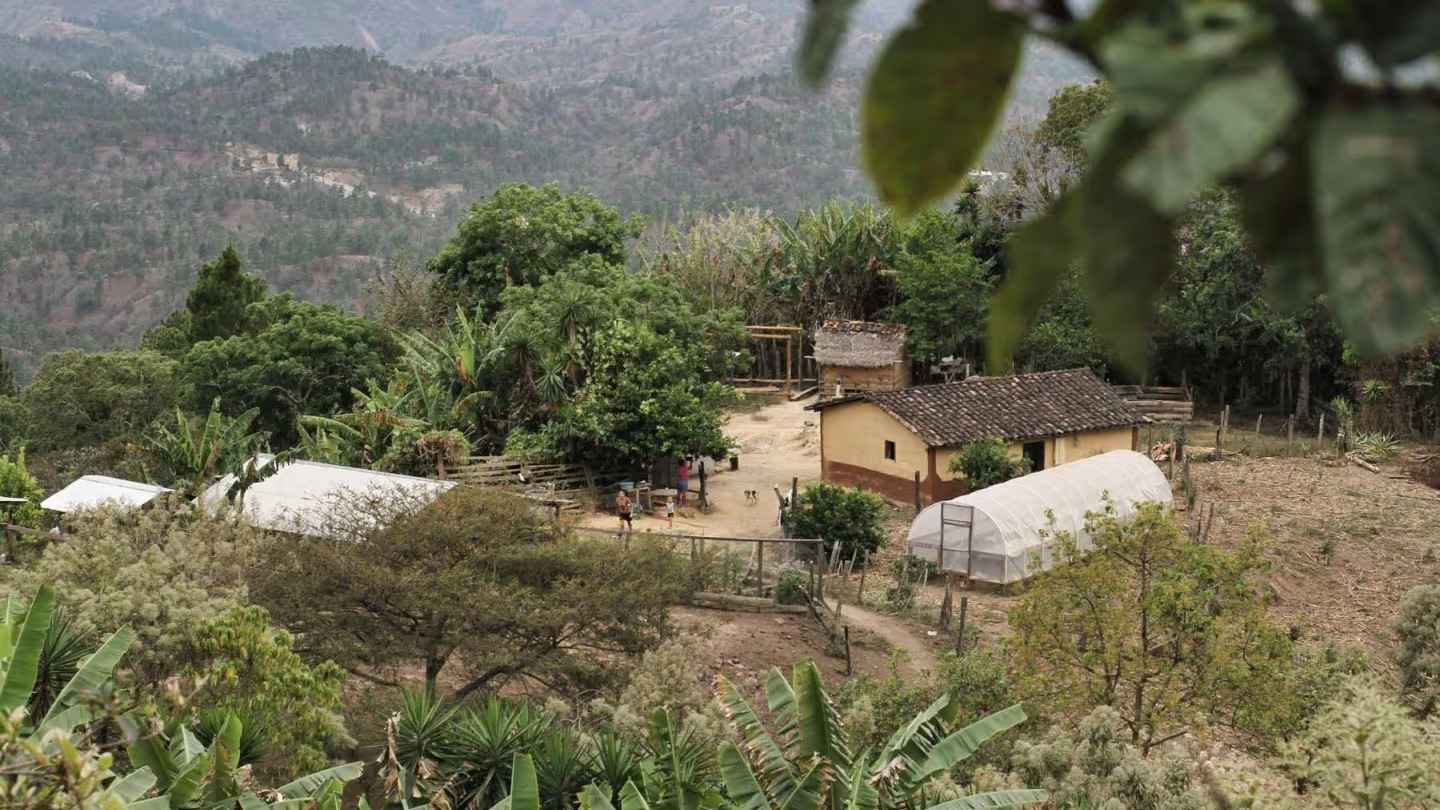
Honduras is characterised by a largely mountainous territory with extensive and biodiverse forest ecosystems. Its forests include moist broadleaf forests, coniferous pine forests, deciduous broadleaf forests and mangroves, which together support biodiversity, watershed functions and rural livelihoods. Forest and land-use dynamics are shaped by agricultural expansion and livestock production, alongside fuelwood use, small-scale farming, illegal logging and recurring forest fire management challenges.
Our approach
EFI assists agricultural supply chains in Honduras by engaging with government institutions, agricultural producer organisations, civil society and the private sector. Our work centres on strengthening capacities and policy and regulatory frameworks for sustainable agricultural production, forest and land‑use governance, and forest management.
In this context, EFI supports Honduras in meeting international and regional sustainability requirements, including the EU Deforestation Regulation (EUDR). This is done by strengthening traceability, due diligence and legality compliance, and improving the use of spatial and other compliance‑related data for monitoring and decision making.
Our work concentrates on the following sectors:
- Coffee sector – technical support on geolocation systems and traceability, legality compliance and deforestation‑risk monitoring for public authorities and coffee supply‑chain actors.
- Palm oil sector – technical support on legality compliance for public authorities and palm oil supply‑chain actors.
- Cocoa sector – technical support on traceability, legality compliance for public authorities and cocoa supply‑chain actors.
Projects in Honduras
Technical facility on deforestation-free value chains
We collaborate with commodity-producing countries to assist in transitioning to legal and deforestation-free value chains.
- Sustainable economy
VPA Africa - Latin America Facility
We worked with partners in Africa and Latin America engaged in FLEGT Voluntary Partnership Agreements.
- Inclusive governance
EU FLEGT Facility
We supported the EU and timber-producing countries in the implementation of the FLEGT Action Plan with a focus on Voluntary Partnership Agreements.
- Inclusive governance