Forest context
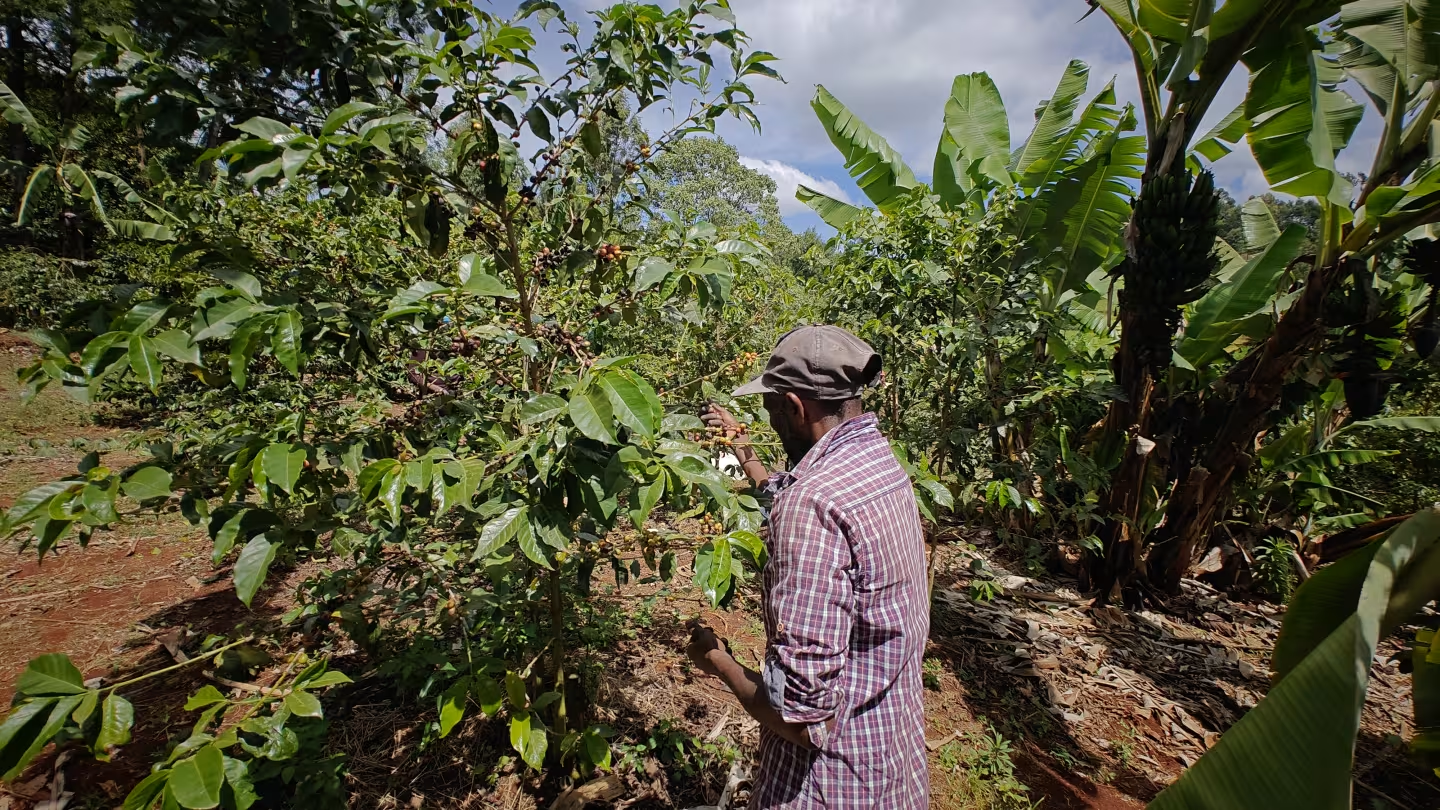
Kenya encompasses a diverse range of forest and landscape ecosystems, including tropical moist and dry forests, savannas, shrublands, semi-arid zones, inland wetlands and coastal marine habitats. These ecosystems support biodiversity, water regulation, livelihoods, and climate resilience. Forest and land-use dynamics are shaped by agricultural and pastoral systems linked to coffee, tea, timber and livestock production. Kenya’s forest cover stood at 8.83% in 2021, with an estimated deforestation rate of around 103,000 hectares per year from 2002-2018, although there has been a net gain since 2010 due to government interventions. Deforestation in Kenya is primarily driven by agriculture, with mining, livestock grazing, charcoal production and logging also playing a role. To address this, Kenya is prioritising forest restoration and enhancing transparency in forest governance by involving local communities in decision-making processes through participatory forest management practices.
Our approach
EFI works in Kenya to support transparent and traceable commodity supply chains, smallholder inclusion, and deforestation-free production, with a focus on the coffee sector. Our approach is centred on technical assistance, analysis and multi-stakeholder engagement, supporting the use of spatial data and risk-assessment tools to inform decision-making.
EFI collaborates with public institutions, producer organisations and cooperatives, civil society, and private sector actors involved in the Kenyan coffee sector in the following areas:
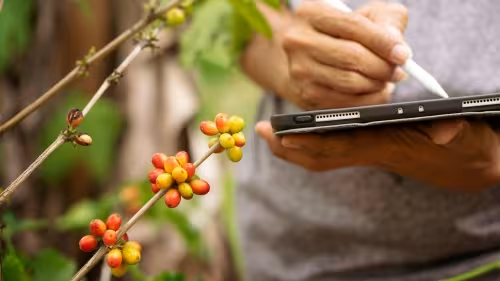
- Traceability – support the Coffee Directorate in improving the geolocation data for coffee plots; develop a National Coffee Information System for better data governance; and pilot farmer-focused traceability solutions.
- Deforestation-free production – support the development of a coffee map, allowing farmers, cooperatives, and exporters to analyse the risk of deforestation around coffee production area.
- Engagement – facilitate exchanges with cooperatives, the private sector, and other supply chain actors to share information, lessons, and insights.
Projects in Kenya
Technical facility on deforestation-free value chains
We collaborate with commodity-producing countries to assist in transitioning to legal and deforestation-free value chains.
- Sustainable economy
Latest Kenya publications
Guidelines for harmonised VHR-based data collection for GeoAI applications for Coffee
These guidelines explain how to use high-resolution satellite imagery to map perennial crops and collect reference data for EUDR compliance.
- Sustainable economy

Preparedness check of Kenya: coffee
This report provides an overview of existing policies, tools and data in Kenya that could support coffee operators’ EUDR due diligence efforts.
- Sustainable economy
