Forest context
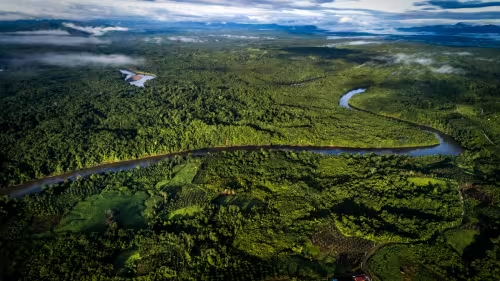
The Republic of the Congo’s forests cover more than 60% of the national territory and form part of the Congo Basin, one of the world’s largest tropical forest ecosystems. Its forests support millions of people and play a key role in the economy. Forest dynamics are shaped by subsistence agriculture, bushmeat hunting, fuelwood use and logging, while weak governance and law enforcement enable illegal logging, leading to resource depletion and loss of state revenue.
Timber is a cornerstone of the economy and the country’s most valuable natural resource (5,6% GDP) after oil. A significant share of timber production is exported, with Europe among the main destinations, making international trade an important lever for addressing illegal logging and strengthening forest governance.
Our approach
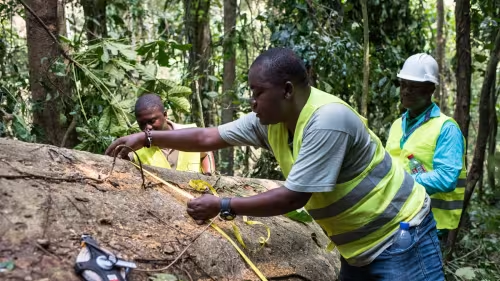
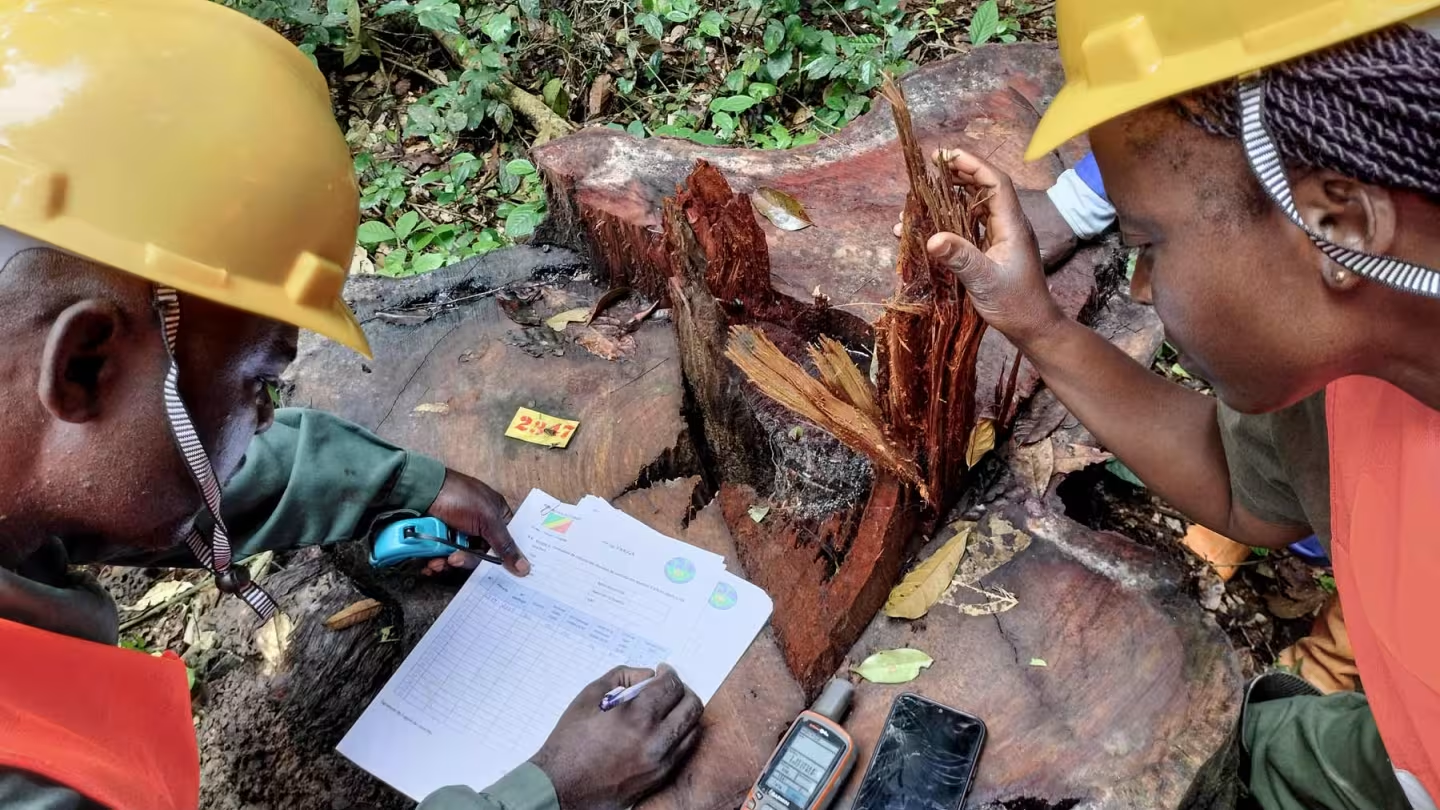
EFI works closely with government institutions, producer organizations, civil society, and private sector stakeholders in the forest sector of the Republic of the Congo. Through the PACO project, EFI supports the Ministry of Forest Economy (MEF) in the implementation of the Timber Legality Assurance System (TLAS) within the framework of the Forest Law Enforcement, Governance and Trade (FLEGT) Voluntary Partnership Agreement (VPA) signed between the European Union and the Republic of Congo.
EFI’s support to the MEF focuses on accompanying and managing the institutional change process required to:
- Strengthen quality control and field-level oversight within the forest administration.
- Improve the internal organization and operational efficiency of the forest administration.
- Advance the digitalisation of administrative processes and systems.
- Enhance coordination and synergies among external support initiatives while strengthening the sustainability of the national verification system.
Projects in Republic of Congo
EFI Rapid Response Programme
We support countries to strengthen forest governance and address land-use and climate challenges.
- Inclusive governance
VPA Africa - Latin America Facility
We worked with partners in Africa and Latin America engaged in FLEGT Voluntary Partnership Agreements.
- Inclusive governance
EU REDD Facility
We supported partner countries improve land-use to combat deforestation, and EU efforts to stop developing country deforestation.
- Inclusive governance
EU FLEGT Facility
We supported the EU and timber-producing countries in the implementation of the FLEGT Action Plan with a focus on Voluntary Partnership Agreements.
- Inclusive governance