Forest context
Sierra Leone’s forests support diverse ecosystems, including mangroves and dense and sparse forest types, and are shaped by economic development, population growth and rising energy demand. Agricultural expansion, logging, mining, charcoal production and infrastructure development all affect forest and land‑use dynamics, while land tenure, enforcement and land‑use planning influence sustainable forest management.
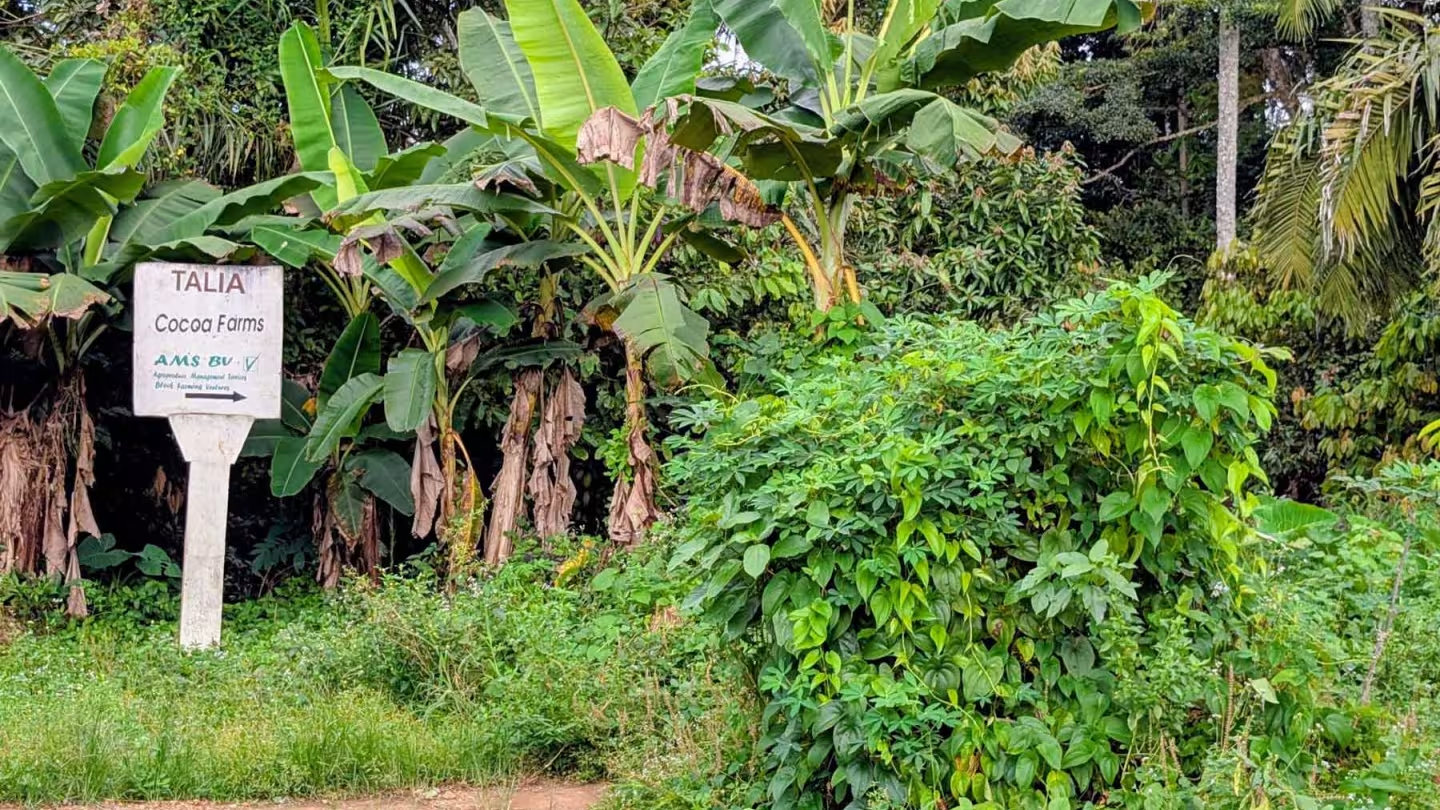
Cocoa plays a strategic role in Sierra Leone’s rural economy. Although the country is a small global producer, estimates suggest that between 60 000 and 100 000 rural households in Sierra Leone are economically linked to the cocoa sector, which also represents an important source of export revenue. Continued access to the EU market is therefore a government priority.
Our approach
EFI works with government institutions, private sector actors and multi‑stakeholder platforms to assess gaps, build capacity and support coordinated preparation for the European Union Deforestation Regulation (EUDR). Our work focuses on strengthening public sector readiness, improving access to reliable data, and supporting policy dialogue on land use, deforestation and legality in the cocoa sector.
EFI places particular emphasis on bridging the gap between private sector efforts on traceability and geolocation, and the government’s role in providing public data, legal clarity and forest governance frameworks.
Key areas of work
- Cocoa sector – We provide technical support on due diligence and deforestation risk monitoring for public authorities and cocoa supply chain actors. We support improved access to reliable data on cocoa production and land use, including through public initiatives such as farmer registration and farm mapping that can strengthen EUDR due diligence. We also contribute to efforts to improve public information on deforestation risks and strengthen national capacity to monitor forest loss and land use change.
Projects in Sierra Leone
Technical facility on deforestation-free value chains
We collaborate with commodity-producing countries to assist in transitioning to legal and deforestation-free value chains.
- Sustainable economy