Forest context
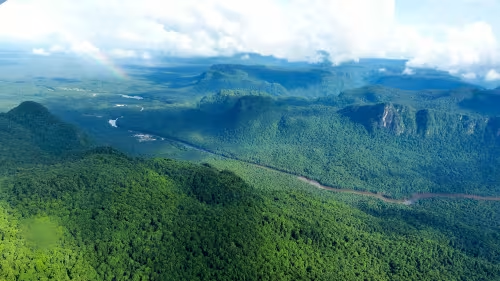
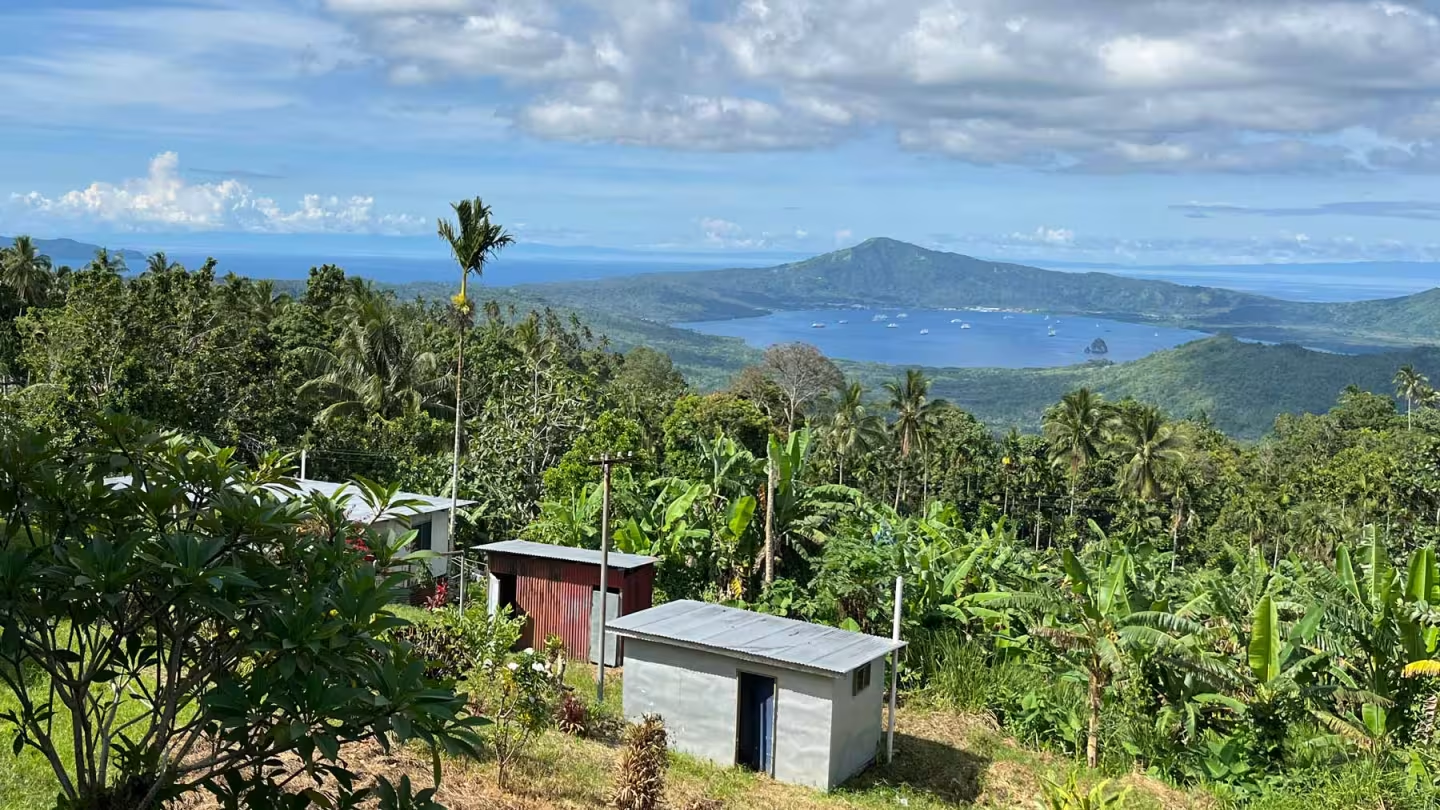
Papua New Guinea is home to one of the world’s largest and most biodiverse tropical forests, covering around three-quarters of the country and contributing significantly to the national economy and rural livelihoods. Nearly all of the country’s land is under customary tenure, giving indigenous people a significant role in forest management. Forest and land-use dynamics are shaped by timber value chains and small-scale rural agriculture. In Papua New Guinea, deforestation is predominantly caused by logging and conversion to agricultural land, particularly oil palm. To curb deforestation and encourage sustainable forest management, the government adopted the National REDD+ Strategy 2017-2027 as a framework for efforts to reduce deforestation and forest degradation. Additionally, the National Biodiversity Strategic Action Plan set out a nationwide reforestation target of 4,200 hectares per year.
Our approach
Focusing on the timber sector, EFI supports Papua New Guinea in strengthening forest governance, legality assurance and forest sector policies, with a focus on forest economics and timber legality. Our work contributes to enhancing the implementation of forest-related policies and decision-making processes.
EFI engages with government authorities, civil society and private sector actors to develop a process for forest sector economic modeling, and to support implementation of a timber legality verification system. Through technical assistance and multi-stakeholder engagement, EFI contributes to, improved forest governance, strengthened national sustainable forest systems, and resilient forest-linked economies in Papua New Guinea.
Projects in Papua New Guinea
EFI Rapid Response Programme
We support countries to strengthen forest governance and address land-use and climate challenges.
- Inclusive governance