Forest context
Cameroon is home to some of Central Africa’s most extensive and ecologically rich forest landscapes, which sustain biodiversity, cultural heritage and rural livelihoods. These forests span monomodal and bimodal zones across the East, South, Littoral and Centre regions, forming a complex mosaic of humid forests, agroforestry systems and agricultural areas.
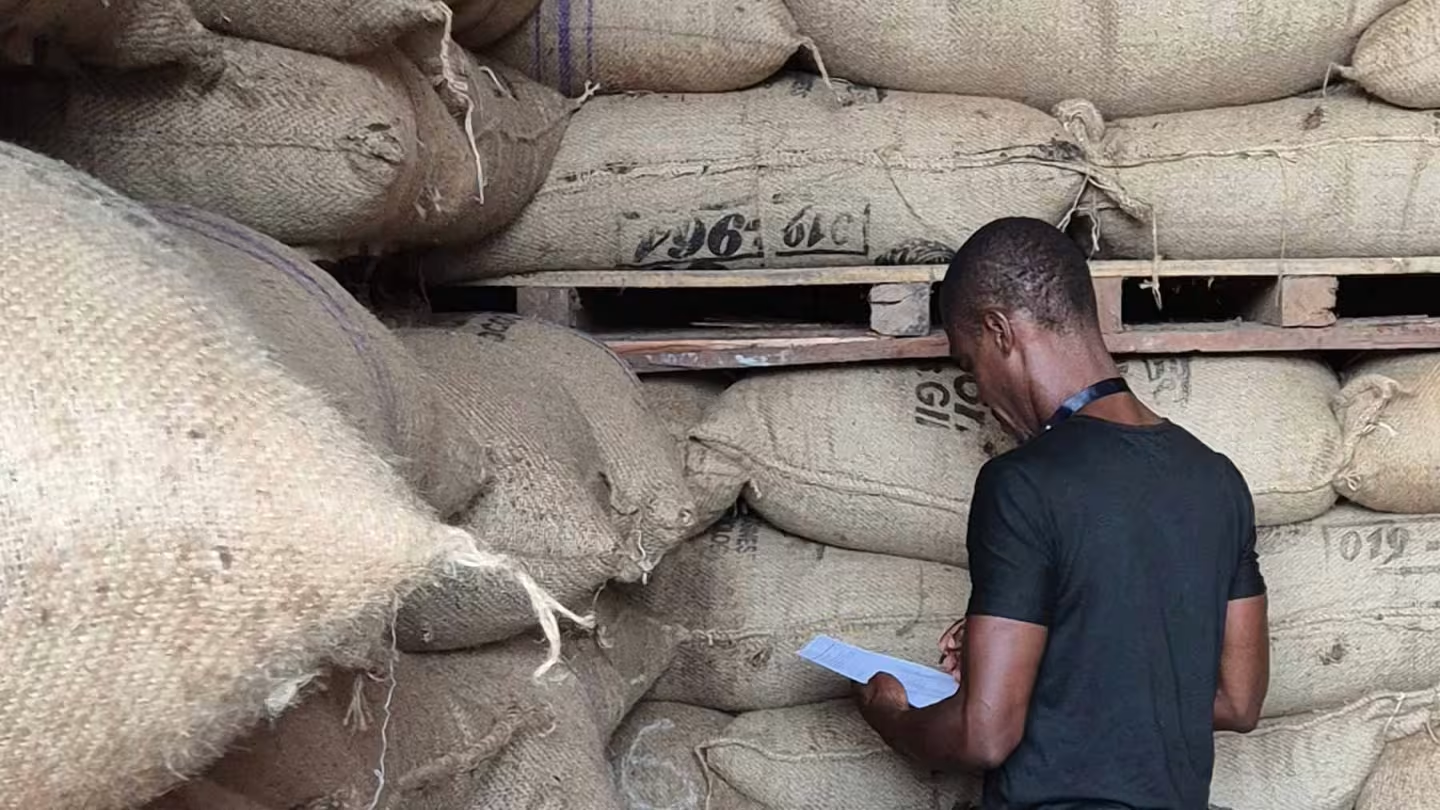
Land-use dynamics are shaped by a range of activities, including cocoa and coffee production, other cash and food crops, timber harvesting, mining and infrastructure development, which in some cases contribute to forest loss or degradation. Among these, cocoa plays a particularly strategic role as a key export commodity and source of foreign exchange earnings for the country. In this context, promoting sustainable, deforestation‑free cocoa is essential to reconcile economic importance with forest conservation objectives.
Our approach
EFI collaborates with stakeholders including government, producer organisation, civil society, and the private sector in Cameroon. We support Cameroon in meeting international and regional sustainability requirements, including the EU Deforestation Regulation (EUDR) and the African regional standard ARS 1000. Our work is structured around several key areas:
- Cocoa sector – we support the Cameroonian Government, the National Cocoa and Coffee Office (ONCC), the private sector and the civil society to integrate geolocation and spatial data, legality information, and deforestation risk assessment tools to promote deforestation-free, traceable, and sustainable cocoa supply chains. We also support the definition of a national framework for sustainable-cocoa production and trade. This includes close engagement with multi-stakeholder platforms on cocoa sector, collaboration with civil society on forest monitoring tools, and the promotion of sustainable and agroforestry-based production practices.
- Land-use planning, biodiversity conservation and rural development – we contribute to advancing Cameroon’s efforts in sustainable natural resource management and climate change mitigation through a landscape approach that integrates biodiversity conservation, rural development and good governance. This includes addressing pressures on protected areas to strengthen their long term‑ conservation and the resilience of surrounding landscapes.
Projects in Cameroon
Natura Sud-Est
We support Cameroon’s efforts in sustainable natural resource management and climate change mitigation.
- Inclusive governance
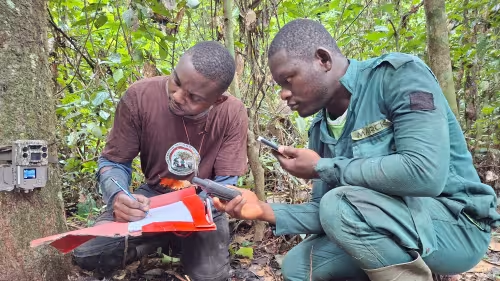
Technical facility on deforestation-free value chains
We collaborate with commodity-producing countries to assist in transitioning to legal and deforestation-free value chains.
- Sustainable economy
Sustainable Cocoa Programme
We support the EU Flagship Initiative on Sustainable Cocoa, in Cote d’Ivoire, Ghana and Cameroon.
- Inclusive governance
VPA Africa - Latin America Facility
We worked with partners in Africa and Latin America engaged in FLEGT Voluntary Partnership Agreements.
- Inclusive governance
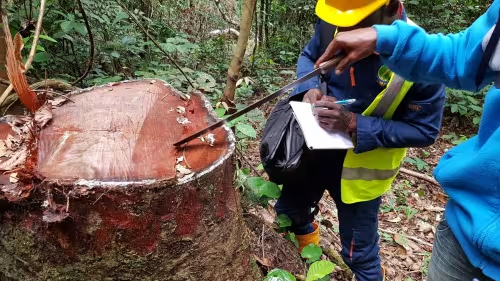
EU REDD Facility
We supported partner countries improve land-use to combat deforestation, and EU efforts to stop developing country deforestation.
- Inclusive governance
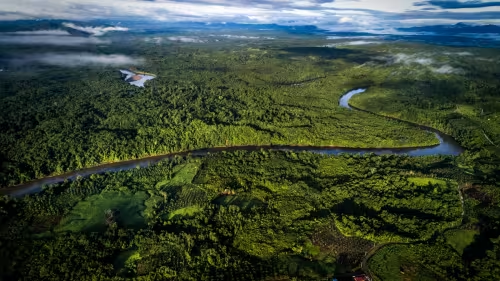
EU FLEGT Facility
We supported the EU and timber-producing countries in the implementation of the FLEGT Action Plan with a focus on Voluntary Partnership Agreements.
- Inclusive governance
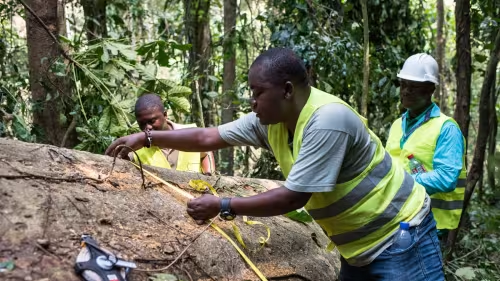
Latest Cameroon publications
EU Deforestation Regulation: Early responses in producer countries
Early evidence shows how producer countries are adapting to the EU Deforestation Regulation through traceability, legal reviews, and coordination.
- Inclusive governance
