Natura Sud-Est
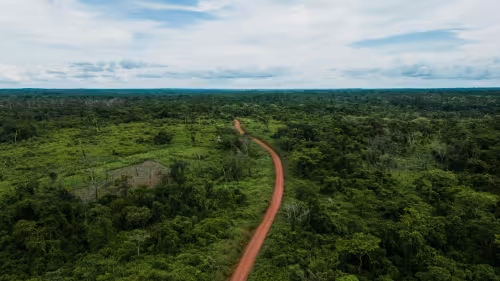
Committing to biodiversity and rural communities in CameroonCameroon has a vast 10-million-hectare forest landscape in the South and South-East, home to two UNESCO World Heritage Sites: The Dja Faunal Reserve and the Lobéké National Park. This region is the country’s least populated (9 inhabitants/km²) and is almost entirely covered by dense, humid forests, 84% under permanent forest estate and 15% designated for community use and agroforestry. Economically marginalised, the area relies heavily on natural resources, with rural communities, many of them indigenous, depending on subsistence farming and forest-based livelihoods. Socially, limited infrastructure and access to services compound existing inequalities, including gender disparities.
Our objective: committing to biodiversity and rural communities in Cameroon
Natura Sud-Est programme’s mission is to promote sustainable development while protecting two of Cameroon’s most important forest ecosystems: the Dja Faunal Reserve and the Lobéké National Park, located respectively in the south and south-east of the country. With the backing of the Cameroonian government, this five-year programme (2024–2029) seeks to create lasting and positive impacts for both nature and rural communities. We are committed to ensuring inclusive growth and the responsible use of natural resources to support biodiversity and empower local populations.
Our work: a pragmatic approach to sustainable resource management
The Natura Sud-Est Programme translates this mission into action by supporting Cameroon’s efforts in sustainable natural resource management and climate change mitigation. Funded by the European Union, the programme follows in the footsteps of ECOFAC and aligns with the broader NaturAfrica programme. Adopting a landscape approach, it integrates biodiversity conservation with economic development and good governance. Additionally, it addresses external pressures on protected areas to strengthen their long-term preservation.
The programme has three main components, aligned with the three pillars of the NaturAfrica programme.
Component 1 – Biodiversity conservation: strengthening inclusive conservation of landscape biodiversity by local communities
Key areas of intervention of component 1 are:
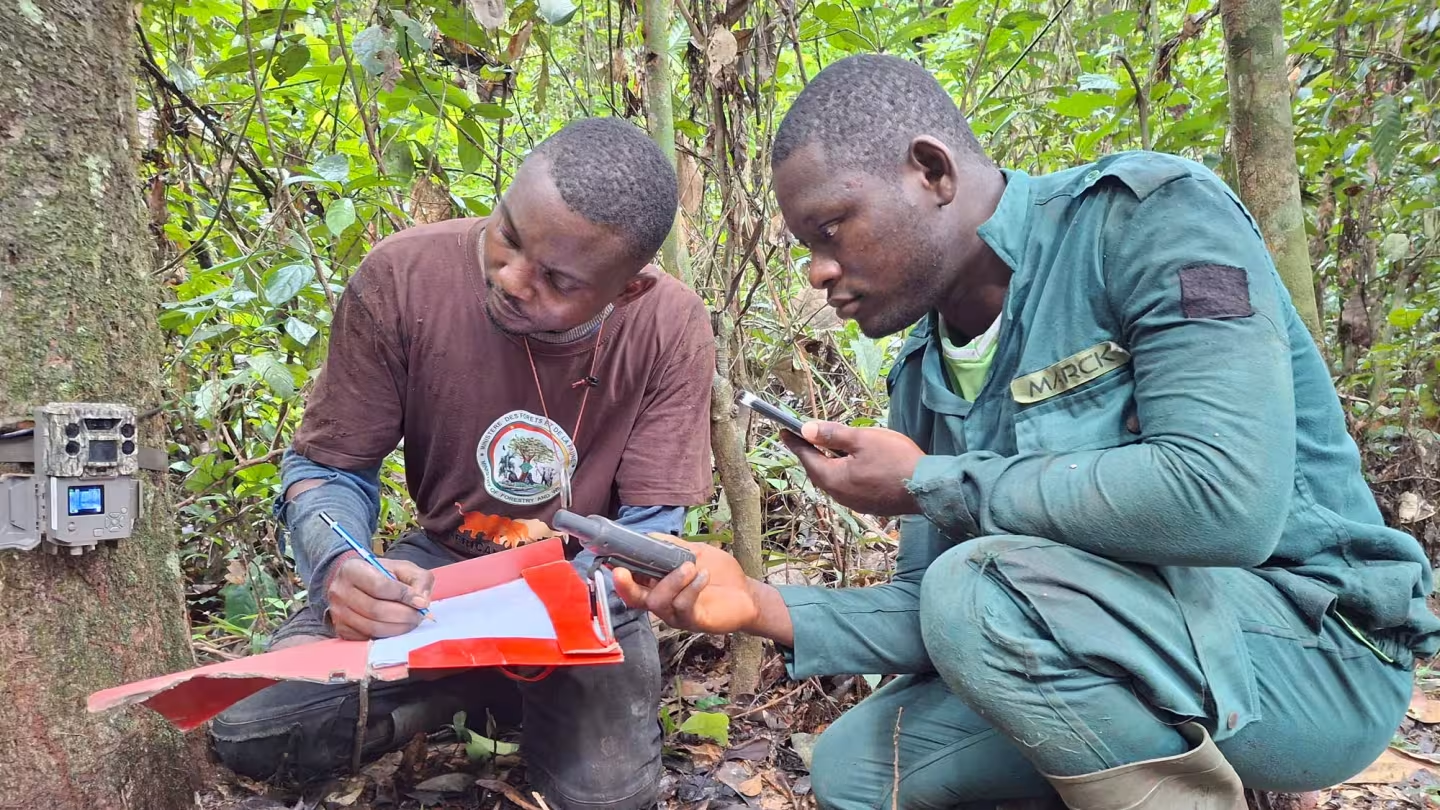
- Management of protected areas and their peripheral zones, ecological monitoring and anti-poaching measures.
- Involvement of local and indigenous communities.
Component 1 is implemented by the African Wildlife Foundation, Noé, Nature+ and UNESCO.
Component 2 – Green economy: increasing the livelihoods and resilience of local communities through green economy sectors
Key areas of intervention of component 2 are:
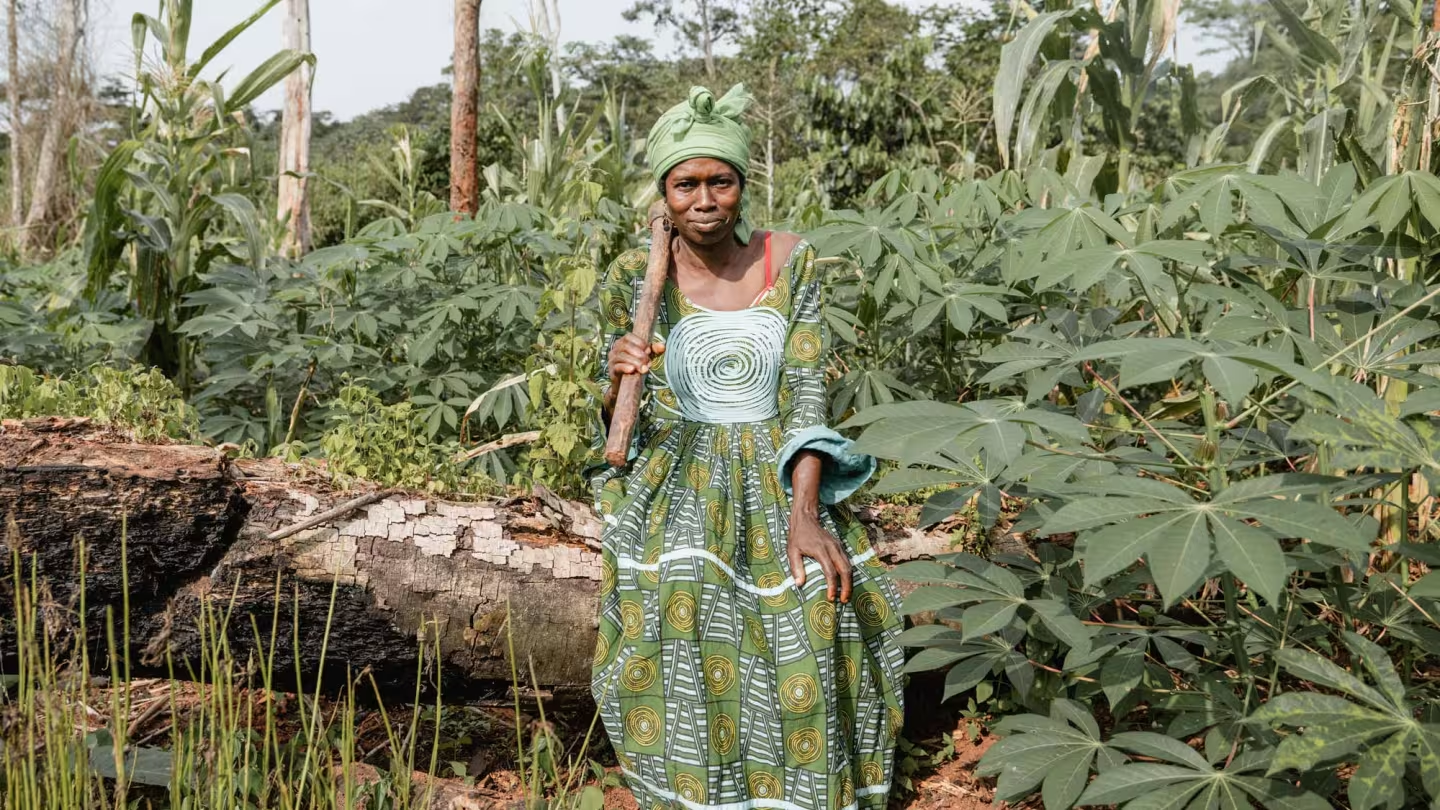
- Promotion of sustainable sectors (forest products, sustainable agriculture)
- Training in rural professions of the future and agricultural support
Component 2 is implemented by the GIZ.
Component 3 – Territorial governance: improving the governance of territories and natural resources by decentralised actors
Key areas of intervention of component 3 are:
- Spatial planning and development operations by rural municipalities
- Human rights (complaints mechanisms)
- Coordination and multi-stakeholder dialogues
Component 3 is implemented by EFI, in collaboration with Nitidae and the Centre for Environment and Development (CED).
Featured experts
Communications contact

Related content
- Inclusive governance

Advancing jurisdictional sustainability in the Central Highlands region of Viet Nam
Developing a jurisdictional sustainability framework and an associated monitoring system in Viet Nam to promote sustainable land use and coffee…
- Inclusive governance
CLEVER
How does international trade in agricultural and forest products affect biodiversity?
- Inclusive governance