Forest context
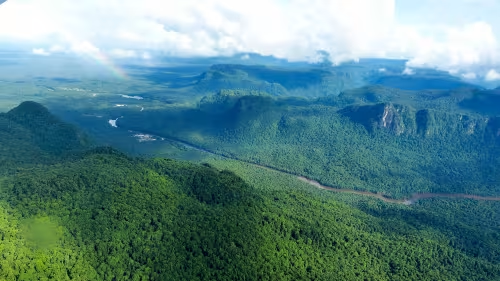
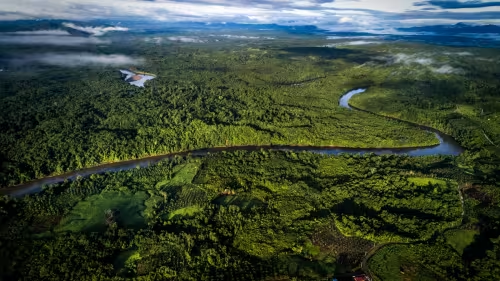
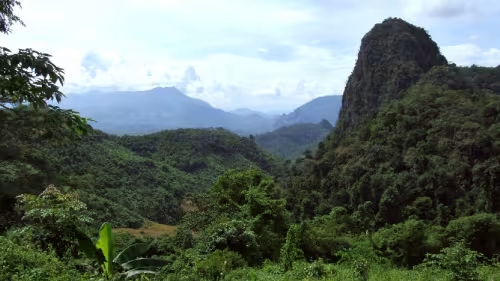
Indonesia is home to the third-largest tropical rainforest in the world, and the largest tropical peatlands and mangrove forests. These forests support biodiversity, carbon storage, and livelihoods for millions of people. Forest and land-use dynamics are shaped by multiple sectors, particularly palm oil, timber, mining, coffee, cocoa, and rubber. In 2016, Indonesia was the first country in the world to issue Forest Law Enforcement, Governance and Trade (FLEGT) licences under a Voluntary Partnership Agreement (VPA) with the European Union, certifying that its timber is produced legally. In 2021, Indonesia’s timber legality assurance system SVLK was expanded to become a broader sustainability verification system called SVLK+, which aims to meet new global market requirements for full traceability. In early 2026, SVLK+ was piloted in key segments of the forestry sectors, with results showing steady progress to full traceability and deforestation-free production in timber supply chains.
Logging and palm oil production, along with mining, have historically been the key drivers of deforestation in Indonesia. However, deforestation rates have declined significantly in recent years, in part due to a 2018-2021 moratorium on clearing land for new oil palm plantations and the strengthening of enforcement of environmental laws. There was a slight increase in deforestation in 2024-2025 mainly due to land clearing in the pulp and paper (forest plantations) sector, although theoverall deforestation trend remains on a downward trajectory. Fiscal transfer systems have been updated to better incentivise forest protection at the regional level, and social forestry programmes have shifted forest management to local communities.
Our approach
EFI supports Indonesia in strengthening forest governance, enhancing timber legality assurance, traceability, sustainable forest management, and developing deforestation-free commodity value chains. We engage with government authorities, producer organisations, smallholders, civil society and the private sector in the following areas:
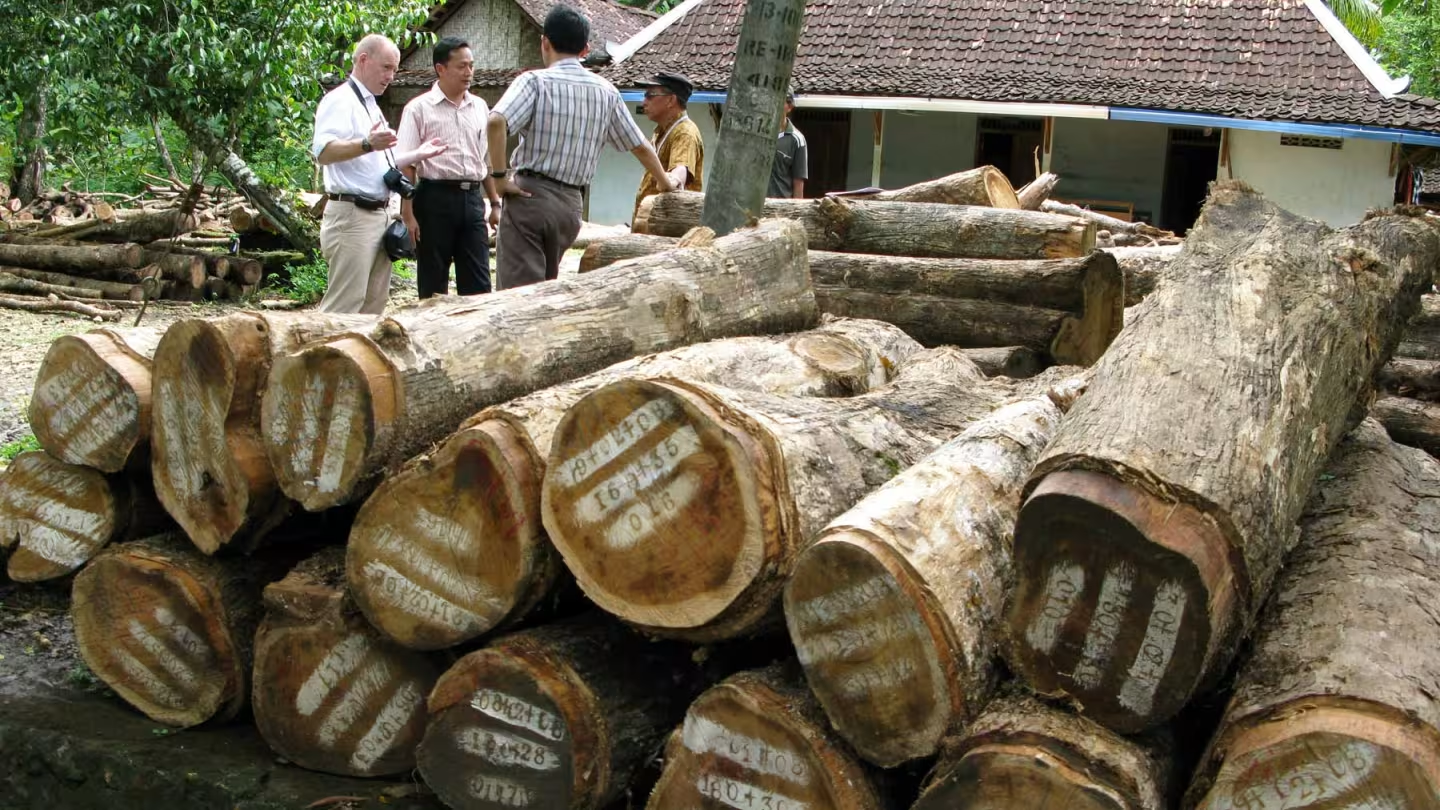
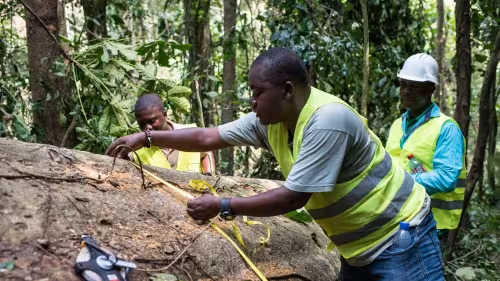
- Timber – we supported Indonesia in the VPA process with the EU and in the development of timber legality and sustainability systems, ultimately leading to FLEGT licensing for the country’s timber and timber products. We also supported expansion of the Indonesian Timber Legality System (SVLK) to include traceability functions (SVLK+) and piloting in key segments of the forest sector.
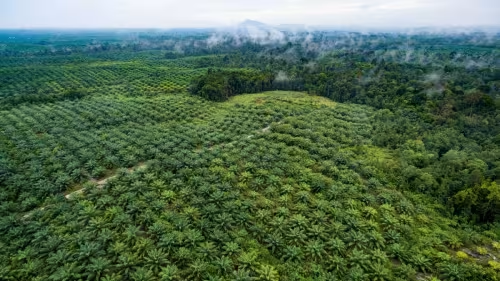
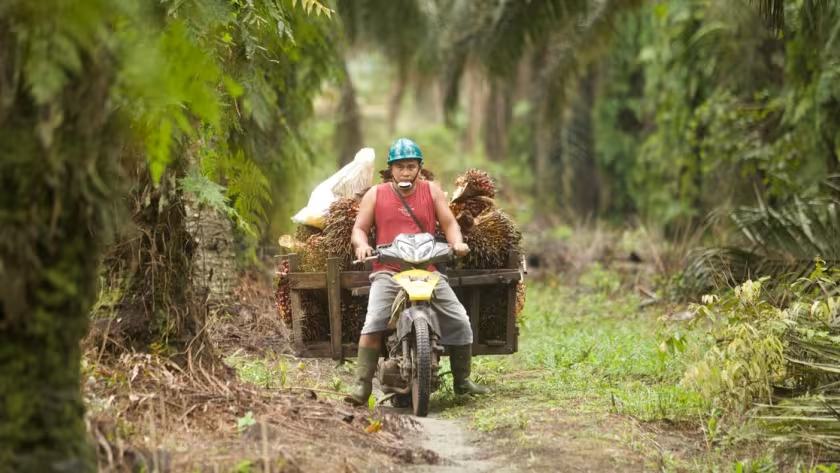
- Palm oil – we facilitated policy dialogue with the EU and other international stakeholders on palm oil sustainability in line with the EU Deforestation Regulation (EUDR); provided technical assistance to enhance supply chain traceability and smallholder inclusion; and helped develop a set of indicators for tracking progress towards jurisdictional sustainability.
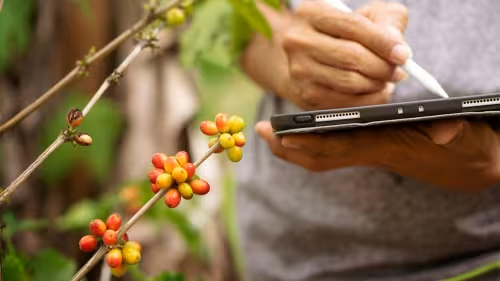
- Cocoa and coffee – we are supporting a review of the coffee and cocoa sectors to understand the preparedness of these sectors to meet the requirements of the EUDR, and identify potential gaps and solutions for overcoming them.
Projects in Indonesia
Technical facility on deforestation-free value chains
We collaborate with commodity-producing countries to assist in transitioning to legal and deforestation-free value chains.
- Sustainable economy
EFI Rapid Response Programme
We support countries to strengthen forest governance and address land-use and climate challenges.
- Inclusive governance
KAMI
The KAMI project provided support for dialogue between EU, Malaysian and Indonesian stakeholders on the sustainability of the palm oil value chain.
- Inclusive governance
EU REDD Facility
We supported partner countries improve land-use to combat deforestation, and EU efforts to stop developing country deforestation.
- Inclusive governance
EU FLEGT Asia Programme
We worked to improve forest governance and promote legal trade of timber across Asia.
- Inclusive governance
EU FLEGT Facility
We supported the EU and timber-producing countries in the implementation of the FLEGT Action Plan with a focus on Voluntary Partnership Agreements.
- Inclusive governance
Latest Indonesia news
Three new publications on EU Deforestation Regulation (EUDR) preparations and oil palm smallholder inclusion in Indonesia
KAMI project releases three publications on EUDR preparations and improving oil palm smallholder supply chain inclusion in Indonesia.
- Inclusive governance
Latest Indonesia publications
EU Deforestation Regulation: Early responses in producer countries
Early evidence shows how producer countries are adapting to the EU Deforestation Regulation through traceability, legal reviews, and coordination.
- Inclusive governance

Insights from EUDR preparedness exercise in the palm oil sector
The voluntary exercise simulated checks on the operators’ due diligence system and related palm oil shipments from Indonesia and Malaysia.
- Sustainable economy
