KAMI
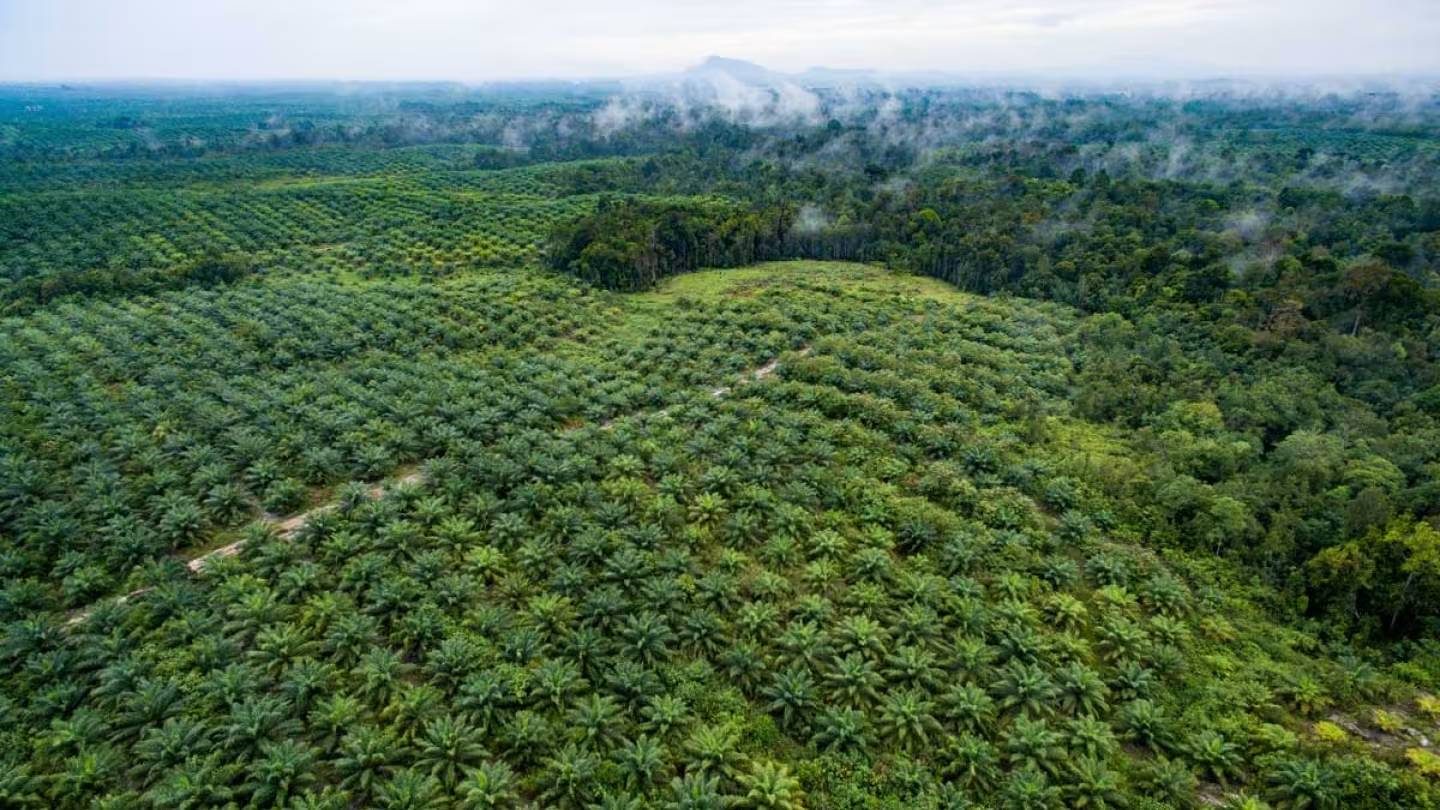
Sustainability of Malaysian and Indonesian palm oilPalm oil is an important global commodity, present in a wide variety of products we use every day. Indonesia and Malaysia are the world’s largest producers of palm oil, accounting for around 85% of global production. Consumers and markets are increasingly demanding evidence that palm oil is produced, legally, sustainably and without causing deforestation.
Our objective: Reinforcing EU-Indonesia and EU-Malaysia partnerships by supporting national processes and international dialogue on sustainable palm oil
KAMI supported all stakeholders – including governments, companies, smallholders and civil society organisations – in Indonesia and Malaysia to progress towards and better demonstrate legal, deforestation-free and sustainable palm oil production in the context of EU and global demands, the United Nations Sustainable Development Goals, and national laws and circumstances.
Our work: Strengthening policy dialogue, supporting supply chain traceability and promoting smallholder inclusion
During the four-year (August 2020-December 2024) project, we provided support for international partnerships in the context of implementation of global market regulations affecting palm oil production and trade, notably the EU Deforestation Regulation (EUDR), through:
- Supporting and facilitating policy dialogue between stakeholders in the EU, Indonesia and Malaysia on palm oil.
- Providing technical assistance to enhance the exchange of objective information on palm oil production and trade as a foundation for strengthened dialogue and increased trade.
- Equipping actors involved in EU, Indonesia, and Malaysia policy dialogues on palm oil with relevant information, and supporting engagement among national and subnational state and non-state actors.
Results / lessons learnt
One of KAMI’s main strengths was in reinforcing EU-Indonesia and EU-Malaysia dialogue on palm oil. When high-level political dialogue faltered, KAMI continued to facilitate policy and technical engagement between the EU, Indonesia and Malaysia, demonstrating the project’s value. A total of 44 reports, briefs, papers and guidelines were produced to inform stakeholders and support continuing policy dialogue.
Several of KAMI’s initiatives and outputs have been taken up by the Indonesian and Malaysian governments, further demonstrating the relevance of our work. In Malaysia, the joint gap analysis of EUDR information needs and information available through the national palm oil certification scheme was adopted by the government as a guide for improving the scheme. In Indonesia, the palm oil traceability app developed and tested with KAMI support was incorporated into a national commodity information system, and the Sustainable Jurisdictions Indicators (SJI) developed to track district progress towards sustainability were launched as a government initiative in a high-profile global event.
Related content
Malaysia Smallholder Project
We work on improving the livelihoods of rubber and palm oil smallholders through increased global market access.
- Inclusive governance

Thai Smallholder Rubber Project
We support smallholder rubber producers in Thailand to improve agricultural and environmental practices and strengthen value‑chain management.
- Inclusive governance
Technical facility on deforestation-free value chains
We collaborate with commodity-producing countries to assist in transitioning to legal and deforestation-free value chains.
- Sustainable economy