Building the future
EFI and Austria host high-level event on wood, bioeconomy and the New European BauhausEurope is rethinking how it builds, and the forest-based bioeconomy is a growing part of that conversation. The goal isn't for construction materials to compete with one another, but to complement each other. This was the main message of the European Forest Institute's latest ThinkForest event, “Building the Future: Wood, Bioeconomy and the New Bauhaus”, held on 19 November 2026 in Brussels at the Permanent Representation of Austria to the European Union.
The event brought together policymakers, scientists and industry representatives to discuss how sustainability, affordability, aesthetics and functionality can be reconciled, without locking Europe into particular technologies or materials.
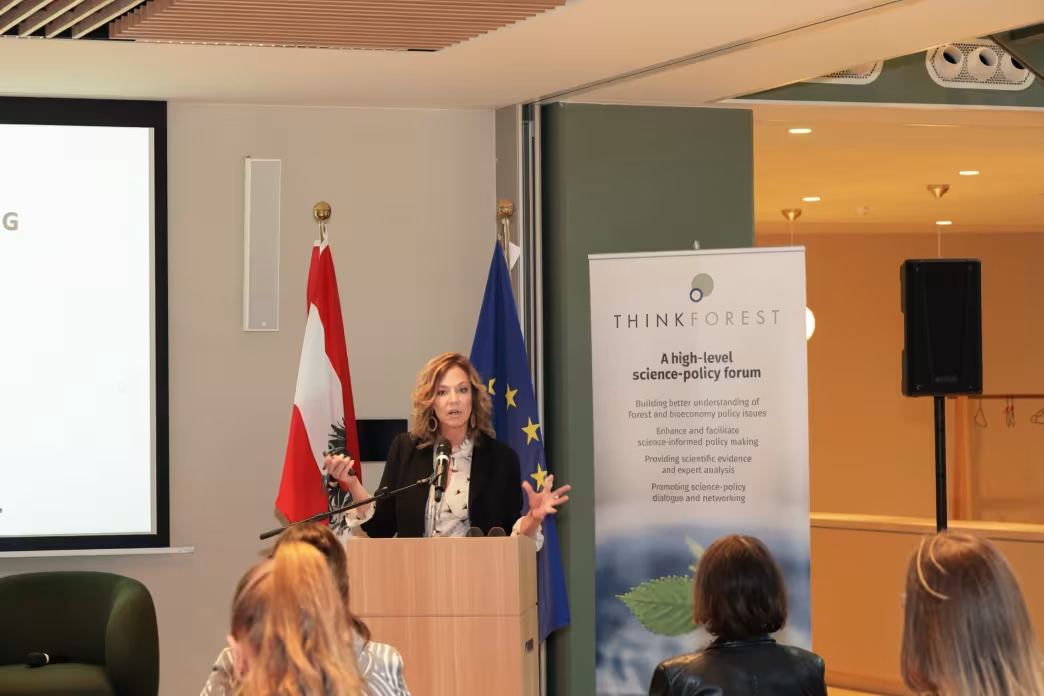
After a breakfast networking session, Helga Pülzl, EFI Policy Support Lead, opened the event. Carolin Spirinckx, Project Manager at VITO, delivered the keynote speech “Beyond material competition: Towards a level playing field in the transition to a more sustainable built environment in Europe”. Spirinckx’ key message is that comparison should start at the building level rather than material level, assessing performance across all environmental impact categories. She also urged an examination of the entire life cycle of materials instead of production alone, and balancing environmental impacts with different pillars of sustainability.
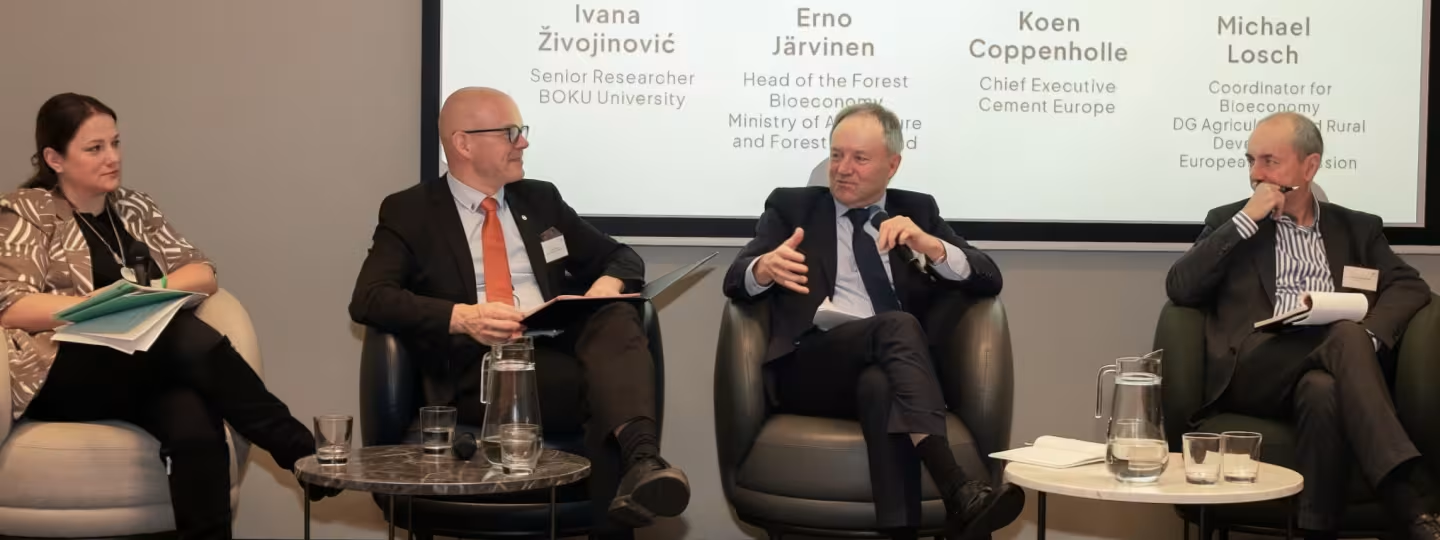
The panel "Building the future: What role for wood?", moderated by Livia Podestà, EFI Communications Manager, looked at opportunities, trade-offs, policy and the way forward:
- Ivana Živojinović, Senior Researcher at BOKU University, explained that wood can and should play a bigger role in the construction sector when sourced responsibly. It is always essential to assess the trade-offs, and to balance wood use with biodiversity, forest carbon stocks, and other demands for biomass.
- Erno Järvinen, Head of the Forest Bioeconomy Unit at the Finnish Ministry of Agriculture and Forestry, noted that Finland is one of the main timber producers in Europe. From Finland’s perspective, EU regulations should be predictable and send clear targets for the construction sector, while leaving freedom for technical choices and accelerating market entry of new solutions.
- Koen Coppenholle, Chief Executive of Cement Europe, highlighted that the construction sector accounts for 10% of European GDP and that the cement and concrete industry is also moving towards carbon neutrality. He stressed that all products on the market should be low-carbon and circular, emphasising that policies should not promote certain construction materials over others.
- Michael Losch, Coordinator for Bioeconomy at DG Agriculture and Rural Development of the European Commission, explained that the Bioeconomy Strategy and the New European Bauhaus are central to the topic. Europe is a leader in bioeconomy, and construction is an important part of it. In addition, products made from sustainably harvested wood go beyond climate neutrality, as they can also act as carbon sinks.
Questions from the audience touched on climate adaptation, long-term carbon storage in buildings, and the importance of considering the structure and the functionality of buildings beyond materials.
Pülzl concluded with an echoing of Spirinckx’s keynote speech - the full life cycle of buildings should be taken into account, and data plays an important role in assessing and enabling environmental performance of buildings.
The full recording of the event will be available soon.
Check here for more event photos. (Photo credits: Shanqing Gao, European Forest Institute)
Related content
Building the Future: Wood, Bioeconomy and the New Bauhaus
This ThinkForest event explores how wood and other bio-based materials can contribute to a sustainable and climate-neutral European built environment.
19 November 2026, 09:00–11:30
- Sustainable economy
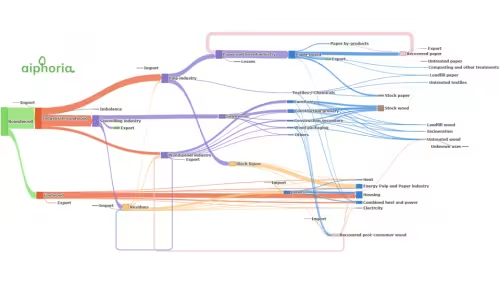
aiphoria: A Python package for dynamic wood material flow and carbon stock analysis
aiphoria is an open-source Python package for dynamic material flow analysis (DMFA) of wood.
- Sustainable economy
Major collaboration agreement between regional bioeconomy networks
The agreement establishes a formal framework with the aim of accelerating the deployment of bio-based innovation at regional level across Europe.
- Sustainable economy