EFISCEN
The European Forest Information SCENario Model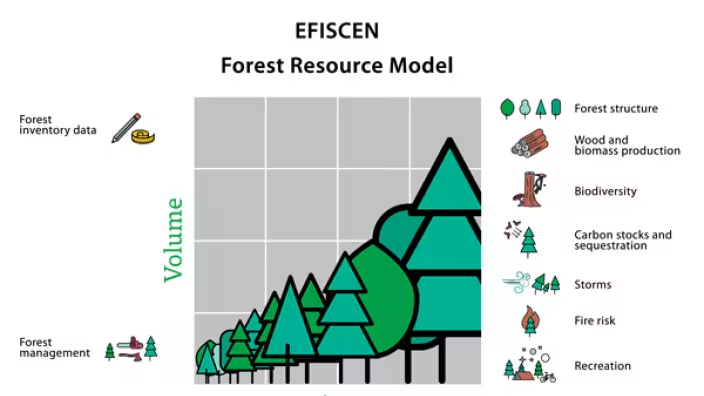
The European Forest Information SCENario Model (EFISCEN) is a large-scale forest model that projects forest resource development on regional to European scale. The model is suitable for the projection of forest resource development for a period of 50 to 60 years.
The model uses national forest inventory data as a main source of input to describe the current structure and composition of European forest resources. Based on this information, the model can project the development of forest resources, based on different scenarios. These scenarios are mainly determined by management actions, but the model can also take into account changes in forest area, as well as changes in growth e.g. due to climate change.
EFISCEN provides data on basic forest inventory data (species, area, stemwood volume, increment, mortality, age-structure), but the model includes multiple indicators related to important forest ecosystem services (carbon sequestration, biodiversity, recreation, wind and fire risk), enabling the assessment of impacts of different policy and management strategies at the national and European level.
Through its underlying detailed forest inventory database, the projections provide these insights at varying scales, thus serving forest managers and policy makers at the national and international levels.
Read the recent news about EFISCEN: Scandinavian Journal of Forest Research
EFISCEN is jointly developed by Alterra and EFI. The model and its source code are available for anyone interested in using the model.
Many people have contributed to the development of EFISCEN, both at EFI and Alterra. The model developers are Jo van Brusselen, Jeannette Eggers, Ville Ikonen, Ville Immonen, Anu Horttanainen, Timo Karjalainen, Inga Kharanen, Janne Kiljunen, Marcus Lindner, Gert-Jan Nabuurs, Risto Päivinen, Ari Pussinen, Mart-Jan Schelhaas, Andreas Schuck, Ola Sallnäs, Matti Suokas, Tommi Suominen, Esther Thürig, Hans Verkerk, Bert van der Werf and Sergey Zudin.
Contact information: efiscen@efi.int
Field of application
Issues that can be addressed with EFISCEN are for example effects of expected changes in wood demand, forest area, forest management or increment level. Effects can be expressed in the form of various characteristics or indicators of the forest resource. The main model outputs consist of:
- Forest characteristics (e.g. forest area, tree species, stemwood volume, increment, age-class distribution and natural mortality) by forest type;
- Harvested wood/biomass by forest and harvest type (thinnings, final fellings, logging residues and stumps);
- Carbon stocks in forest biomass (stem, branches, foliage, coarse roots, fine roots) and soil by forest type;
- Ecosystem services (carbon sequestration, biodiversity preservation (dead wood), recreation, moderation of wind and fire risk.
EFISCEN is suitable for the projection of forest resources for periods up to about 50-60 years. The model is designed for large forest areas, such as provinces or countries. Application to smaller areas is possible, but there have been no studies yet to determine the minimum size and effects of scale on uncertainty of the projections. Generally, several thousand hectares could be regarded as a safe minimum.
EFISCEN has been developed for even-aged, managed forests. Deviations from this situation (e.g. uneven-aged forests, unmanaged forests and shelterwood systems) make the application of EFISCEN less suitable. Furthermore, the model is currently not suited to simulate fast growing tree species with very short rotations, due to the 5-year time step.
As with all models, uncertainties in EFISCEN depend largely on the quality of the input data. Especially a correct estimation of the increment functions is important for the model outcomes. Initial uncertainties propagate through the model with every simulated time step, and thus the overall uncertainty increases. For 10-12 time steps (50-60 years) the model is believed to give reasonable projections. With increasing projection length, observed patterns become more important than absolute values.
Version history
The core of the EFISCEN model was developed in the late 1980s for Sweden by Prof. Ola Sallnäs at the Swedish Agricultural University. The first European application of this model was carried out by the International Institute for Applied Systems Analysis (IIASA) in the early 1990s. This application was motivated by the expectation of large-scale dieback due to acidification. The model was transferred to EFI in 1996, and given the name EFISCEN (version 1.0). At the same time, the underlying EFISCEN inventory database was updated and further expanded with the help of many country correspondents and inventory experts.
By the year 2000, several changes were made to the model, resulting in EFISCEN version 2.0. The changes were:
- The decline module as used in the IIASA study was taken out of the model code.
- The width of the age classes during simulations was set equal to the time step of the model (5 years).
- The possibility was introduced to change the tree species after final harvest.
- The way thinnings are handled in the model was changed, by introducing a growth boost and modifying the transition of area between matrix cells.
- An option was built in to be able to change the transition chances over time, for example due to climate change.
- A biomass carbon module was added to estimate carbon stored in whole tree biomass with help of biomass expansion factors.
- A products module was developed to track carbon stored in wood products
- A soil module (the YASSO soil model) was added to calculate carbon stocks in forest soils.
Soon after these improvements, work started at EFI to reprogram EFISCEN from Fortran to C++ (EFISCEN 3.x). Several sub-versions of the model have been developed and the most recent version is EFISCEN 3.1.3.
In 2011 another process was started to re-implement EFISCEN from C++ to Java to improve EFISCEN with participation by the University of Eastern Finland and Alterra. Besides re-implementation, model functionality has been extended as well. All steps were completed in summer 2014. The re-implemented EFISCEN is named version 4.1. Key improvements in EFISCEN 4.1 as compared to EFISCEN 3.1.3 are:
- Graphical User Interface (GUI) has been redesigned with additional functionality. Total and selected data is now divided to two tabs to make the interface less crowded.
- In the GUI, the user can now select multiple regions, owners, sites or species in the selection tree and data are shown in the selected-tab accordingly.
- All simulation values that are shown in the panels can also be shown in the graphs with their history. Variables to show as graphs can now be easily toggled by clicking corresponding buttons.
- Error messages have been made more descriptive and log files are now provided that describe any possible errors.
- Time step specification in scenario files has been changed so the last parameter values are used when the last step in scenario file is reached, rather than re-running the whole scenario.
- Area scaling factors can now be applied to individual matrices through a newly added scenario file.
- Management parameters that were previously fixed through the simulation can now change. They are defined in two new scenario files. This feature allows the user to modify management regimes along the course of the simulation.
- Scenario file format has been extended to include individual matrix scaling and thinning and felling change files.
- All output files are now written in .csv format
- It is possible for the user to specify a list of output files that need to be created
In addition to the re-implementation and adding more options for creating scenarios, another feature that has been added is that EFISCEN outputs can directly be saved to an external database. Databases that are currently supported are MySQL, PostgreSQL and Microsoft Access.
Model availability
EFISCEN version 4 is available for everyone and is distributed according to the GNU General Public License conditions. EFISCEN 4 is available as follows:
To cite EFISCEN 4 in publications use:
- European Forest Institute (2016). EFISCEN: European Forest Information SCENario model, version 4. European Forest Institute, Joensuu, Finland. URL: http://efiscen.efi.int
- Sallnäs, O., 1990. A matrix model of the Swedish forest. Studia Forestalia Suecica 183, 23.
In addition to the EFISCEN model, several tools are made available as well:
Modelling approach
EFISCEN is a matrix model, where the state of the forest is represented in matrices as an area distribution over age and volume classes. The basic input data for each forest type in EFISCEN consist of area (ha), average growing stock volume per hectare (m3 ha-1) and net annual increment per age class (m3 ha-1 yr-1). The input data are derived from forest inventory data. This inventory data is obtained for different forest types, which can be defined by region, owner-class, site-class and/or tree species. The number of forest types can differ per country and usually depends on the level of detail of the input data. For each forest type that is distinguished, a separate matrix is set up. The initial distribution of area over matrices represents the state of the forest as derived from the national forest inventory data.
During simulations, area is transferred between matrix cells and these transitions are determined by natural processes (e.g., growth and mortality) and influenced by management regimes (thinning, final felling, choice of tree species in regeneration,) and changes in forest area. Growth dynamics are simulated by shifting area proportions between matrix cells. In each 5-year time step, the area in each matrix cell moves up one age-class to simulate ageing. Part of the area of a cell also moves to a higher volume-class, thereby simulating volume increment. Growth dynamics are estimated by the model’s growth functions, which are derived from inventory data or yield tables. Natural mortality is simulated by moving a fraction of the area in a certain cell one volume class down. This fraction can be set by the user as a percentage of the growing stock, varying by age class. The actual fraction of the area that is moved down will then depend on the average volume before, and the difference between the volume classes. Only area that has not recently been thinned can be subjected to natural mortality.
Harvest regimes are specified at two levels in the model. First, a basic management regime defines the period during which thinnings can take place and a minimum age for final fellings. These regimes can be regarded as constraints on the total harvest level. Second, the demand for wood is specified for thinnings and for final felling separately and EFISCEN will harvest the requested wood volume if available. Thinnings are implemented in the model by moving area one volume class down. Final fellings are simulated by taking the area out of a certain cell. During thinnings and final fellings, logging residues are produced, which can either be left in the forest to decompose or be extracted, e.g. to produce energy.
EFISCEN provides information on (future) forest resource structure (tree species, area, age-class structure, stem wood volume, increment, mortality), as well as wood removals and logging residues and stumps from thinning and final fellings for every five-year time-step. With the help of biomass expansion factors, stemwood volume is converted into whole-tree biomass and subsequently to whole-tree carbon stocks. The soil module YASSO is linked to EFISCEN and can be used to provide information on forest soil carbon stocks.
Scenario analysis
EFISCEN is mostly used as a tool to evaluate and compare different scenarios. Scenarios can be defined in terms of management regime and expected wood demand, changes in forest area and increment level (e.g. due to climate change).
Management with regards to harvest is controlled at two levels in the model. First, for each forest type a basic management of thinning and final felling is incorporated. This theoretical management regime defines age limits for thinning and final fellings according to handbooks or expert knowledge for forest management in the region or country to be studied. This theoretical regime must be seen as constraint of what might be felled. Second, total required harvest volumes (or wood demand) from thinning and final felling are specified for a region or country as a whole for each time period. The demand for wood is usually derived from statistical sources and/or external models. Based on the theoretical management regimes, the model searches and might find, depending on the state of the forest, the required volumes.
During thinning and final fellings, logging residues consisting of stem parts, branches, foliage and coarse roots are produced. A share can be specified defining the amount of logging residues that should extracted from the forest, e.g. for energy purposes. Logging residues that are not extracted remain in the forest to decompose.
It is possible to take afforestation and deforestation into account. The user can add or remove area per tree species in each time step of the simulations. The maximum area for deforestation in one time steps equals the area in the bare-forest-land-class, but in that case also no regeneration will occur.
The model can simulate the development of the forest for decades. For various reasons, e.g. climate change, increment rates may change during long simulation periods. The model can take into account such changes in increment rate by defining an expected relative change. The basis of the increment calculation is always the increment as calculated by the incorporated growth functions, which are based on the inventory data. The new increment rates are defined relative to the basic growth functions. The expected relative change can be defined per time step, by forest type and age class and are usually derived from external models.
Input
EFISCEN can be used to conduct large-scale forest resource assessments. To characterise the forest resource structure, the forest area under study is usually separated into forest types. Forest types in EFISCEN are defined based on administrative unit, ownership, tree species and site class. The number of forest types usually depends on the level of detail of inventory data. As input for the matrix set-up, EFISCEN needs the area and average volume per age class of each forest type. The minimum data required are:
- area (ha), including temporarily unstocked areas;
- growing stock volume (m3/ha overbark);
- net annual increment (m3/ha/yr overbark);
These data should be structured by:
- age-classes
- tree species;
- geographic regions;
- ownership classes;
- site-classes;
See an example of the data required. Input data on area, growing stock volumes and increment are usually derived from national forest inventories.
In addition to forest inventory data, information is needed on the minimum and maximum age at which thinnings can take place and the minimum age from which final fellings can commence.
EFISCEN is also capable of converting wood volume into estimates of carbon in total tree biomass. For this conversion, the user needs to supply the model with biomass expansion factors. Additionally, the model can simulate carbon dynamics in the soil via the soil model YASSO, which is dynamically linked with EFISCEN. YASSO requires data on turnover rates of different biomass components, data on quality of the litter, and some basic climate parameters for the region under study.
Inventory database
The EFISCEN inventory database contains forest inventory data that can be used to initialise the EFISCEN model. Input data are available for 32 European countries: Albania, Austria, Belarus, Belgium, Bosnia-Herzegovina, Bulgaria, Croatia, Czech Republic, Denmark, Estonia, Finland, France, Germany, Hungary, Ireland, Italy, Latvia, Lithuania, Luxembourg, Macedonia, Netherlands, Norway, Poland, Portugal, Romania, Russian Federation, Slovakia, Slovenia, Sweden, Switzerland, Turkey, and United Kingdom.
The input data for these countries have been derived from their national forest inventories. For a number of countries the model relies on the database of the IIASA Forest Study (Nilsson, S., O. Sallnäs and P. Duinker. 1992. A report on the IIASA forest study: Future forest resources of Western and Eastern Europe, The Parthenon Publishing Group, UK).
This public EFISCEN inventory database does not contain the most recent forest inventory data available for each country. Some countries publish forest inventory results on national websites.
For whom is this database?
The EFISCEN Inventory database can be used by anyone who seeks information on Europe's forests and its resources. The design of the database is aimed at providing forest resource information to the modeller, policy and decision makers, researchers and the general public.
What information does the database contain?
The bases of the EFISCEN Inventory database are the individual national forest inventories of 32 European countries. Each country lists different so called "forest types". In this context a forest type is "the forest that can be distinguished according to region, owner class, structure, site class and tree species". The level of detail between different countries may vary, as not all have presented their information at all possible levels (e.g. region, owner class, tree species, etc.). For each forest type and age class, the forest area, the total and mean volume, the total annual increment and the current annual increment may be retrieved from the EFISCEN Inventory database. Such data are available for all countries which have an even-aged forest structure.
How to use the database
When you use the database for the first time, you have to register. Within a few minutes you will get a username and password. Registration is free and is only intended to monitor the use of the database. After logging in, you can choose the country you are interested in from a drop-down list. After pressing the button 'Search' you will get an overview of the available options for regions, ownership classes, site classes and tree species. You have to choose one option from each of these categories, or choose all options within the category. Below the selection screen is a screen with additional information. Here you will find the contact person for the data, definitions, a map and some more additional information. After clicking the “Search” button again, you will get the requested data. These data can also be downloaded as a CSV file.
Availability of the data
The data available through this database is freely accessible to all registered users. If you want more detailed information, you may directly consult the national contact person or institute given in the country background information.
How to refer to the data/copyrights
When using any data obtained from the EFISCEN Inventory database, reference should be made both to the original source and the EFISCEN Inventory database. You will find references to the original sources in the individual country information screen. The EFISCEN Inventory database itself can be referred to as:
Schelhaas, M.J., Varis, S., Schuck, A. and Nabuurs, G.J., 2006, EFISCEN Inventory Database, European Forest Institute, Joensuu, Finland, http://www.efi.int/portal/virtual_library/databases/efiscen/
EFI has obtained permission to publish the data from the national contact persons and institutes. The copyright of the data included in the EFISCEN Inventory database remains with the responsible organisations.
Model validation
The model has been validated by (i) comparing its growth functions against growth functions of other models (Sterba 2003), (ii) comparing its projections against other projections carried out for the same forests (e.g. Nilsson et al 1992; Böttcher et al. 2012), and (iii) running the model on historic data and comparing the output to present day forest state. Separate validation studies have been conducted for Finland with EFISCEN 1.0 (Nabuurs et al. 2000) and for Switzerland with EFISCEN 2.2 (Thürig and Schelhaas 2006).
EFISCEN 1.0 was applied to Finland for the period 1921-1990. The initial situation was based on the results of the first national forest inventory, carried out in the years 1921-1924. Simulation results were then compared to corresponding later inventories. This validation study showed that projected forest resource development was able to capture observed forest resource development for 50-60 years. Differences in increment level were found after 30-40 years, with visible consequences in growing stock levels after 50-60 years. Another conclusion of the validation was that the results at a national level were fairly close to observed levels, but that results at a lower level (per species and region) showed much more deviation. An important reason for this seemed to be differences in management intensity between regions and between tree species.
EFISCEN 2.2 was validated for Switzerland. Firstly, the matrix as initialised by EFISCEN was compared with the original plot data from the second Swiss National Forest Inventory. The result of this comparison was in general satisfying. The largest deviations occurred in poor sites in the Alps region. This was attributed to the fact that forests on such sites usually have a protective rather than a productive function. Such stands are generally managed in an uneven-aged way, leading to a different distribution of growing stocks over age than in case of forests that are managed in a truly even-aged way. Secondly, the forest resource development was projected for the canton Bern for different sets and time spans of inventory plots where repeated measurements were available. On the aggregated (national) level the model produced results comparable to the observed values. However, at a more detailed (forest type) level results deviated sometimes considerably, due to differences in management intensity between regions and between tree species. Moreover, it was concluded that the current structure of the model is not suitable to simulate the uneven-aged, selective management as practised in the Alpine region.
References:
- Böttcher, H., Verkerk, P.J., Gusti, M., Havlík, P., Grassi, G. 2012. Projection of the future EU forest CO2 sink as affected by recent bioenergy policies using two advanced forest management models. GCB Bioenergy 4(6): 773-783.
- Nabuurs, G.-J., Schelhaas, M.-J., Pussinen, A., 2000. Validation of the European Forest Information Scenario Model (EFISCEN) and a projection of Finnish forests. Silva Fennica 34, 167-179.
- Nilsson, S., O. Sallnäs and P. Duinker. 1992. A report on the IIASA forest study: Future forest resources of Western and Eastern Europe, The Parthenon Publishing Group, UK
- Thürig, E., Schelhaas, M.-J., 2006. Evaluation of a large-scale forest scenario model in heterogeneous forests: a case study for Switzerland. Canadian Journal of Forest Research 36, 671-683.
Projects and model applications
EFISCEN has been applied in numerous regional, national and European-level forest resource assessments. These applications include:
- Submissions of Forest Management Reference Levels by Parties of the UNFCCC in the context of carbon accounting rules in the Land Use, Land-Use Change and Forestry sector. 14 European countries (France, Italy, Spain, Luxemburg, Belgium, the Netherlands, Rumania, Bulgaria, the Czech Republic, Hungary, Lithuania, Latvia, Estonia and Slovakia) relied for their Forest Management reference levels on model-based projections by two forest resource models EFISCEN and G4M.
- Assessments of forest resource development in all European countries in the context of the UNECE and FAO European Forest Sector Outlook Study II.
- Estimations of woody biomass potentials for material and energy use in all European Union member states in the context of the EUwood study for the European Commission DG Energy to study.
Wood and biomass potentials from forests in EU-27 for different mobilisation scenarios in 2010 and 2030, as estimated by EFISCEN in the EUwood study.
Meta-information
- Name: European Forest Information Scenario model (EFISCEN)
- Version: 4 (including subversions)
- Description: EFISCEN is a large-scale forest model that projects forest resource development on regional to European scale based on aggregated national forest inventory data and scenarios.
- Initial release date: 20.6.2016
- Spatial scale: Subnational, national, continental (Europe)
- Temporal scale: 5-year time steps
- Input needed: Area, average growing stock and net annual increment per age class per forest type
- Output generated: Basic forest variables (species, area, stemwood volume, increment, mortality, age-structure), as well as derived indicators of ecosystem services (wood and biomass production, carbon sequestration, biodiversity, recreation, wind and fire risk),
- Interface language: English
- Platforms supported: EFISCEN runs under any platform supporting Java. It is tested on Windows 7 and 10 and Ubuntu Linux.
- Software needed: The minimum requirement to run EFISCEN is Java version 8 update 40
- License: EFISCEN version 4 is available for everyone and is distributed according to the GNU General Public License conditions.
- Model availability: Source code and model releases can be found at https://github.com/EuropeanForestInstitute
- Costs: Free
- Website: http://efiscen.efi.int
- Contact: efiscen@efi.int
Model documentation
The EFISCEN model has been developed since the late 1980s. This page provides an overview of documentation and manuals that are available for the model. The list of publications provides an overview of all published EFISCEN applications.
The current version of the model is EFISCEN 4. Download manual.
Reference to the manual: Verkerk, P.J., Schelhaas, M.J., Immonen, V., Hengeveld, G., Kiljunen, J., Lindner, M., Nabuurs, G.J., Suominen, T., Zudin, S. Manual for the European Forest Information Scenario model (EFISCEN 4). EFI Technical Report 99, 2016. European Forest Institute. 49 p.
The following supporting documents are available for EFISCEN 4:
- Description of the modelling approach of the European Forest Information Scenario model (EFISCEN 4)
- Manual for matrix initialisation using P_2009
- Description of matrix transitions in EFISCEN
- Recommended parameter values
- Input dataset for testing purposes
Documentation and manuals of previous versions of EFISCEN:
- Schelhaas, M.-J., Eggers, J., Lindner, M., Nabuurs, G.J., Päivinen, R., Schuck, A., Verkerk, P.J., Werf, D.C. van der, Zudin, S., 2007.
Model documentation for the European Forest Information Scenario model (EFISCEN 3.1.3). Alterra report 1559 and EFI technical report 26.
Alterra and European Forest Institute, Wageningen and Joensuu, p. 118.
Version model: 3.1.3 - Pussinen, A., Schelhaas, M.J., Verkaik, E., Heikkinen, E., Liski, J., Karjalainen, T., Päivinen, R., Nabuurs, G.J., 2001.
Manual for the European Forest Information Scenario Model (EFISCEN 2.0). Internal Report No. 5. European Forest Institute, Joensuu, Finland, p. 49.
Version model: 2.0 - Nilsson, S., O. Sallnäs and P. Duinker. 1992. A report on the IIASA forest study: Future forest resources of Western and Eastern Europe, The Parthenon Publishing Group, UK
- Sallnäs, O., 1990. A matrix model of the Swedish forest. Studia Forestalia Suecica 183, 23
Publications
2019
- Kalliokoski T., Heinonen T., Holder J., Lehtonen A., Mäkelä A., Minunno F., Ollikainen M., Packalen T., Peltoniemi M., Pukkala T., Salminen O., Schelhaas M.J., Seppälä J., Vauhkonen J., Kanninen, M. (2019). Skenaarioanalyysi metsien kehitystä kuvaavien mallien ennusteiden yhtäläisyyksistä ja eroista. Report 2/2019. The Finnish Climate Change Panel. 88 p.
- Verkerk, P.J., Fitzgerald, J.B., Datta, P., Dees, M., Hengeveld, G.M., Lindner, M., Zudin, S., 2019. Spatial distribution of the potential forest biomass availability in Europe. Forest Ecosystems 6, 5.
- Verkerk, P.J., Fitzgerald, J.B., Datta, P., Dees, M., Hengeveld, G.M., Lindner, M., Zudin, S., 2019. Data from: Spatial distribution of the potential forest biomass availability in Europe (Version 1). Zenodo.
2018
- Lotze-Campen, H., Verburg, P.H., Popp, A., Lindner, M., Verkerk, P.J., Moiseyev, A., Schrammeijer, E., Helming, J., Tabeau, A., Schulp, C.J.E., van der Zanden, E.H., Lavalle, C., e Silva, F.B., Walz, A., Bodirsky, B., 2017. A cross-scale impact assessment of European nature protection policies under contrasting future socio-economic pathways. Regional Environmental Change 18, 751-762
- Nabuurs, G.-J., Arets, E.J.M.M., Schelhaas, M.-J., 2018. Understanding the implications of the EU-LULUCF regulation for the wood supply from EU forests to the EU. Carbon Balance and Management 13, 18.
- Nabuurs, G.J., Verkerk, P.J., Schelhaas, M.J., González Olabarria, J.R., Trasobares, A., Cienciala, E., 2018. Climate-Smart Forestry: mitigation impacts in three European regions. From Science to Policy 6. European Forest Institute.
- Stürck, J., Levers, C., van der Zanden, E., Schulp, C.J.E., Verkerk, P.J., Kuemmerle, T., Helming, J., Lotze-Campen, H., Tabeau, A., Popp, A., Schrammeijer, E., Verburg, P. (2015). Simulating and delineating future land change trajectories across Europe. Regional Environmental Change 18, 733-749
- Verkerk, P.J., Lindner, M., Pérez-Soba, M., Paterson, J.S., Helming, J., Verburg, P.H., Kuemmerle, T., Lotze-Campen, H., Moiseyev, A., Müller, D., Popp, A., Schulp, C.J.E., Stürck, J., Tabeau, A., Wolfslehner, B., van der Zanden, E.H. Identifying pathways to visions of future land use in Europe. Regional Environmental Change, 18, 817-830.
2017
- Jasinevičius, G., Lindner, M., Verkerk, P.J., Aleinikovas, M., 2017. Assessing Impacts of Wood Utilisation Scenarios for a Lithuanian Bioeconomy: Impacts on Carbon in Forests and Harvested Wood Products and on the Socio-Economic Performance of the Forest-Based Sector . Forests 8.
- Kraxner, F., Fuss, S., Verkerk, P.J., 2017. Is there enough forest biomass available to meet the demands of the forest-based bioeconomy? In: Winkel, G. (Ed.), Towards a sustainable European forest-based bioeconomy – assessment and the way forward. European Forest Institute, Joensuu, pp. 53-66.
- Lindner, M., Dees, M.G., Anttila, P., Verkerk, P.J., Fitzgerald, J., Datta, P., Glavonjic, B., R., P., Zudin, S., 2017. Assessing Lignocellulosic Biomass Potentials From Forests and Industry. In: Panoutsou, C. (Ed.), Modeling and Optimization of Biomass Supply Chains. Top-Down and Bottom-up Assessment for Agricultural, Forest and Waste Feedstock. Academic Press, pp. 127-159.
- Mouchet, M.A. , Paracchini, M.L., Schulp, C.J.E., Stürck, J., Verkerk, P.J., Verburg, P.H., Lavorel, S., 2017. Bundles of ecosystem (dis)services and multifunctionality across European landscapes . Ecological Indicators 73, 23-28.
- Mouchet, M.A., Rega, C., Lasseur, R., Georges, D., Paracchini, M.-L., Renaud, J., Stürck, J., Schulp, C.J.E., Verburg, P.H., Verkerk, P.J., Lavorel, S., 2017. Ecosystem service supply by European landscapes under alternative land-use and environmental policies. International Journal of Biodiversity Science, Ecosystem Services & Management, 1-13.
- Prins A.G., Pouwels R., Clement J., Hendriks H., de Knegt B., Petz K., Beusen A., Farjon H., van Hinsberg A., Janse J., Knol O., van Puijenbroek P., Schelhaas MJ. and van Tol S. (2017). Perspectives on the future of nature in Europe: impacts and combinations. PBL Netherlands Environmental Assessment Agency, The Hague. PBL publication number: 1784
- Schelhaas, M.-J., Nabuurs, G.-J., Verkerk, P.J., Hengeveld, G., Packalen, T., Sallnäs, O., Pilli, R., Grassi, G., Forsell, N., Frank, S., Gusti, M., Havlik, P., 2017. Forest Resource Projection Tools at the European Level. In: Barreiro, S., Schelhaas, M.-J., McRoberts, R.E., Kändler, G. (Eds.), Forest Inventory-based Projection Systems for Wood and Biomass Availability. Springer International Publishing, Cham, pp. 49-68.
- Van der Zanden , E.H., Verburg, P.H., Schulp, C.J.E., Verkerk, P.J., 2017. Trade-offs of European agricultural abandonment. Land Use Policy 62, 290-301. DOI: 10.1016/j.landusepol.2017.01.003
- Verkerk, P.J., Schelhaas, M.J., Immonen, V., Hengeveld, G., Kiljunen, J., Lindner, M., Nabuurs, G.J., Suominen, T., Zudin, S., 2017. Manual for the European Forest Information Scenario model. Version 4.2.0. EFI Technical Report 99. European Forest Institute, Joensuu, p. 49.
2016
- Katalin Petz, Catharina J.E. Schulp, Emma H. van der Zanden, Clara Veerkamp, Mart-Jan Schelhaas, Gert-Jan Nabuurs, Geerten Hengeveld, 2016 Indicators and modelling of land use, land management and ecosystem services. Methodological documentation Nature Outlook. PBL Netherlands Environmental Assessment Agency. PBL publication number: 2386
- Verkerk P.J., Schelhaas M.J., Immonen V., Hengeveld G., Kiljunen J., Lindner M., Nabuurs G.J., Suominen T., Zudin S. (2016) Manual for the European Forest Information Scenario model (EFISCEN 4.1). EFI Technical Report 99. European Forest Institute. 49 p.
2015
- Crouzat, E., Mouchet, M., Turkelboom, F., Byczek, C., Meersmans, J., Berger, F., Verkerk, P.J., Lavorel, S. (2015). Assessing bundles of ecosystem services from regional to landscape scale: insights from the French Alps. Journal of Applied Ecology.
- Schelhaas, M.-J., Nabuurs, G.-J., Hengeveld, G., Reyer, C., Hanewinkel, M., Zimmermann, N., Cullmann, D., 2015. Alternative forest management strategies to account for climate change-induced productivity and species suitability changes in Europe. Regional Environmental Change 15, 1581-1594.
- Verkerk P.J. (2015). Assessing impacts of intensified biomass removal and biodiversity protection on European forests. Dissertationes Forestales 197. 50 p.
2014
- Nabuurs, G.-J., Schelhaas, M.-J., Orazio, C., Hengeveld, G., Tome, M., Farrell, E., 2014. European perspective on the development of planted forests, including projections to 2065. N.Z. j. of For. Sci. 44, 1-7.
- Nabuurs, G.-J., Schelhaas, M.-J., Hendriks, K., Hengeveld, G., (2014). Can European forests meet the demands of the bio-economy in the future? Wood supply alongside environmental services. In: Forests and globalizations: Challenges and opportunities for sustainable development. Innes, J., Nikolakis, W. (eds.) The Earthscan Forest Library, Routledge, p. 153 - 165.
- Seidl, R., Schelhaas, M.-J., Rammer, W., Verkerk, P.J., 2014. Increasing forest disturbances in Europe and their impact on carbon storage. Nature Climate Change 4, 806-810.
- Verkerk, P.J., Mavsar, R., Giergiczny, M., Lindner, M., Edwards, D., Schelhaas, M.J., 2014. Assessing impacts of intensified biomass production and biodiversity protection on ecosystem services provided by European forests. Ecosystem Services 9, 155-165.
2013
- Groen, T.A., Verkerk, P.J., Böttcher, H., Grassi, G., Cienciala, E., Black, K.G., Fortin, M., Köthke, M., Lehtonen, A., Nabuurs, G.-J., Petrova, L. & Blujdea, V. (2013) What causes differences between national estimates of forest management carbon emissions and removals compared to estimates of large-scale models? Environmental Science & Policy, 33, 222-23
- Cameron, D.R., Van Oijen, M., Werner, C., Butterbach-Bahl, K., Haas, E., Heuvelink, G.B.M., Grote, R., Kiese, R., Kuhnert, M., Kros, J., Leip, A., Reinds, G.J., Reuter, H.I., Schelhaas, M.J., De Vries, W., Yeluripati, J. 2013. Environmental change impacts on the C- and N-cycle of European forests: a model comparison study. Biogeosciences 10: 1751-1773. doi:10.5194/bg-10-1751-2013
- Hanewinkel, M., Cullmann, D.A., Schelhaas, M.-J., Nabuurs, G.-J., Zimmermann, N.E., 2013. Climate change may cause severe loss in the economic value of European forest land. Nature Climate Change 3: 203-207. doi:10.1038/nclimate1687
2012
- Böttcher, H., Verkerk, P.J., Gusti, M., Havlík, P., Grassi, G. 2012. Projection of the future EU forest CO2 sink as affected by recent bioenergy policies using two advanced forest management models. GCB Bioenergy 4(6): 773-783. doi:10.1111/j.1757-1707.2011.01152.x
- Elbersen, B., Staritsky, I., Hengeveld, G.M., Schelhaas, M.J., Böttcher, H., 2012. Atlas of EU biomass potentials. Deliverable 3.3: Spatially detailed and quantified overview of EU biomass potential taking into account the main criteria determining biomass availability from different sources. Biomass Futures Project.
- Forsström, J., Pingoud, K., Pohjola, J., Vilén, T., Valsta, L., Verkerk, H., 2012. Wood-based biodiesel in Finland. Market-mediated impacts on emissions and costs. VTT Technology 7, Espoo, p. 47. http://www.vtt.fi/inf/pdf/technology/2012/T7.pdf
- Luyssaert, S., Abril, G., Andres, R., Bastviken, D., Bellassen, V., Bergamaschi, P., Bousquet, P., Chevallier, F., Ciais, P., Corazza, M., Dechow, R., Erb, K.H., Etiope, G., Fortems-Cheiney, A., Grassi, G., Hartmann, J., Jung, M., Lathière, J., Lohila, A., Mayorga, E., Moosdorf, N., Njakou, D.S., Otto, J., Papale, D., Peters, W., Peylin, P., Raymond, P., Rödenbeck, C., Saarnio, S., Schulze, E.D., Szopa, S., Thompson, R., Verkerk, P.J., Vuichard, N., Wang, R., Wattenbach, M., Zaehle, S., 2012. The European land and inland water CO2, CO, CH4 and N2O balance between 2001 and 2005. Biogeosciences 9, 3357-3380. doi:10.5194/bg-9-3357-2012
- Robinet, C., Lansink, A.G.J.M.O., 2012. Framework for Modelling Economic Impacts of Invasive Species, Applied to Pine Wood Nematode in Europe. PLoS ONE 7, e45505. https://doi.org/10.1371/journal.pone.0045505
2011
- Böttcher, H., Verkerk, H., Gusti, M., Havlik, P., Schneider, U. 2011. Analysis of potential and costs of LULUCF use by EU Member States. Final Report submitted to the European Commission DG Environment. IIASA, Laxenburg. 56p. http://www.iiasa.ac.at/Research/FOR/LULUCF/LULUCF_Final_Report_Sep21_2011_UNFCCC_review_update.pdf
- UNECE-FAO, 2011. The European Forest Sector Outlook Study II. 2010-2030. ECE/TIM/SP/28. United Nations, Geneva. http://www.unece.org/efsos2.html
- Verkerk, P.J., Anttila, P., Eggers, J., Lindner, M., Asikainen, A. 2011. The realisable potential supply of woody biomass from forests in the European Union. Forest Ecology and Management 261(11): 2007-2015. doi:10.1016/j.foreco.2011.02.027
- Verkerk, P.J., Lindner, M., Zanchi, G., Zudin, S. 2011. Assessing impacts of intensified biomass removal on deadwood in European forests. Ecological Indicators 11(1): 27-35. doi:10.1016/j.ecolind.2009.04.004
2010
- Kujanpää, M., Eggers, J., Verkerk, H., Helin, T., Lindner, M., Wessman, H. 2010. Carbon balance of forest residue collection and combustion in southern-Finland. 18th European Biomass Conference and Exhibition, Lyon. France, pp. 1575-1579.
- Mantau, U., Saal, U., Prins, K., Steierer, F., Lindner, M., Verkerk, H., Eggers, J., Leek, N., Oldenburger, J., Asikainen, A. and Anttila, P., 2010. EUwood - Real potential for changes in growth and use of EU forests. Final report to the European Commission DG TREN. University of Hamburg, Hamburg. http://ec.europa.eu/energy/renewables/studies/doc/bioenergy/euwood_final_report.pdf
- Schelhaas, M.-J., Hengeveld, G., Moriondo, M., Reinds, G.J., Kundzewicz, Z.W., ter Maat, H., Bindi, M. 2010. Assessing risk and adaptation options to fires and windstorms in European forestry. Mitigation and Adaptation Strategies for Global Change 15(7): 681-701. doi:10.1007/s11027-010-9243-0
- Tupek, B., Zanchi, G., Verkerk, P.J., Churkina, G., Viovy, N., Hughes, J.K., Lindner, M. 2010. A comparison of alternative modelling approaches to evaluate the European forest carbon fluxes. Forest Ecology and Management 260(3): 241-251. doi:10.1016/j.foreco.2010.01.045
2009
- Pussinen, A., Nabuurs, G.J., Wieggers, H.J.J., Reinds, G.J., Wamelink, G.W.W., Kros, J., Mol-Dijkstra, J.P., de Vries, W. 2009. Modelling long-term impacts of environmental change on mid- and high-latitude European forests and options for adaptive forest management. Forest Ecology and Management 258(8): 1806-1813. doi:10.1016/j.foreco.2009.04.007
- Seidl, R., Schelhaas, M.-J., Lindner, M., Lexer, M.J. 2009. Modelling bark beetle disturbances in a large scale forest scenario model to assess climate change impacts and evaluate adaptive management strategies. Regional Environmental Change 9(2): 101-119. doi:10.1007/s10113-008-0068-2
2008
- Cienciala, E., Exnerová, Z., Schelhaas, M.-J. 2008. Development of forest carbon stock and wood production in the Czech Republic until 2060. Annals of Forest Science 65(6): 603-603. doi:10.1051/forest:2008043
- Eggers, J., Lindner, M., Zudin, S., Zaehle, S., Liski, J. 2008. Impact of changing wood demand, climate and land use on European forest resources and carbon stocks during the 21st century. Global Change Biology 14(10): 2288-2303. doi:10.1111/j.1365-2486.2008.01653.x
- Fürstenau, C., Badeck, F.W., Lasch, P., Rock, J., Verkerk, P.J. 2008. Effect of material and energy substitution on the effective source/sink function of managed forests. In: Fürstenau, C. The impact of silvicultural strategies and climate change on carbon sequestration and other forest ecosystem functions. Dissertation. Institut für Geoökologie und Potsdam Institut für Klimafolgenforschung, Jena. pp. 77-100. http://opus.kobv.de/ubp/volltexte/2009/2765/pdf/fuerstenau_diss.pdf
- Jansson, T., Bakker, M., Boitier, B., Fougeyrollas, A., Helming, J., van Meijl, H., Verkerk, P.J. 2008. Cross sector land use modelling framework. In: Helming, K.; Tabbush, P. and M. Perez-Soba (Eds.). Sustainability Impact Assessment of land use policies. Springer-Verlag Berlin. pp. 159-180. doi:10.1007/978-3-540-78648-1_9
- Petit, S., Vinther, F.P., Verkerk, P.J., Firbank, L.G., Halberg, N., Dalgaard, T., Kjeldsen, C., Lindner, M., Zudin, S. 2008. Indicators for environmental impacts of land use changes. In: Helming, K.; Tabbush, P. and M. Perez-Soba (Eds.). Sustainability Impact Assessment of land use policies. Springer-Verlag Berlin. pp. 305-324. doi:10.1007/978-3-540-78648-1_16
2007
- Nabuurs, G.J., Pussinen, A., van Brusselen, J., Schelhaas, M.J. 2007. Future harvesting pressure on European forests. European Journal of Forest Research 126(3): 391-400. doi:10.1007/s10342-006-0158-y
- Schelhaas, M.J., Eggers, J., Lindner, M., Nabuurs, G.J., Pussinen, A., Päivinen, R., Schuck, A., Verkerk, P.J., van der Werf, D.C., Zudin, S. 2007. Model documentation for the European Forest Information Scenario model (EFISCEN 3.1.3). Alterra rapport 1559. EFI Technical Report 26.
2006
- Nabuurs, G.J., Schuck, A., Verkerk, H., Zudin, S., Schelhaas, M.J., Lindner, M., Bianchi, F., van Brusselen, J., Mohren, F. 2006. Next Generation Tools for Analyzing European Scale Forest Resources. EFI News 1/2006: 10-11.
- Schelhaas, M.J., van Brusselen, J., Pussinen, A., Pesonen, E., Schuck, A., Nabuurs, G.J., Sasse, V. 2006. Outlook for the development of European forest resources. A study prepared for the European Forest Sector Outlook Study (EFSOS). Geneva Timber and Forest Discussion Paper ECE/TIM/DP/41. UN-ECE, Geneva. EFSOS web-page.
- Thürig, E., Schelhaas, M.J. 2006. Evaluation of a large-scale forest scenario model in heterogeneous forests: A case study for Switzerland. Canadian Journal of Forest Research 36(3): 671-683. doi:10.1139/X05-283
- Verkerk, P.J., Eggers, J., Lindner, M., Korotkov, V.N. and Zudin, S. 2006. Impact of wood demand and management regime on forest development and carbon stocks in Kostroma region. Proceedings of the international scientific conference on modern problems of sustainable forest management, inventory and monitoring of forests. St. Petersburg, 29-30 November 2006. Pp 370-379.
2005
- Kellomäki, S., Leinonen, S. (Eds.) 2005. Management of European Forests Under Changing Climatic Conditions. Final Report of the Project "Silvicultural Strategies to Climatic Change in Management of European Forests (SilviStrat)". Tiedonantoja/Research Notes No. 163. University of Joensuu, Faculty of Forestry. 427 p. SilviStrat final report.
- Lehikoinen, N. 2005. Forest management induced changes of the structure of regional forest resources derived from inventory data and modelling. Thesis North Karelia Polytechnic, Degree Programme in Forestry, MMNS01. 89 p.
- Meyer, J. 2005. Fire effects on forest resource development in the French Mediterranean region - projections with a large-scale forest scenario model. Technical Report 16. European Forest Institute, Joensuu Finland. 86 p.
- Verkerk. P.J. 2005. Impact of wood demand and forest management on forest development and carbon stocks in Kostroma region, Russia : traineeship report. Wageningen Universiteit, Forest Ecology and Forest Management Group. 31 p.
2004
- Lindner, M., Meyer, J., Pussinen, A., Liski, J., Zaehle, S., Lapveteläinen T. and Heikkinen E. 2004. Forest resource development in Europe under changing climate. In: Hasenauer, H. and Mäkelä, A. (Eds.). Modeling Forest Production - Scientific tools, data needs and sources, validation and application. Proceedings of the International Conference held in Vienna, Austria, 19- 21 April 2004. Department of Forest- and Soil Sciences, BOKU University of Natural Resources and Applied Life Sciences, Vienna. Pp. 244-251.
- Schelhaas, M.J., Cerny, M., Buksha, I.F., Cienciala, E., Csoka, P., Karjalainen, T., Kolozs, L., Nabuurs, G.J., Pasternak, V., Pussinen, A., Sodor, M., Wawrzoniak, J. 2004. Scenarios on forest management in Czech Republic, Hungary, Poland and Ukraine. European Forest Institute Research Report 17. Brill. Leiden, Boston, Kölln. 107 p.
2003
- Karjalainen, T., Pussinen, A., Liski, J., Nabuurs, G.J., Eggers, T., Lapvetelainen, T., Kaipainen, T. 2003. Scenario analysis of the impacts of forest management and climate change on the European forest sector carbon budget. Forest Policy and Economics 5: 141-155. doi:10.1016/S1389-9341(03)00021-2
- Mohren, G.M.J. 2003. Large scale scenario analyses in forest ecology and management. Forest Policy and Economics 5: 103-110. doi:10.1016/S1389-9341(03)00016-9
- Nabuurs, G.J., Päivinen, R., Pussinen, A., Schelhaas, M.J. 2003. Development of European Forests until 2050: European Forest Institute Research Report 15. Brill, Leiden - Boston.
- Nabuurs, G.J., Schelhaas, M.J., Ouwehand, A., Pussinen, A., van Brusselen, J., Pesonen, E., Schuck, A., Jans, M.F.F.W., Kuiper, L. 2003. Future wood supply from European forests. Implications to the pulp and paper industry. Alterra rapport 927. Alterra, Green World Research, Wageningen. 147 p.
2002
- Dolstra, F. 2002. Simulating growth and development of the German forest: a large-scale scenario study incorporating the impact of natural disturbances and climate change. Afstudeerverslag Wageningen University, Environmental Sciences. 29 p.
- Eggers, T. 2002. The Impacts of Manufacturing and Utilisation of Wood Products on the European Carbon Budget. Internal Report 9, European Forest Institute, Joensuu, Finland. 90 p.
- Karjalainen, T., Pussinen, A., Liski, J., Nabuurs, G.J., Erhard, M., Eggers, T., Sonntag, M., Mohren, G.M.J. 2002. An approach towards an estimate of the impact of forest management and climate change on the European forest sector carbon budget: Germany as a case study. Forest Ecology and Management 162: 87-103. doi:10.1016/S0378-1127(02)00052-X
- Nabuurs, G.J., de Goede, D., Michie, B., Schelhaas, M.J., Wesseling, J.G. 2002. Long term international impacts of nature oriented forest management on European forests - an assessment with the EFISCEN model. Journal of World Forest Resource Management 9: 101-129.
- Nabuurs, G.J., Pussinen, A., Karjalainen, T., Erhard, M., Kramer, K. 2002. Stemwood volume increment changes in European forests due to climate change-a simulation study with the EFISCEN model. Global Change Biology 8: 304-316. doi:10.1046/j.1354-1013.2001.00470.x
- Rooze, I. 2002. The spatial dimension in large scale forestry scenario models. Wageningen University MSc thesis. 68 p.
- Schelhaas, M.J., Nabuurs, G.J., Sonntag, M., Pussinen, A. 2002. Adding natural disturbances to a large-scale forest scenario model and a case study for Switzerland. Forest Ecology and Management 167: 13-26. doi:10.1016/S0378-1127(01)00685-5
2001
- Nabuurs, G.J. 2001. European forests in the 21st century: impacts of nature-oriented forest management assessed with a large scale scenario model. PhD Thesis University of Joensuu. European Forest Institute and Alterra, Joensuu and Wageningen, 130 p.
- Nabuurs, G.J., Päivinen, R., Schanz, H. 2001. Sustainable management regimes for Europe's forests -- a projection with EFISCEN until 2050. Forest Policy and Economics 3: 155-173. doi:10.1016/S1389-9341(01)00058-2
- Nabuurs, G.J., Päivinen, R., Schelhaas, M.J., Pussinen, A., Verkaik, E., Lioubimov, A., Mohren, G.M.J. 2001. Nature-Oriented Forest Management in Europe: Modeling the Long-Term Effects. Journal of Forestry 99(7): 28-33.
- Nabuurs, G.J., Pussinen, A., Liski, J., Karjalainen, T. 2001. Upscaling based on forest inventory data and EFISCEN. In: Kramer K., Mohren, G.M.J. (Eds.), Long term effects of climate change on carbon budgets of forests in Europe. Alterra rapport 194. Alterra, Green World Research, Wageningen. Pp. 220-234.
- Nabuurs, G.J., Pussinen, A., Liski, J., Karjalainen, T. 2001. Forest inventory-based approach. In: Kramer, K., Mohren, G.M.J. (Eds.), Long-term effects of climate change on carbon budgets of forests in Europe. Alterra rapport 194. Alterra, Green World Research, Wageningen. Pp. 111-121.
- Pussinen, A., Schelhaas, M.J., Verkaik, E., Heikkinen, E., Päivinen, R., Nabuurs, G.J. 2001. Manual for the European Forest Information Scenario Model (EFISCEN); version 2.0. EFI Internal Report 5. European Forest Institute. Joensuu, Finland.
2000
- de Goede, D. 2000. Between fear and hope. A scenario study into the long term international consequences of a changing forest management in western and central European countries. MSc thesis Wageningen University, AV2000-32.
- Nabuurs, G.J., Lioubimov, A.V. 2000. Future development of the Leningrad region forests under nature-oriented forest management. Forest Ecology and Management 130: 235-251. doi:10.1016/S0378-1127(99)00179-6
- Nabuurs, G.J., Schelhaas, M.J., Pussinen, A. 2000. Validation of the European forest information scenario model (EFISCEN) and a projection of Finnish forests. Silva Fennica 34: 167-179.
- Verkaik, E., Nabuurs, G.J. 2000. Wood Production Potentials of Fenno-Scandinavian Forests Under Nature-Orientated Management. Scandinavian Journal for Forest Research 15: 445-454. doi:10.1080/028275800750172673
<2000
- Nabuurs, G.-J. and Moiseyev, A. 1999. Consequences of accelerated growth for the forests and forest sector in Germany. In: Karjalainen, T., Spiecker, H. and Laroussinie, O. (Eds.). Causes and Consequences of Accelerating Tree Growth in Europe Eds. EFI Proceedings No. 27. European Forest Institute, Joensuu, Finland. Pp. 197-206.
- Päivinen, R., Nabuurs, G.J., Lioubimov, A.V., Kuusela, K. 1999. The State, Utilisation and Possible Future Developments of Leningrad Region Forests. Working Paper 18, European Forest Institute, Joensuu, Finland. 58 p.
- Schelhaas, M.J., Varis, S., Schuck, A., Nabuurs, G.J. 1999. EFISCEN's European Forest Resource, European Forest Institute, Joensuu, Finland.
- Lioubimow, A., Kudriashov, V., Nabuurs, G.J., Päivinen, R., Tetioukhine, S., Kuusela, K. 1998. Leningrad region forests, past and future development. St. Petersburg Forest Technical Academy, St Petersburg in cooperation with Forest Committee of Leningrad Region and European Forest Institute, Joensuu, Finland. (In Russian).
- Nabuurs, G.J., Päivinen, R., Sallnäs, O., Kupka, I. 1997. A large scale forestry scenario model as a planning tool for European forests. In: Moiseev, N.A., von Gadow, K. and Krott, M. (Eds.). Planning and decision making for forest management in the market economy. IUFRO conference, Pushkino, Moscow. 25-29 September 1996. Cuvillier Verlag, Göttingen. p. 89-102.
- Schelhaas, M.J. 1997. A forest resource projection for the Spanish forest inventory: report of a practical period at the IBN-DLO Institute. Wageningen Agricultural University, Department of Forestry. 77 p.
- Nabuurs, G.J., Päivinen, R. 1996. Large Scale Forestry Scenario Models - a Compilation and Review. Working Paper 10. European Forest Institute, Joensuu, Finland. 174 p.
- Sallnäs, O. 1996. The IIASA-model for analysis of harvest potentials. EFI Proceedings 5. Seminar and summer school on 'Large scale forestry scenario models' held in Joensuu, Finland. 15-22 June 1995. European Forest Institute pp 19-30.
Contact information: efiscen@efi.int
Related content
New open-source tool models how forest soils respond to climate and management change
HoliSoils' new me4soc tool lets managers and researchers simulate how forest soil carbon responds to climate, land-use, and management change.
- Resilient forests
I-MAESTRO
Improving the scientific basis for developing management strategies that increase resilience for future natural disturbances and climate change.
- Resilient forests

CO2Fix
A tool which quantifies the C stocks and fluxes in the forest biomass, the soil organic matter and the wood products chain.
- Resilient forests