Priority actions for the conservation of primary and old-growth forests in Europe
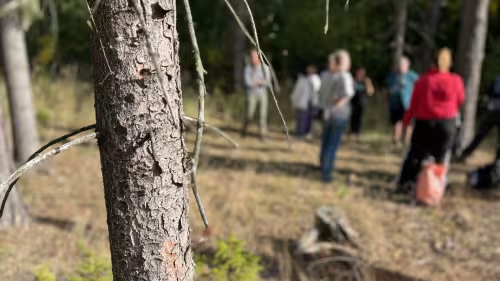
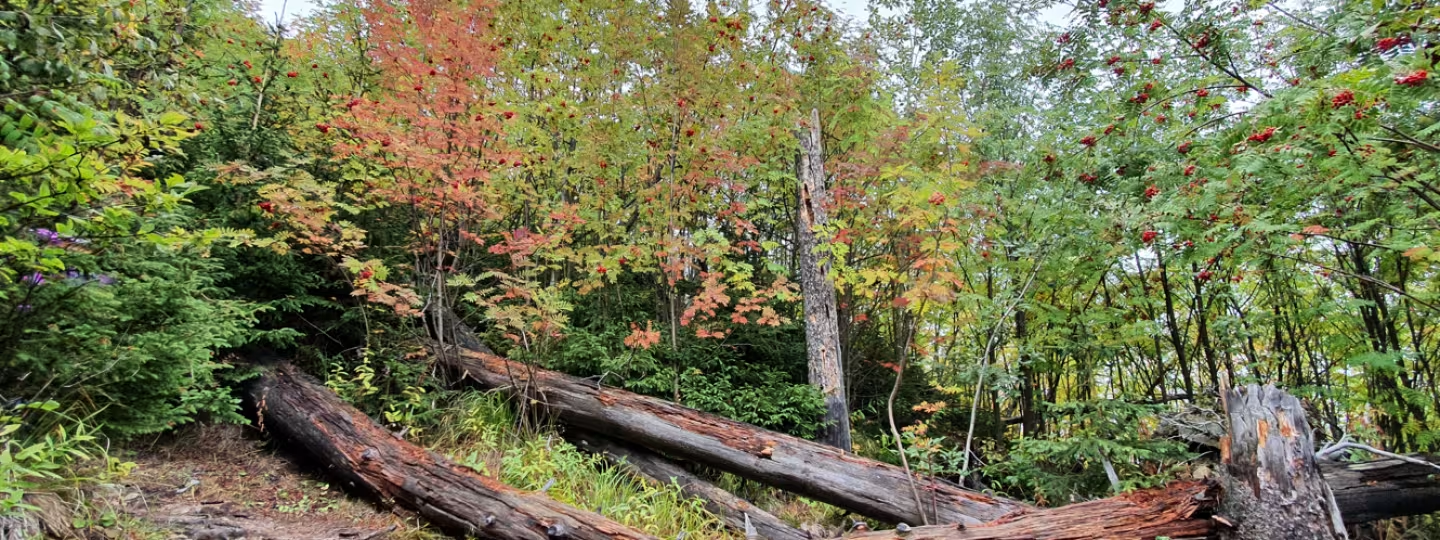
The first time I walked through a primary forest in the Low Tatras in Slovakia, I was struck by how different it looked and felt from the forests I had known before. Woody fungi called Polypores, larger than both of my hands emerged from the deadwood littered across the forest floor. Spruce trees bore horizontal scars left by three toed woodpeckers searching for insects beneath the bark. Beneath a tree more than 200 years old, a patch of cleared earth marked the resting place of a brown bear. At every step, the forest revealed something new and unexpected.
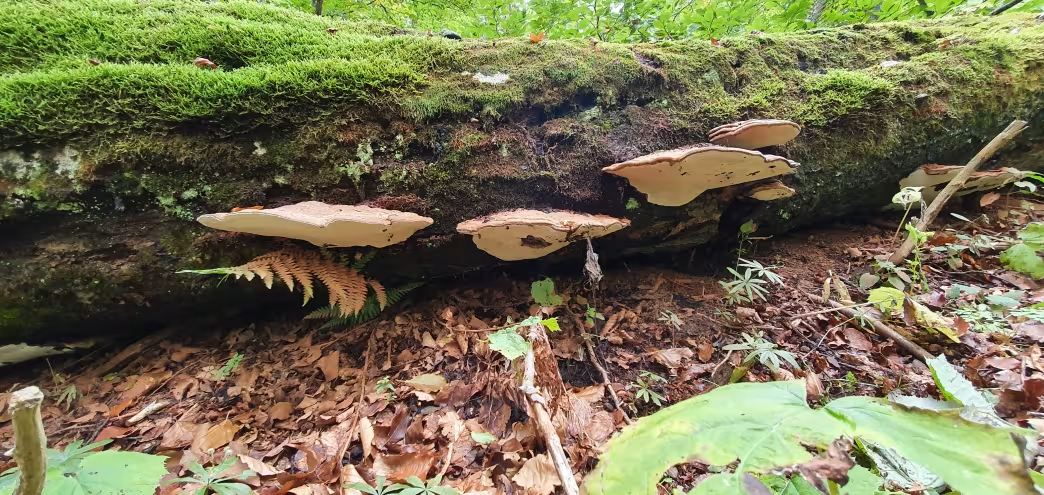
Amazing biodiversity: woody fungi called Polypores.
Photo by:
Marcus Lindner, European Forest Institute
These remaining primary and old-growth forests offer a rare glimpse into ecosystems that existed before centuries of intensive land use and forest management reshaped much of Europe. Today, however, they survive only in small, isolated fragments and continue to decline rapidly due to logging. Their loss is of particular concern because these forests support exceptionally high levels of biodiversity and provide important ecosystem services like carbon storage and water regulation.
Together with other researchers, I published a perspective article in Conservation Letters, titled Priority actions for the conservation of primary and old-growth forests in Europe. In the article, we examine how the recently adopted Nature Restoration Regulation could strengthen the long-term conservation of Europe’s remaining primary and old-growth forests. Although the EU Biodiversity Strategy for 2030 calls for their strict protection, the target is not legally binding and implementation has progressed slowly. We argue that, despite not explicitly referring to primary and old-growth forests, the Regulation nonetheless presents an exceptional opportunity to advance their conservation.
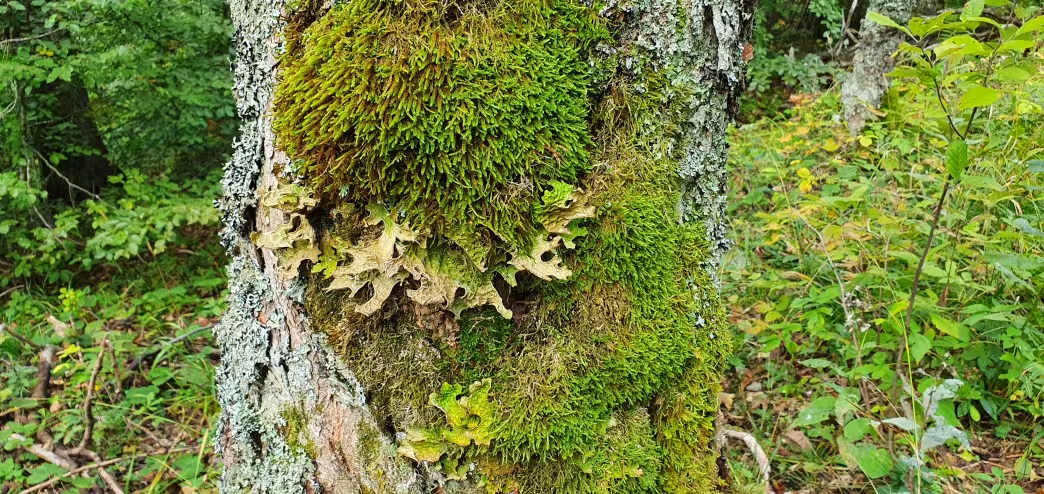
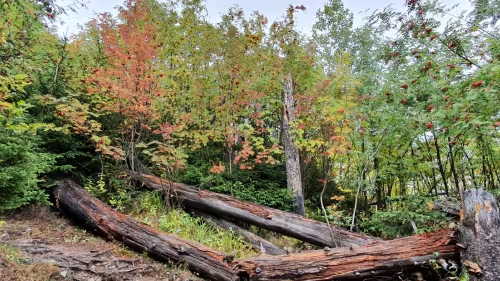
Ecosystem services: old-growth forest in Slovakia.
Photo by:
Marcus Lindner, European Forest Institute
We therefore identify four key problems for the conservation of these forests and propose four accompanying actions that we consider most urgent, while exploring how the Regulation could support their implementation (Table 1).
First, incomplete mapping and weak protection should be addressed by identifying barriers and introducing a logging moratorium for unprotected forests, including those that are unmapped.
Second, human pressures should be reduced even inside protected areas by banning logging, avoiding new roads, limiting infrastructure and recreation, and regulating hunting practices.
Third, because many forests are too small and fragmented, strict protection should be expanded and buffer zones established to maintain ecological processes and reduce external anthropogenic disturbances.
Fourth, connectivity between isolated forest patches should be improved and new old-growth forests should be developed through active restoration or by letting nature recover on its own passively.
The paper shows that conserving Europe’s primary and old-growth forests requires more than formal protection goals; it needs targeted, complementary action, which can be implemented under the Nature Restoration Regulation.
Table 1: Priority actions for improving the conservation of primary and old-growth forests in the EU and relevant articles for achieving them embedded in the National Restoration Regulation
| Problem | Priority action | Key elements | Link to NRR |
| Significant gaps in mapping and protection | 1. Assess progress and address barriers to identification, mapping, and protection; implement a logging moratorium | Identify implementation barriers to mapping and protection; integrate findings into EU progress assessments; impose a moratorium on mapped but unprotected and potential primary and old-growth forests | Article 4(12) non-deterioration clause |
| Anthropogenic impacts, also in protected forests | 2. Prevent degradation from anthropogenic pressures and protect natural processes | No new forest roads; no logging; limited infrastructure and recreation; relocation of ungulate hunting; ban on supplementary feeding | |
| Small, fragmented patches, limiting natural disturbance dynamics and increasing vulnerability | 3. Expand strict protection and establish buffer zones around primary and old-growth forests | Expand strictly protected area to meet minimum dynamic area; Establish protection and conservation buffer zones | Article 4(1) restoration of degraded habitat types listed in Annex 1 to good condition; Article 12(1) enhancement of forest; Article 12(3) increase in the national trend for at least six of the following seven indicators for forest biodiversity: standing deadwood, lying deadwood, share of forests with uneven-aged structure, forest connectivity, stock of organic carbon, and share of forests dominated by native tree species and tree species diversity |
| Fragmentation and isolation, which threatens persistence of associated species, lack of representative network of primary and old-growth forests | 4. Improve connectivity between primary and old-growth forests and create secondary old-growth forests through restoration | Restore patches of land to reconnect forests and promote secondary old-growth forests through passive and active restoration | |
With this article, we urge EU Member States to incorporate these priority actions into their national restoration plans before the end of 2026, providing an opportunity for the EU to move beyond broad political commitments toward concrete conservation outcomes for some of Europe’s most valuable and threatened forests.
Reference
O’Brien, L., Castelli, F., Felton, A., Kuemmerle, T., Mikoláš, M., Munteanu, C., Sabatini, F. M., Svensson, J., Svoboda, M., Vandekerkhove, K., Winkel, G., & Lindner, M. (2026). Priority actions for the conservation of primary and old-growth forests in Europe. Conservation Letters. https://doi.org/10.1111/con4.70054

Related content
How can we conserve primary and old-growth forests through the EU Nature Restoration Regulation?
The EU Nature Restoration Regulation could help conserve Europe's last primary and old-growth forests.
- Resilient forests
The EU Nature Restoration Regulation could help conserve Europe's last primary and old-growth forests
Our new Policy Brief identifies four actions EU Member States can take to strengthen conservation efforts.
- Resilient forests
The forest that refused the rulebook
Journalists, scientists and forest experts explore how different perspectives shape decisions on forest health and post-disturbance management in…
- Forests and people