How can we conserve primary and old-growth forests through the EU Nature Restoration Regulation?
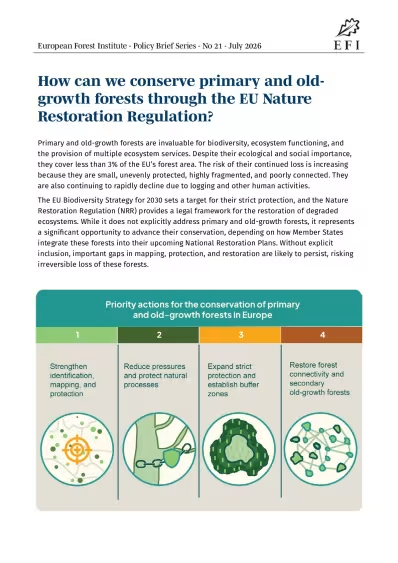
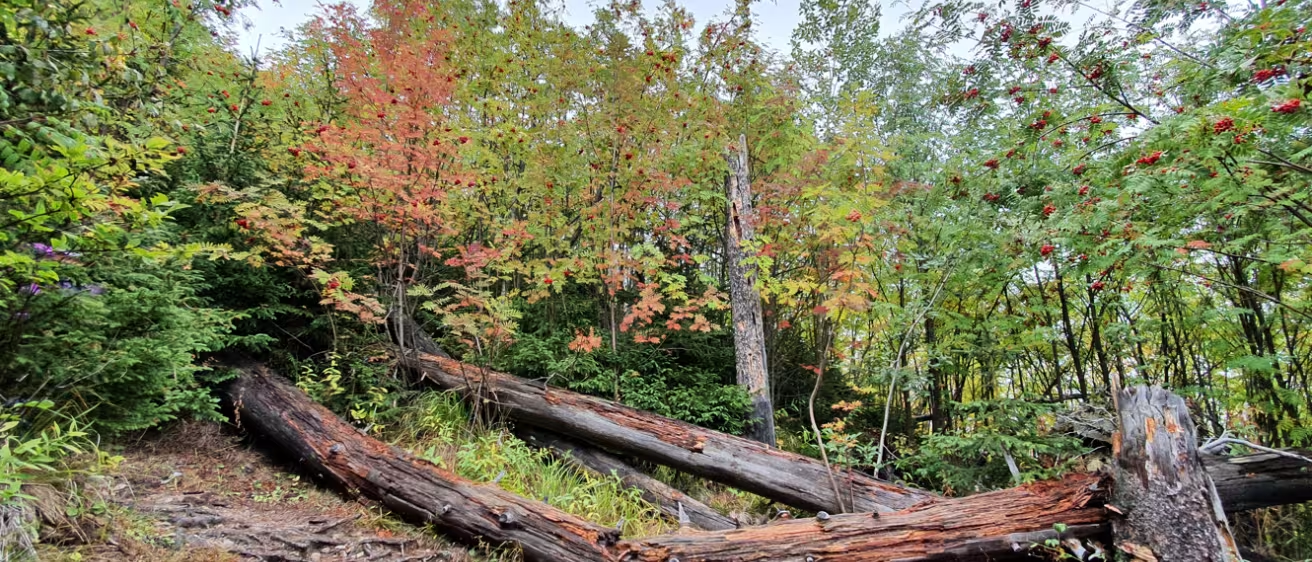
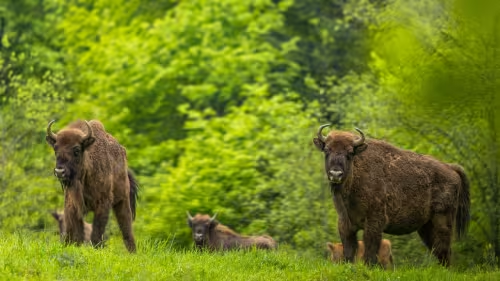
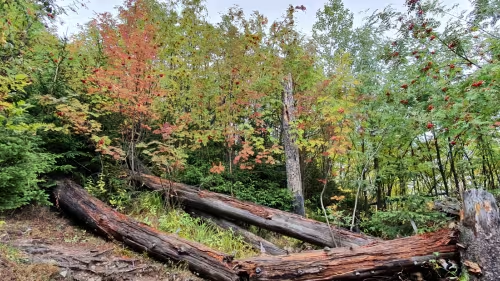
Old-growth forest in Slovakia.
Photo by:
Marcus Lindner, European Forest Institute
Primary and old-growth forests are invaluable for biodiversity, ecosystem functioning, and the provision of multiple ecosystem services. Despite their ecological and social importance, they cover less than 3% of the EU’s forest area. The risk of their continued loss is increasing because they are small, unevenly protected, highly fragmented, and poorly connected. They are also continuing to rapidly decline due to logging and other human activities.
The EU Biodiversity Strategy for 2030 sets a target for their strict protection, and the Nature Restoration Regulation (NRR) provides a legal framework for the restoration of degraded ecosystems. While it does not explicitly address primary and old-growth forests, it represents a significant opportunity to advance their conservation, depending on how Member States integrate these forests into their upcoming National Restoration Plans. Without explicit inclusion, important gaps in mapping, protection, and restoration are likely to persist, risking irreversible loss of these forests.
What could policymakers do?
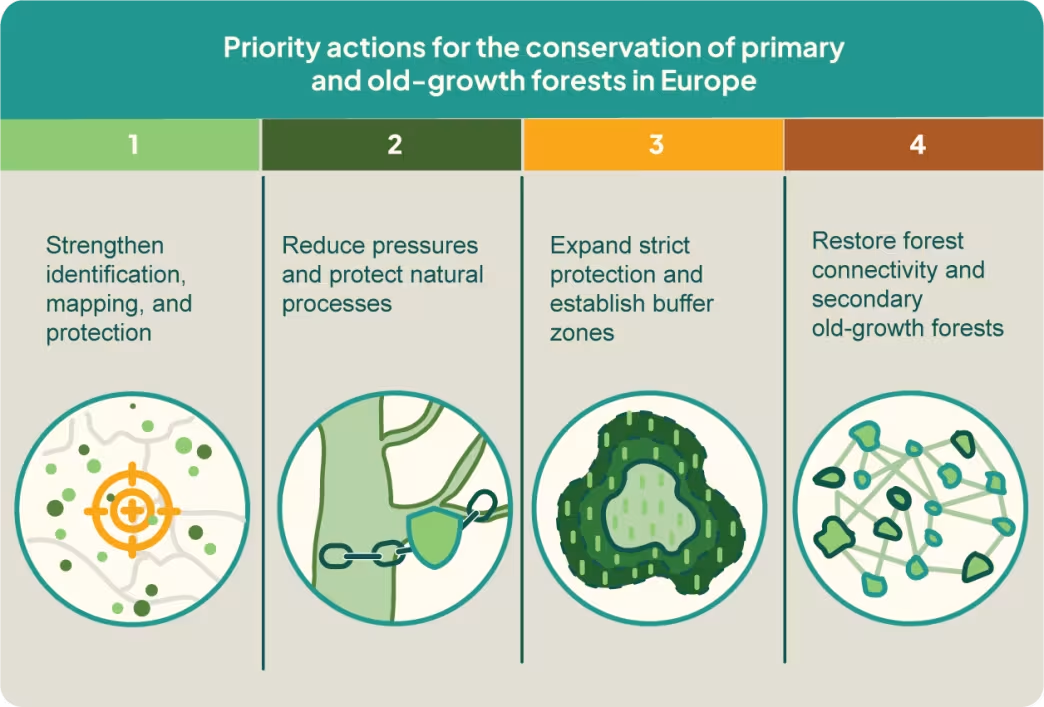
- Complete mapping and protection
Significant gaps remain in both mapping and protection. In the long term, Member States should identify barriers to progress, and the European Commission should integrate these findings into its assessment of the EU Biodiversity Strategy target on strict protection. In the short term, Member States could apply a precautionary approach, including a moratorium on the logging of mapped but not yet strictly protected primary and old-growth forests as well as forests that have a high likelihood of being primary or old-growth. Article 4(12) of the NRR provides a legal basis for preventing deterioration of Annex I habitats in good condition and can support such a moratorium where applicable.
- Prevent degradation and protect natural processes
Primary and old-growth forests remain subject to anthropogenic pressures (e.g. logging) even within protected areas. Article 4(12) of the NRR provides a legal basis to reduce these pressures and safeguard natural processes. Member States can use it to ensure: (1) no new forest roads in or around these forests; (2) exclusion of all logging; (3) infrastructure and recreational use only when compatible with conservation objectives; (4) the relocation of ungulate hunting outside these forests, and; (5) the banning of supplementary feeding of ungulates in and around these forests. - Expand strict protection and establish buffer zones
Primary and old-growth forests are typically small and therefore highly vulnerable to external pressures. Strict protection should be extended beyond remaining forest patches to include surrounding landscapes at ecologically sufficient scales to maintain key processes. Two types of buffer zones could be established: a smaller protection zone allowing only minimal interventions, and a broader landscape buffer to reduce intensive land use and other pressures. Articles 4(1), 12(1) and 12(3) of the NRR provide a basis for restoring adjacent degraded forests and designating them as strictly protected areas or buffer zones around primary and old-growth forests. - Restore connectivity and develop secondary old-growth forests
Restoration planning should improve connectivity between primary and old-growth forest remnants and support the development of secondary old-growth forests through passive, active, or mixed restoration approaches depending on local conditions. Articles 4(1), 12(1) and 12(3) of the NRR can be used to enable such restoration.
The Nature Restoration Regulation provides a significant opportunity to address longstanding gaps in the protection of Europe’s primary and old-growth forests. Outcomes will however depend on Member State implementation choices. Explicit inclusion of these forests in National Restoration Plans is necessary to prevent their further loss.
Citation
O’Brien, L. and Lindner, M. 2026. How can we conserve primary and old-growth forests through the EU Nature Restoration Regulation? EFI Policy Brief 21. European Forest Institute. https://doi.org/10.36333/pb21
Further reading
O'Brien, L., F. Castelli, A. Felton, et al. 2026. Priority Actions for the Conservation of Primary and Old-Growth Forests in Europe. Conservation Letters 19, no. 4: e70054. https://doi.org/10.1111/con4.70054


Related content
The EU Nature Restoration Regulation could help conserve Europe's last primary and old-growth forests
Our new Policy Brief identifies four actions EU Member States can take to strengthen conservation efforts.
- Resilient forests
Priority actions for the conservation of primary and old-growth forests in Europe
New paper outlines four priority actions to better protect Europe's remaining primary and old-growth forests.
- Resilient forests
Biodiversity credits: How to ensure their integrity and impact?
A glance into the challenges in biodiversity credits and how to ensure their integrity and impact.
- Resilient forests