Rethinking forest disturbances: How can rewilding support more resilient European landscapes?
When can Europe’s forests recover naturally after disturbance, and when is targeted management needed? A new policy brief jointly developed by WILDCARD and WildE, led by EFI, weighs the opportunities and risks of rewilding and offers practical recommendations for more resilient landscapes.
Climate change is reshaping Europe's forests. Droughts, storms, wildfires and bark beetle outbreaks are becoming increasingly frequent and intense, putting biodiversity, ecosystem services and forest resilience under growing pressure. At the same time, traditional approaches to forest management are being challenged by changing environmental conditions and the need to address both the climate and biodiversity crises.
Could rewilding be part of the answer?
A new policy brief, jointly developed by the WILDCARD and WildE projects and under the lead of EFI research, explores the relationship between rewilding and natural disturbances, highlighting how allowing natural processes to unfold can contribute to healthier, more diverse and climate-resilient ecosystems. It also examines the potential trade-offs and management challenges that need to be considered when integrating rewilding into European forest and land-use policies.
From disturbance as a threat to disturbance as an opportunity
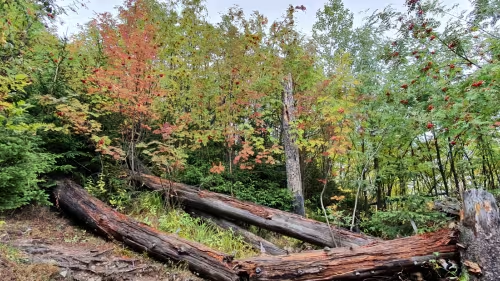
Natural disturbances have traditionally been viewed primarily as events to prevent, control or mitigate. However, growing scientific evidence shows that disturbances can also play an important ecological role. Drought-induced tree mortality, storms and bark beetle outbreaks, for example, can create canopy gaps, promote natural regeneration and favour tree species better adapted to changing climatic conditions. Deadwood generated by these processes also provides essential habitats and resources for a wide range of forest species.
Rather than automatically intervening through extensive salvage logging or artificial replanting, allowing some forests to regenerate naturally can help create more structurally diverse and resilient ecosystems over time.
Yet rewilding is not without challenges. In the early stages of natural succession, regenerating landscapes may be particularly vulnerable to drought and other disturbances. Increasing biomass accumulation can also contribute to wildfire risk under certain conditions. Furthermore, the expansion of forests and shrublands may come at the expense of valuable open habitats and the species that depend on them.
The policy brief therefore emphasises the importance of context-specific and adaptive approaches. Rewilding should not mean simply abandoning management, but rather combining natural ecological processes with strategic interventions where necessary. Measures such as targeted grazing, prescribed burning and planned vegetation management can help reduce wildfire risks while supporting biodiversity and ecosystem recovery. Landscape-scale planning is essential to balance these objectives.
Turning scientific evidence into policy action
Going beyond scientific insights, the policy brief translates the findings of a joint WILDCARD–WildE workshop on “Rewilding–Disturbance Interactions” into practical recommendations for decision-makers and practitioners.
The brief identifies priorities across several governance levels, from forest managers and regional authorities to national policymakers, European institutions and sustainable finance actors. Key recommendations include integrating natural disturbances into forest resilience strategies, supporting mixed and locally adapted management approaches, and strengthening monitoring and early-warning systems. Further suggestions are improving cross-sector collaboration, and aligning public funding instruments with biodiversity and ecosystem resilience objectives.
Ultimately, the brief calls for a shift towards more dynamic and flexible landscape governance – one that recognises the ecological role of natural disturbances while anticipating and managing the risks they may pose.
Related content
Interdisciplinary insights on climate-smart rewilding
Lessons from 30 years of rewilding show how adaptive thinking, policy support and partnerships can drive climate resilience and biodiversity.
- Resilient forests
Wildfires are Europe’s new normal: why we urgently need to act
EFI experts urge moving from managing each fire as an isolated emergency to managing fire risk across landscapes and throughout the year.
- Resilient forests
The EU Nature Restoration Regulation could help conserve Europe's last primary and old-growth forests
Our new Policy Brief identifies four actions EU Member States can take to strengthen conservation efforts.
- Resilient forests