Wildfires are Europe’s new normal: why we urgently need to act
Every summer, Europe faces another “unprecedented” wildfire emergency. Records are broken, communities are evacuated, economic, environmental and social loss rise, and political leaders promise urgent action. Yet when such unprecedented events occur year after year, we must ask whether they can still be considered exceptions, or whether they have become the new reality that experts have warned us about for years, but for which our policies remain dangerously unprepared.
With devastating wildfires again in the spotlight, the question is no longer whether Europe needs to act, but whether its policies can work together. Agriculture, forestry, biodiversity conservation, rural development and civil protection still operate through separate objectives, budgets and institutions, even though wildfire risk cuts across them all.
What causes extreme wildfire events?
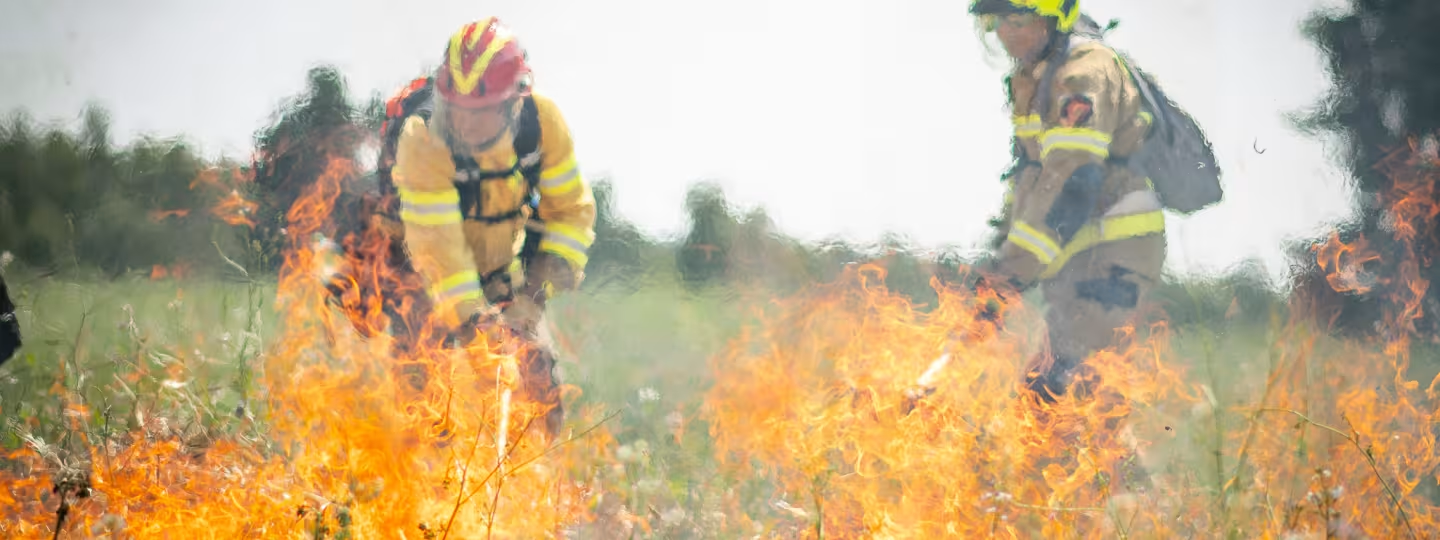
The fires near Bordeaux and Madrid this year have burned vast areas, displaced thousands of people and, at times, reached an intensity beyond the capacity of conventional firefighting. These events are not simply a matter of more ignitions. Wildfire disasters emerge when an ignition coincides with extreme heat, drought, strong winds and large quantities of combustible vegetation. Human activity may start many fires, but climate and landscape conditions determine whether they remain manageable or develop into extreme events.
Climate change and other contributing risk factors
Climate change exacerbates the conditions making wildfires more likely to occur. Higher temperatures and prolonged drought dry out soil and vegetation, while successive heatwaves can push forests beyond the conditions in which firefighters can safely and effectively operate. EFI fire expert Alexander Held has warned that some recent fires have reached an intensity at which additional firefighters and aircraft alone cannot bring them under control. Wildfire is also no longer only a southern European concern: serious risks are emerging in Central and Northern Europe.
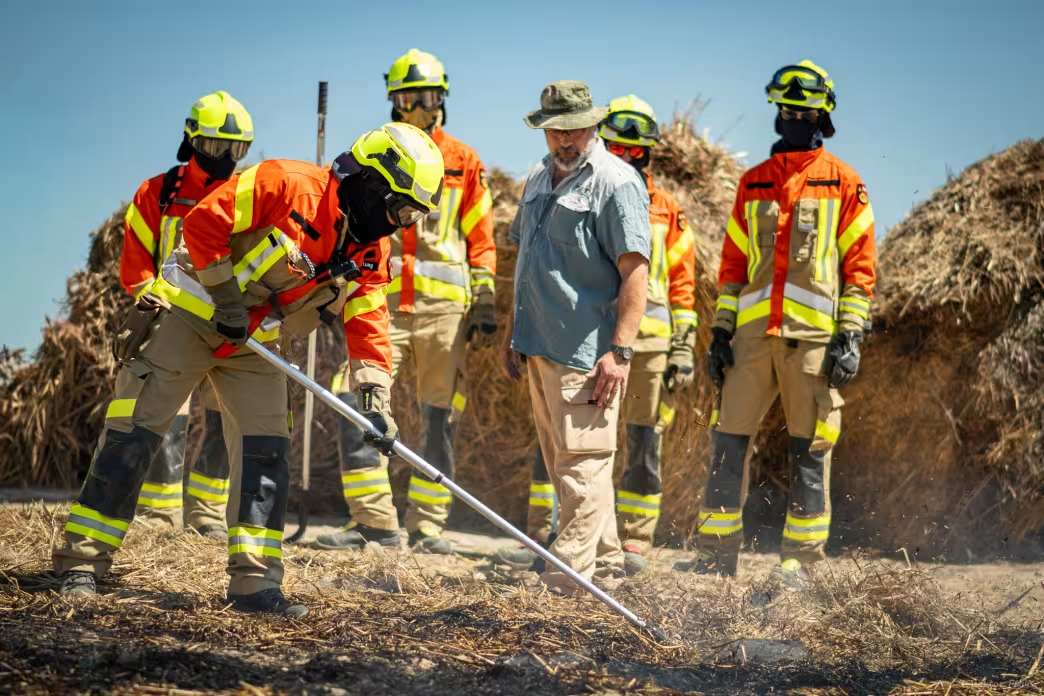
EFI Senior Expert Alexander Held, coordinating a fire practice exercise in the Forest Camp 2026.
Photo by:
Wiktor Feliks
But climate change is only part of the picture. We must also examine how those landscapes are managed and the policies shaping them. There is no single European land-use story. In some regions, abandonment, declining grazing and reduced management allow combustible vegetation to accumulate on the forest soil. Elsewhere, intensive agriculture and forestry have created simplified landscapes dominated by a limited number of crops or tree species. Although these processes are very different, both can reduce landscape diversity and increase vulnerability to extreme fires.
A new approach is needed: from emergencies to prevention
Europe already has valuable examples of sustainable forest management practices, agroforestry, and silvopastoral systems that combine production with ecological resilience. The challenge, therefore, is not to promote one model, but to create diverse and resilient landscapes adapted to local conditions.

“The wildfire crisis shows why Europe can no longer develop agricultural, forest, conservation, rural development, and civil protection policies in isolation. These policies must work together, draw on the latest scientific evidence and expert knowledge, and support prevention, resilient landscapes and empowered communities throughout the year, not only mobilise once fires have already become emergencies.”
EFI’s recent Policy Brief, Integrated Fire Management – empowering action for a fire-resilient Europe, provides a practical framework for policy action at European, national, and regional levels. In addition to shifting from suppression to prevention, the brief calls for integrated wildfire management across the full risk-management cycle, including prevention, preparedness, response, recovery and long-term landscape resilience. It recognises wildfire as both a land-management and societal challenge, requiring coordinated action across ecology, rural development, governance, and emergency management.
Resilient landscapes, empowered people, and coordinated leadership
Effective firefighting will always be essential. But Europe cannot extinguish its way out of the combined effects of climate change, accumulated fuel, and changing land use. Resilience must be built before fires begin.
Active forest and landscape management can reduce the amount and continuity of combustible vegetation. Locally adapted measures such as strategic grazing, biomass removal, agroforestry, and carefully managed prescribed burning can help create diverse landscape mosaics in which fires are less able to spread unchecked. Forest diversification and the restoration of more species-rich, structurally varied forests can also improve resilience to drought and fire.
Communities should be empowered to help prevent wildfires and prepare for those that do occur. Residents need support to manage vegetation around homes, develop evacuation and communication plans, and understand why prescribed burning or vegetation removal may sometimes be necessary. Farmers, foresters, firefighters, conservation bodies, and local authorities should jointly identify where intervention is most urgent.
Europe does not lack policy objectives. It lacks effective mechanisms for reconciling them across sectors, administrative levels and landscapes. Agricultural, forestry, conservation, rural development, and civil protection policies can still pursue separate objectives and, in some cases, work at cross purposes. Measures supporting afforestation, agricultural production, biodiversity or rural development should therefore be assessed for their effects on wildfire risk.
Funding must also make long-term prevention economically viable. It should reward the public services provided by land managers who reduce fuel loads, maintain grazing, and restore resilient landscape mosaics. Policies and interventions should draw on the latest scientific evidence and expert knowledge while remaining adapted to local ecological and socioeconomic conditions.
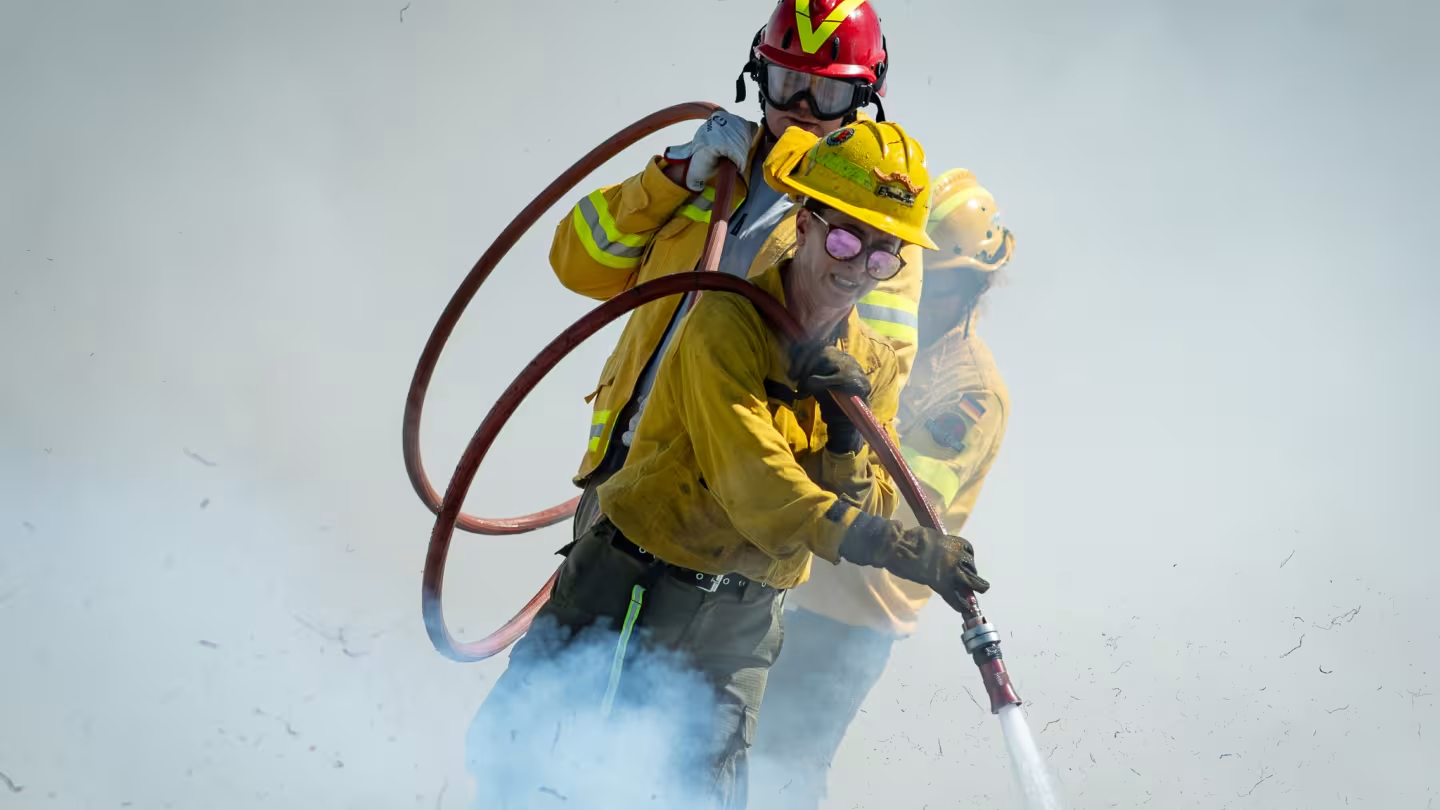
Elizabeth Hoover, Associate Professor of Environmental Science, Policy, and Management of the
University of California, Berkeley, during the Forest Camp 2026 co-organised by FoRISK.
Photo by:
Wiktor Feliks
An opportunity for Europe to act now
The EU policy recommendation on integrated wildfire risk management, launched in March 2026, provides a common framework across the full disaster risk-management cycle. The priority now is its implementation, supported by sustained funding, institutional coordination, and practical capacity.
FoRISK, the pan-European implementation mechanism of FOREST EUROPE coordinated by EFI, can help translate this framework into action. It supports integrated approaches to forest risks, develops practical training on wildfire preparedness, prevention and suppression, and facilitates knowledge exchange among policymakers, practitioners, and researchers.
The opportunity, like the danger, is real and present. Extreme wildfire events can be tackled, not only in the moment with water, planes, and astonishing human bravery, but through year-round, integrated strategies that shape new land and societal relationships for a wildfire-resilient Europe. Preventive measures and integrated fire management may be less visible and attract fewer headlines, but over time they can reduce the human, environmental, and economic toll when landscapes burn.


Related content
New factsheet highlights fire-resilient forest management in Switzerland
FoRISK and FOEN launched a factsheet on Alpine wildfire risks, promoting fire-resilient forest management and long-term prevention.
- Resilient forests
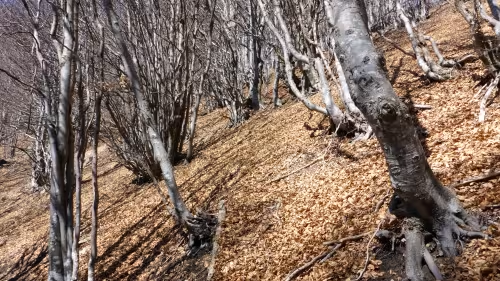
EU Forest Directors' discussion on wildfire risk turns on integrated management
EFI was represented by Silvia Abruscato and Robert Mavsar at the EU Forest Directors-General meeting in Cyprus.
- Resilient forests
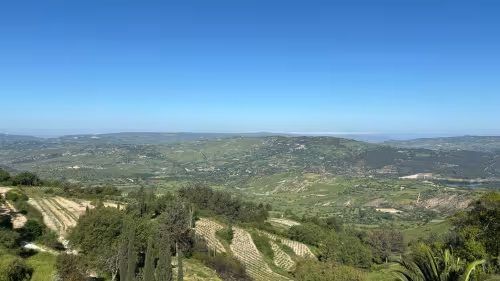
EFI Mediterranean Network Forum 2026 closes with concrete outputs in Valencia
The Forum addressed some of the most pressing challenges facing Mediterranean forests today: climate change, biodiversity loss, and more.
- Resilient forests