The European Deforestation-free products Regulation
– lessons learned and challenges ahead
Photo by:
Pixel Commerce Co, Adobe Stock
The Deforestation-free products regulation will enter into force on 30 December 2025, with an additional six months compliance period granted to micro or small operators. The regulation covers palm oil, cattle, soy, coffee, cocoa, timber, rubber, and derived products, such as beef, furniture, or chocolate. It aims to ensure that EU consumers have access to products that do not contribute to deforestation and forest degradation.
Countries in and outside the European Union, and especially the respective private sector, are developing approaches to meet EUDR requirements. It is important to better understand and exchange experiences on how actors address supply chain traceability, conduct and monitor risk-based due diligence, enforce compliance, and prevent leakage, as well as the challenges they face in doing so.
This ThinkForest event:
- provided updates on how countries in the Global South are preparing for the implementation of the EUDR and share learnings,
- encouraged dialogue and exchange of experiences among representatives from EU and non-EU countries and experts.


Related content
Unpacking the EU Deforestation Regulation for the coffee sector
This factsheet explains how the EUDR applies to the coffee sector, covering traceability, geolocation, due diligence, deforestation-free value chains.
- Sustainable economy
Technical facility on deforestation-free value chains
We collaborate with commodity-producing countries to assist in transitioning to legal and deforestation-free value chains.
- Sustainable economy

EFI Commodity Converter
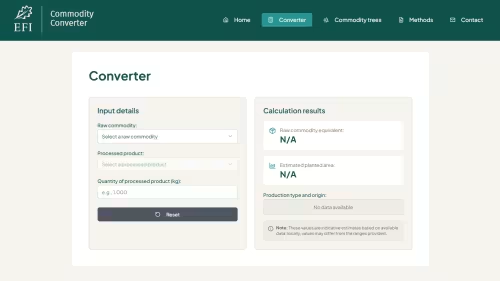
The EFI Commodity Converter offers an easy way to convert processed agricultural products into raw commodity equivalents.
- Sustainable economy