Photo by:
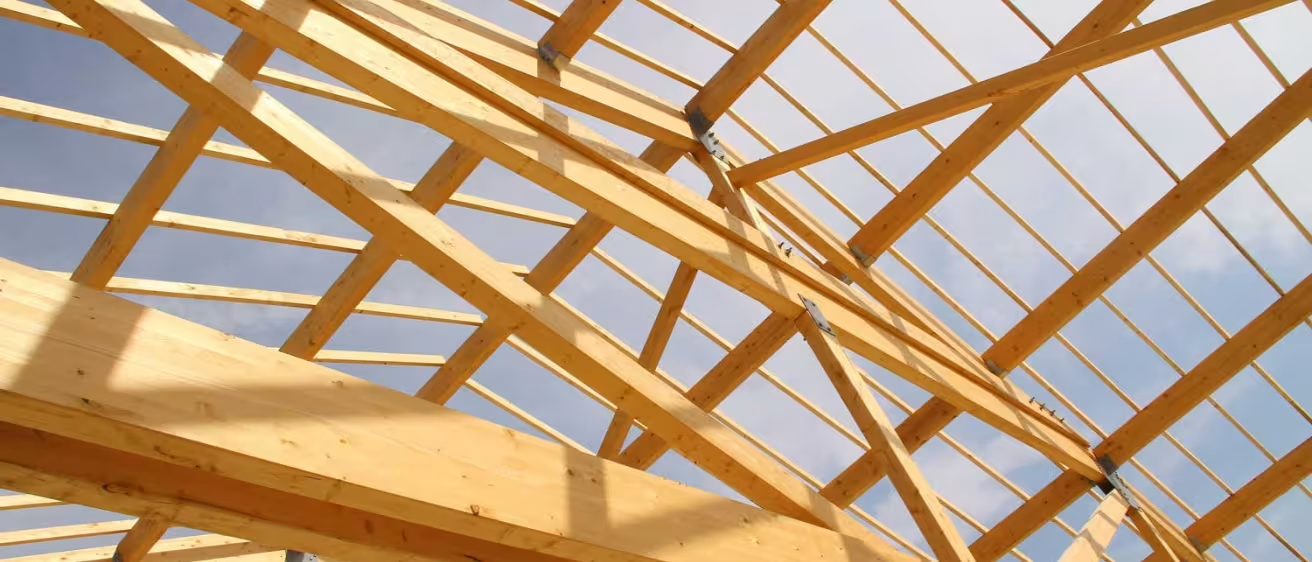
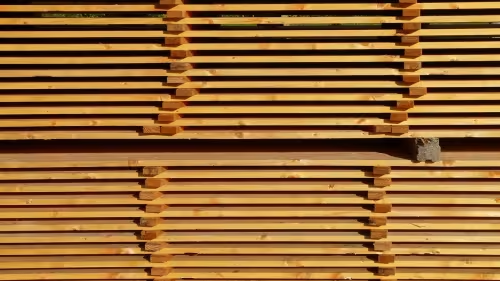
Photo by Frederic Combes / AdobeStock
What is at stake?
Combating climate change necessitates a global transformation to decarbonize the world. Buildings and construction play a critical part in this transition – using engineered wood for constructing buildings helps avoid emissions associated with conventional materials in the short term while also acting as a carbon sink in the long run. Wood is a renewable resource with one of the smallest carbon footprints of any comparable, newly used building material.
Environmental impacts – what do we know?
Modern wood buildings are often associated with lower environmental impacts compared to buildings made from other materials. This conclusion depends on the building type, production technology, methodological assumptions and data used. Aside from the environmental performance of engineered wood products, building sustainability criteria and product post-use considerations are critical. As modern wooden buildings and their building systems are still relatively new, studies are still limited.
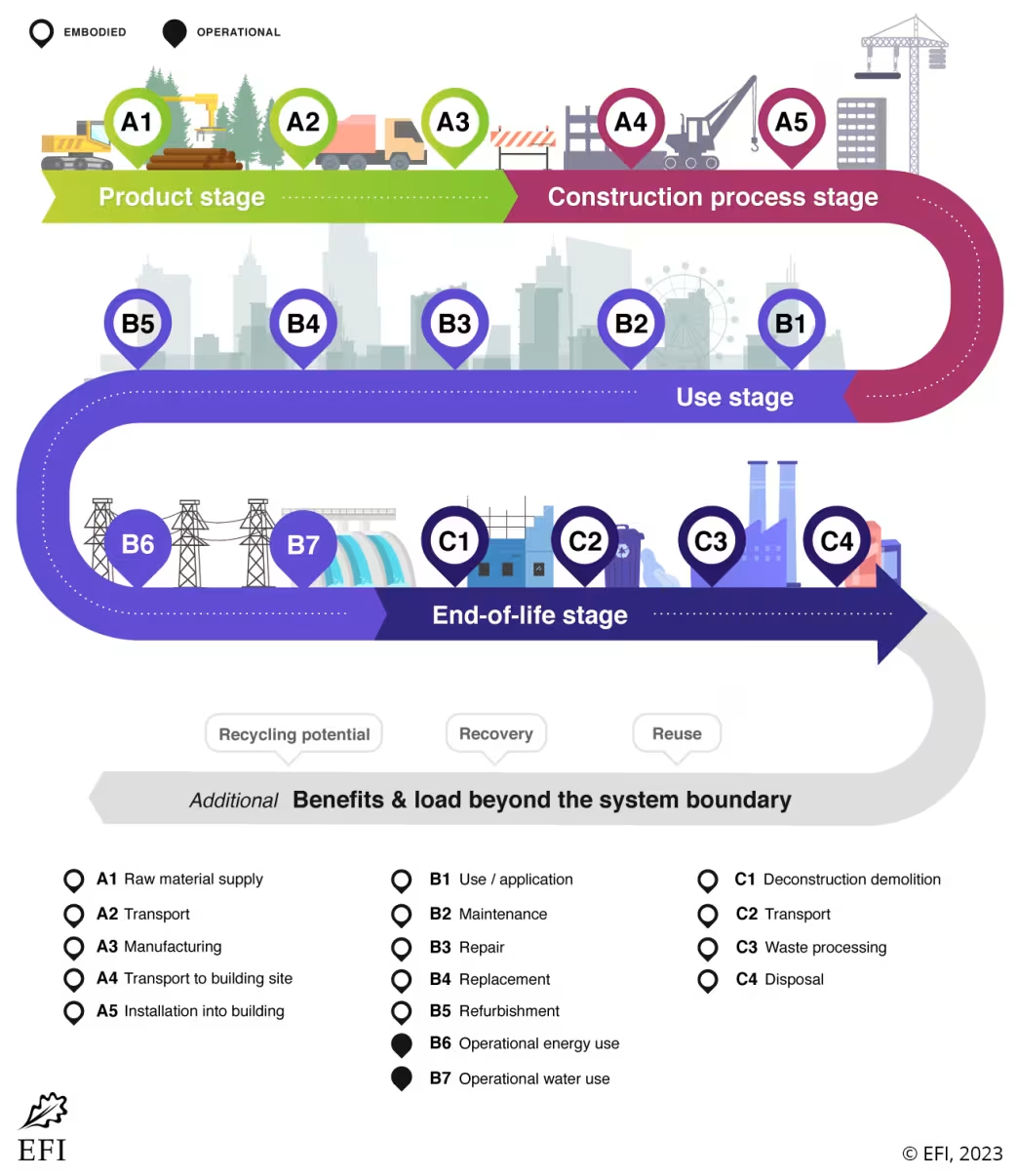
Building life cycle stages
The wider adoption of wood in modern buildings is limited by:
- National building codes, although recently national building codes have changed in some countries (e.g., National Building Code of Canada 2020) to lift the impediment to designing buildings with wood as a structural material.
- Limited wood design expertise in the value chain, making the use of engineered wood as a structural material challenging. This is due to e.g., a lack of systematic cooperation for knowledge transfer, as well as a lack of educational programmes and training.
- Insurance issues, difficulties to access capital, volatile timber prices, cost of procurement, special fire protection requirements, and a shortage in skilled workforce are all associated with economic factors and increased costs.
- Technical aspects in relation to high fire risk and wood deterioration due to moisture are a barrier for using wood in construction. Both are linked to misconceptions and past events involving fire and moisture in buildings. When experienced experts are involved in the design process, modern wood structures are constructed with great durability and state-of-the-art fire safety engineering considerations.
Key messages:
- Invest in the development of more environmentally friendly adhesives or technologies that reduce chemical input while maintaining the structural integrity of modern engineered wood. This will both reduce embodied environmental impacts and increase circularity potential.
- Develop clear policies and policy instruments for integrating circularity into value chains to maintain the high value of engineered wood in modern wood buildings. Establishing new value chains that facilitate reuse and recycling at the end of lifecycle could enable circularity and motivate the design of buildings for disassembly.
- Apply collaborative working methods to bridge designers, manufacturers and construction companies. Building eco-design is identified as a critical element for modern wood buildings that should be incorporated early in the design process to ensure overall sustainability and support increased wood utilization efficiency at end-of-life.
- Include other environmental impacts and overall sustainability in wood product value chains, besides putting an emphasis on carbon.
Please note: Modern wood buildings may replace buildings made from other materials (e.g., concrete, steel) and thereby avoid or reduce greenhouse gas emissions associated with the production, use and disposal of these products. See Verkerk et al. 2022 (https://doi.org/10.4060/cb7274en) for more information on such climate-related substitution effects.
Reference
Orfanidou, T., Hassegawa, M. 2023. Environmental impacts of modern wood buildings. Policy Brief 6. European Forest Institute. https://doi.org/10.36333/pb6
More details with regards to wood-based textiles and modern wooden buildings:
Orfanidou, T., Hassegawa, M., Leskinen, P., Sixta, H., Oinas, P., Cardellini, G. 2023. Wood-based textiles & modern wood buildings. Knowledge to Action 6, European Forest Institute. https://doi.org/10.36333/k2a06


Related content
Building the Future: Wood, Bioeconomy and the New Bauhaus
This ThinkForest event explores how wood and other bio-based materials can contribute to a sustainable and climate-neutral European built environment.
19 November 2026, 09:00–11:30
- Sustainable economy
Mapping wood flows to final product and energy uses in 2021 in the European Union
This study presents a material flow analysis of wood use across the European Union in 2021, tracking flows from forest harvest to end-of-life.
- Sustainable economy
Environmental impacts of wood-based textile fibres
The environmental performance of wood-based textile fibres is dependent on the benchmark used in assessments and the value chain’s complexity.
- Sustainable economy