Greater thermophilisation in communities of juveniles than adults in temperate European forests
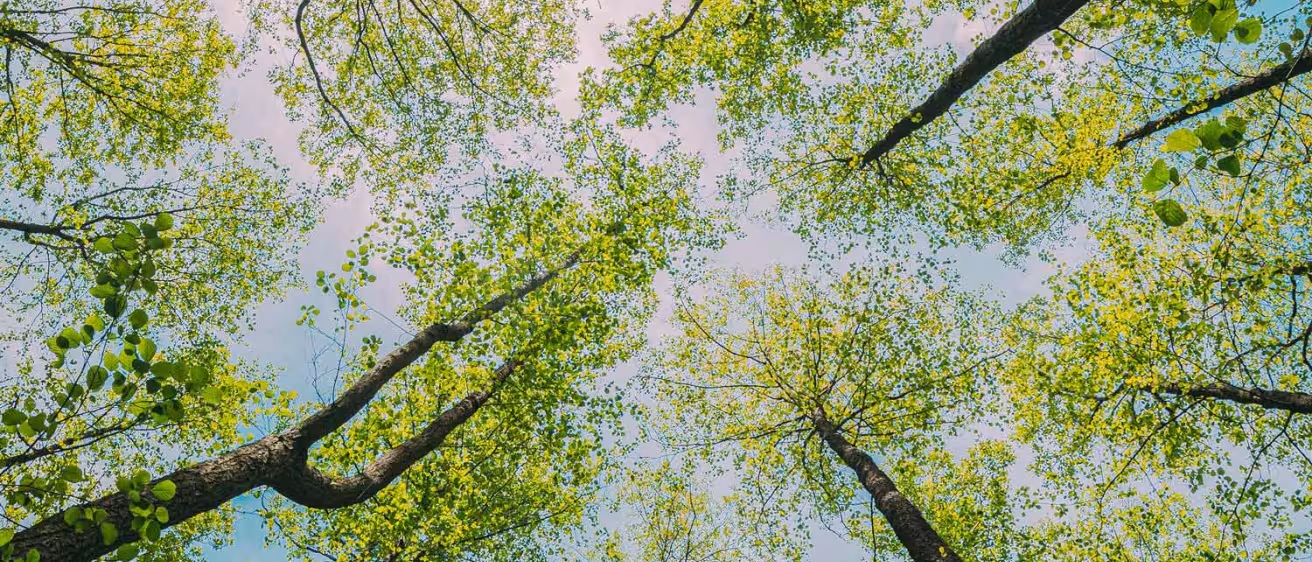
Photo by:
Great Brut Here
Abstract
Warming of the climate system is increasing the dominance of warm-adapted species, a process referred to as thermophilisation. In forests, adult trees in the forest canopy experience warmer daytime summer conditions than juveniles in the understorey, but they are less susceptible to warming. These differences can result in differing thermophilisation rates between adults and juveniles. Here, we quantify for the first time the long-term thermophilisation of tree species in temperate European forests, comparing adults with juveniles.
Citation
Caron, M. M., P. Vangansbeke, F. Zellweger, et al. 2026. “ Greater Thermophilisation in Communities of Juveniles Than Adults in Temperate European Forests.” Journal of Vegetation Science 37, no. 1: e70111. https://doi.org/10.1111/jvs.70111

Related content
Wood type influences tree responses to recurring hot and dry summer tree water deficits across European forests
Article shows that wood type and its associated functional traits influence tree responses to recurring stem dehydration periods.
- Resilient forests

Climate change will increase forest disturbances in Europe throughout the 21st century
Grünig et al. projected changes in disturbance rates and tree mortality across Europe in the 21st century under three climate change scenarios.
- Resilient forests
New open-source tool models how forest soils respond to climate and management change
HoliSoils' new me4soc tool lets managers and researchers simulate how forest soil carbon responds to climate, land-use, and management change.
- Resilient forests