How can we effectively maintain and enhance forest biodiversity in Europe?
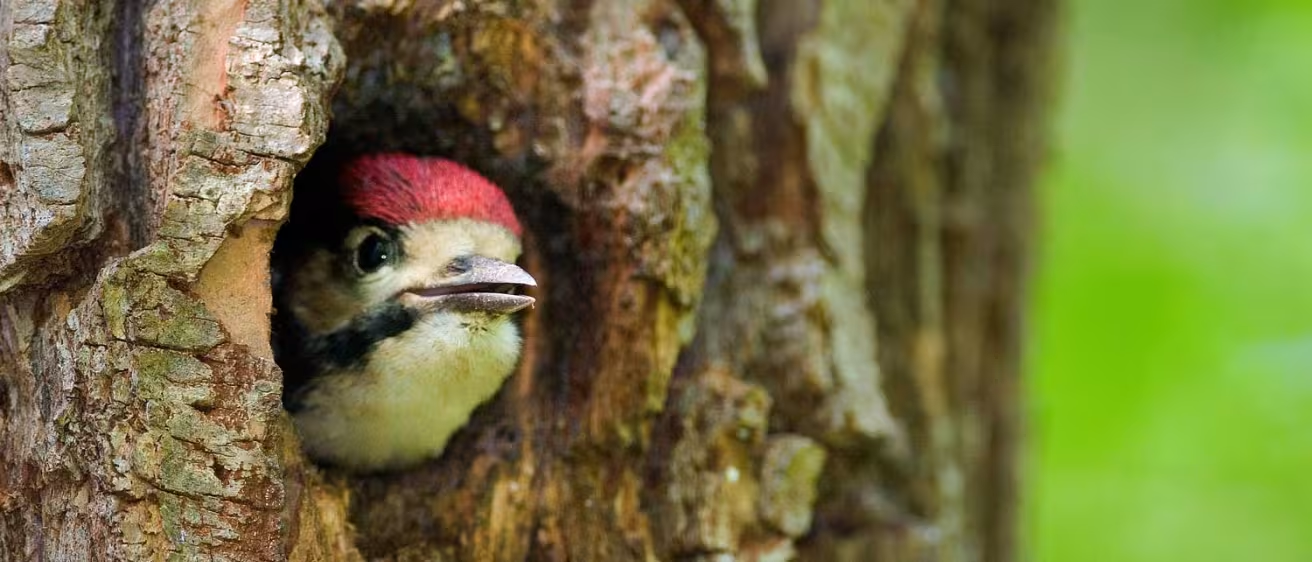
Photo by:
Goran / AdobeStock
What is at stake?
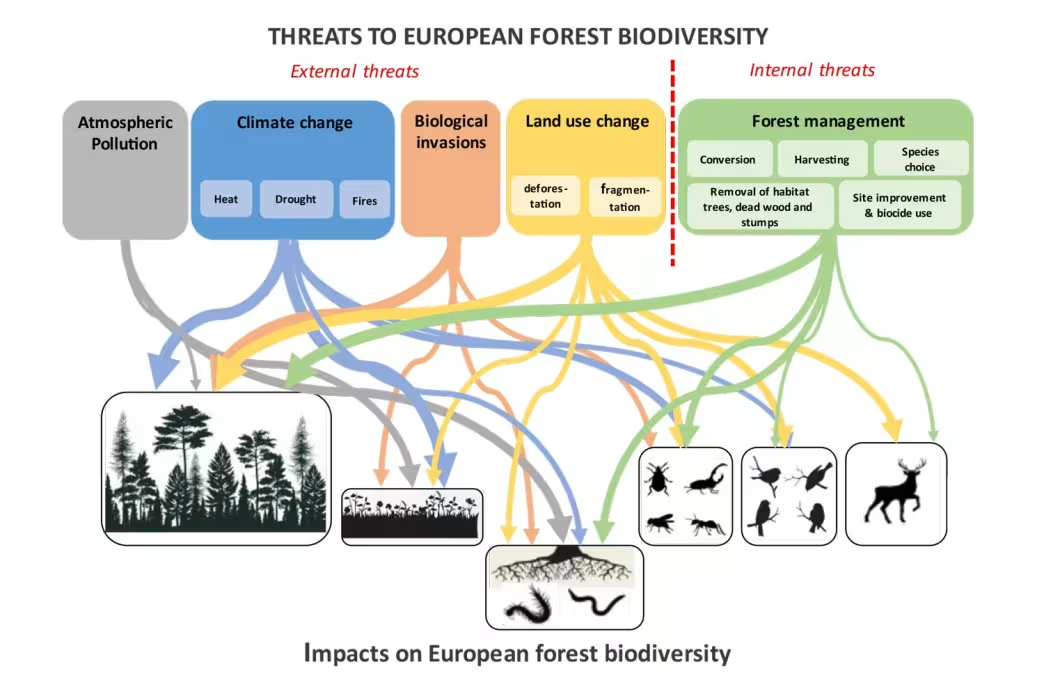
External and internal threats interact, increasing the overall vulnerability of species and even entire forests.
- Forest biodiversity in Europe has suffered from atmospheric pollution, more than in any other continent.
- Efforts to mitigate climate change continue to be urgent to preserve European forest biodiversity.
- Invasive species of plants, pests and diseases increasingly impact European forests and can profoundly threaten biodiversity by dominating or devastating local ecosystems.
- Expanding forested areas via land abandonment and active reforestation (e.g. in Mediterranean and mountain areas) can cause a loss of non-forest biodiversity.
- Different forest management practices have different impacts on biodiversity. Biodiversity in managed forests is of-ten much lower than in natural forests, due to a lack of diversity of tree species, of tree age differences, and of dead-wood and tree-related microhabitats. Smart management practices can improve biodiversity in managed forests.
- The lack of coordination on what and how to monitor has hampered efforts to build a standardised, EU-level over-view of forest biodiversity trends.
Forest (biodiversity) management – what should we do?
- Adopt more stringent conservation measures for forests that are home to species under threat, including the unique primary, old-growth and ancient forests that Europe still has.
- Include more biodiversity-friendly measures in the forest management portfolio.
- Use hands-on nature-positive management in every forest managed for wood production including plantation forests, for the sake of climate adaptation and overall forest stability.
- Promote ecosystem management, including variants of close-to-nature forest management to embrace varied disturbances and support bio diversity.
- Use a Triad approach combining various management intensities on a landscape scale to conserve a broad range of biodiversity while provisioning the circular bioeconomy.
How should the policy landscape and finance respond?
Conserving and increasing biodiversity is a shared task that needs to be undertaken ambitiously by European forest managers and owners, public and private institutions, and the general public. It requires broad institutional and financial support.
- Ensure support from all sectors and actors at multiple levels to curb biodiversity loss.
- Take into account the considerable time lag between new policies and their biodiversity impacts.
- Expand the mix of tailor-made financial and other instruments.
- Explore the use of market-driven instruments (e.g. reverse auctions and biodiversity offsets).
- Optimize biodiversity measures by taking advantage of the strong regional differences in biodiversity legacies, ecosystem services demands and management traditions.
Forests are crucial havens for much of Europe’s biodiversity. Forest ecosystems include both natural and managed forests and provide habitats for plant and animal species. Biodiversity has also cultural and aesthetic values, and there is clear evidence that biodiversity contributes to ecosystem productivity, stability and multifunctionality. Biodiversity loss is a major threat to ecological, social and economic resilience.
Reference
Muys, B., Angelstam, P., Bauhus, J., Bouriaud, L., Jactel, H., Kraigher, H., Müller, J., Pettorelli, N., Pötzelsberger, E., Primmer, E., Svoboda, M., Thorsen, J.B., Van Meerbeek, K. 2022. How can we effectively maintain and enhance forest biodiversity in Europe? Policy Brief 1. European Forest Institute. https://doi.org/10.36333/pb1
ISBN 978-952-7426-24-1 (pdf)
ISSN 2814-8150 (pdf)

Related content
Forest resilience and disturbance: What role does biodiversity play?
This brief shares insights as to what policymakers and forest managers can do to enhance biodiversity.
- Resilient forests
Comment pouvons-nous préserver et améliorer la biodiversité des forêts en Europe ?
Analyses scientifiques accessibles sur la biodiversité forestière, identifiant menaces clés et actions pour la gestion, les politiques et la finance.
- Resilient forests
Wie können wir die Biodiversität in den Wäldern Europas effektiv erhalten und verbessern?
Accessible science-based insights on forest biodiversity, outlining key threats and actions for management, policy and finance.
- Resilient forests