Photo by:
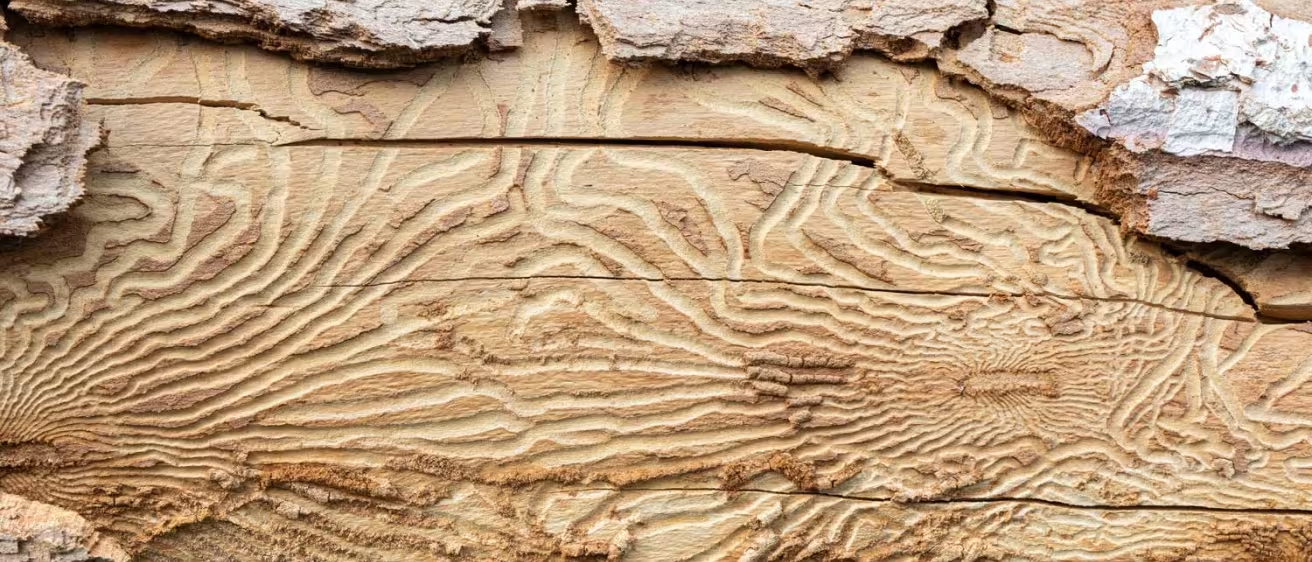
Photo by Olya / AdobeStock
Natural disturbances are important drivers of forest ecosystem change. Canopy openings caused by disturbances promote tree regeneration and increase species diversity. However, disturbances can also cause ecosystem degradation, widespread tree mortality and damage large amounts of wood, potentially transforming forests from sinks to net carbon sources.
Large-scale disturbance increases may:
- counteract the implementation of improved and climate-smart forest management to mitigate climate change, hampering the achievement of EU climate targets;
- strongly disrupt long-term forest planning in disturbance hotspot regions, making it difficult to ensure sustainable harvesting and ecosystem services provisioning, and heavily affecting local economies, human wellbeing and safety.
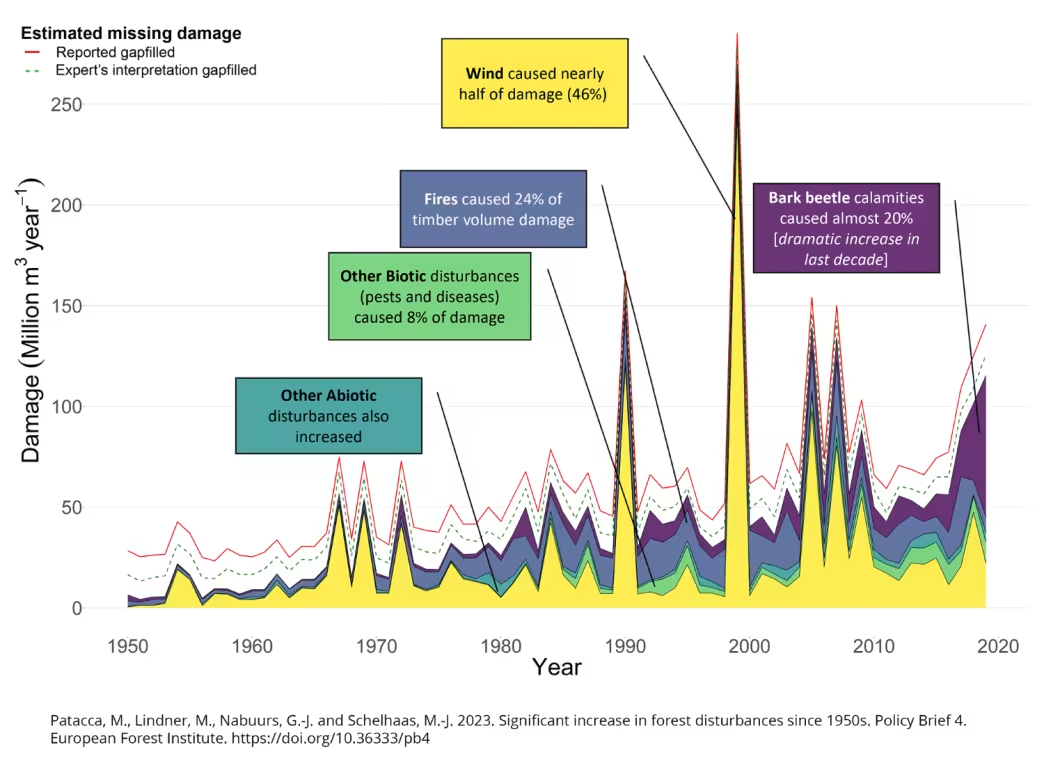
Total estimated disturbance damage and reported damage by disturbance agent. The results are based on the updated Database (DFDE) which contains 173,500 records from 600 sources in 34 countries (1950-2019). To gap-fill reporting data machine learning models (alone / in combination with disturbance experts’ knowledge) were used.
Key trends explained
- Wind disturbances caused 46% of total timber volume damage. The majority were extreme windstorms (peaks), supplemented by widespread chronic damage with particularly high rates in the 1990s and 2000s.
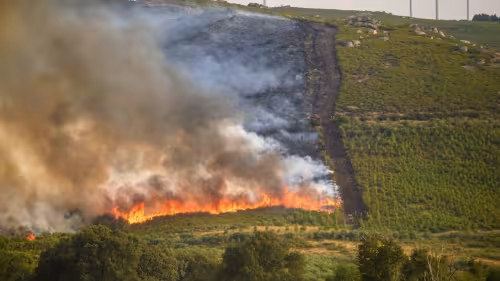
- Forest fires were responsible for 24% of total timber volume damage. In the 1970s and 1980s, there was a significant increase in fire disturbance, followed by two opposing trends. Smaller and average-sized fires have decreased since the late 1990s as a result of improved fire management, detection and control, but climate change related mega-fires increased. Most recent research predicts that fire size and severity will increase across all European biomes under future climate conditions.
- Almost 20% of damage was caused by bark beetle calamities with a dramatic increasing trend in the last decade. The years 2020 and 2021, which had even greater damage, were excluded.
- Pests and diseases (other biotic damages) accounted for 8% of total timber damage with the strongest positive trend and a sharp increase after the 1980s, most likely influenced by climate change.
- Other abiotic disturbances (e.g. due to snow and ice) increased, with certain years (e.g.2007) exhibiting high damage peaks.
Incomplete reporting on forest disturbances
Reporting practices vary greatly between countries. Data analysis revealed that consistent data collection on disturbance events is lacking, particularly for the reporting of smaller, dispersed damage. Moreover, other biotic disturbances (with greatest damage increase) are among the most widely underreported disturbance agents.
What can we do?
A harmonized, consistent and near-real-time pan-European monitoring and reporting system of forest disturbances is needed, with improved data collection on small disturbance impacts. This will enable us to understand and systematically study the forest-climate-disturbance nexus.
A combination of ground-based observations and remote sensing is necessary for a consistent monitoring and reporting system.
Special efforts are required to better understand disturbance dynamics, especially the expected increase of drought and biotic agents, as well as disturbance interactions.
Reference
Patacca, M., Lindner, M., Nabuurs, G.-J. and Schelhaas, M.-J. 2023. Significant increase in forest disturbances since 1950s. Policy Brief 4. European Forest Institute. https://doi.org/10.36333/pb4
Further reading:
Patacca, M., Lindner, M., Lucas-Borja, M.E., Cordonnier, T., Fidej, G., Gardiner, B., Hauf, Y., Jasinevičius, G., Labonne, S., Linkevičius, E., Mahnken, M., Milanovic, S., Nabuurs, G.-J., Nagel, T.A., Nikinmaa, L., Panyatov, M., Bercak, R., Seidl, R., Sever, M.Z.O., Socha, J., Thom, D., Vuletic, D., Zudin, S., Schelhaas, M.-J. (2023). Significant increase in natural disturbance impacts on European forests since 1950. Global Change Biology, 29(5):1359-1376. https://doi.org/10.1111/gcb.16531
Grünig, M., Seidl, R., Senf, C. (2023). Increasing aridity causes larger and more severe forest fires across Europe. Global Change Biology. https://doi.org/10.1111/gcb.16547


Related content
The future of European forest disturbance regimes
The increase of forest disturbances in Europe is projected to continue, reaching unprecedented levels in the second half of the 21st century.
- Resilient forests
Integrated Fire Management – empowering action for a fire-resilient Europe
The mitigation of wildfire impacts in Europe necessitates moving beyond reactive suppression towards Integrated Fire Management.
- Resilient forests
- Resilient forests