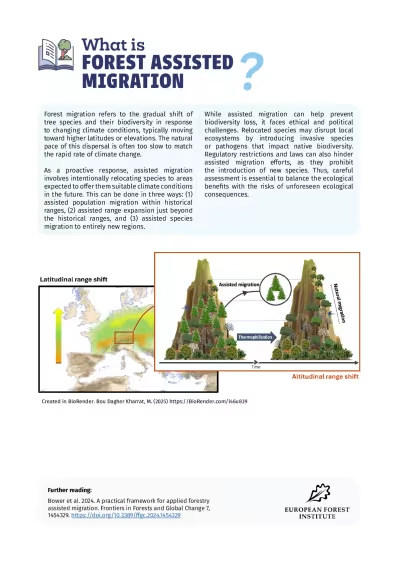
Forest migration refers to the gradual shift of tree species and their biodiversity in response to changing climate conditions, typically moving toward higher latitudes or elevations. The natural pace of this dispersal is often too slow to match the rapid rate of climate change.
As a proactive response, assisted migration involves intentionally relocating species to areas expected to offer them suitable climate conditions in the future. This can be done in three ways: (1) assisted population migration within historical ranges, (2) assisted range expansion just beyond the historical ranges, and (3) assisted species migration to entirely new regions.
While assisted migration can help prevent biodiversity loss, it faces ethical and political challenges. Relocated species may disrupt local ecosystems by introducing invasive species or pathogens that impact native biodiversity. Regulatory restrictions and laws can also hinder assisted migration efforts, as they prohibit the introduction of new species. Thus, careful assessment is essential to balance the ecological benefits with the risks of unforeseen ecological consequences.
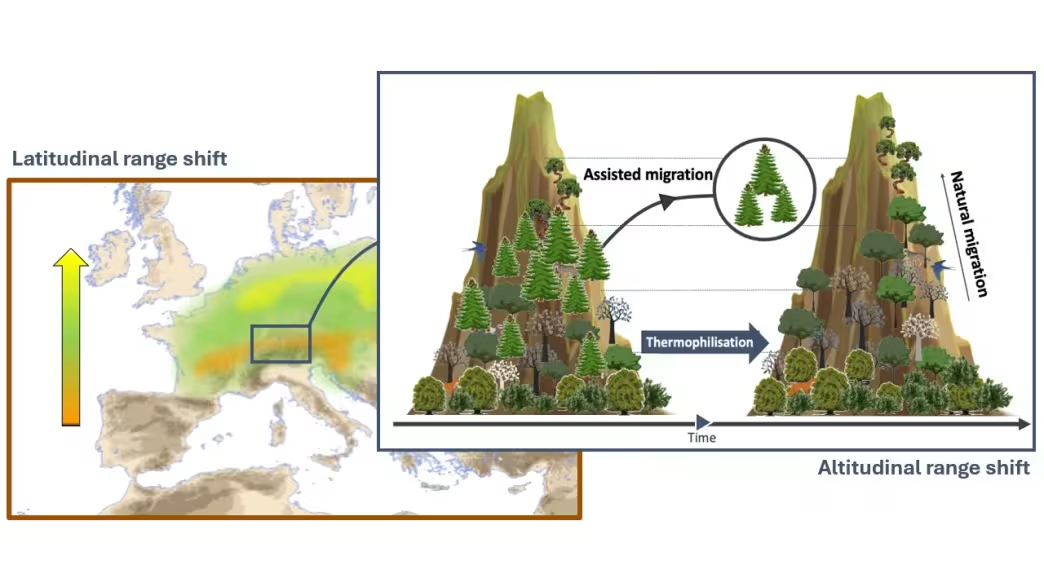
Created in BioRender. Bou Dagher Kharrat, M. (2025) https://BioRender.com/l46u839
Further reading
Bower et al. 2024. A practical framework for applied forestry assisted migration. Frontiers in Forests and Global Change 7,
1454329. https://doi.org/10.3389/ffgc.2024.1454329

Related content
What are the key steps for planning biodiversity monitoring in forest restoration?
Structured monitoring is essential not only to demonstrate restoration success but to guide and improve ongoing efforts.
- Resilient forests
What is forest biodiversity?
Forest biodiversity includes not only species diversity, but also the variety of functions they perform, from genes to landscapes.
- Resilient forests
How does forest management affect biodiversity?
Forest management practices influence forest structure and biodiversity in many different ways.
- Resilient forests