Photo by:
Richard Whitcombe
Forest context
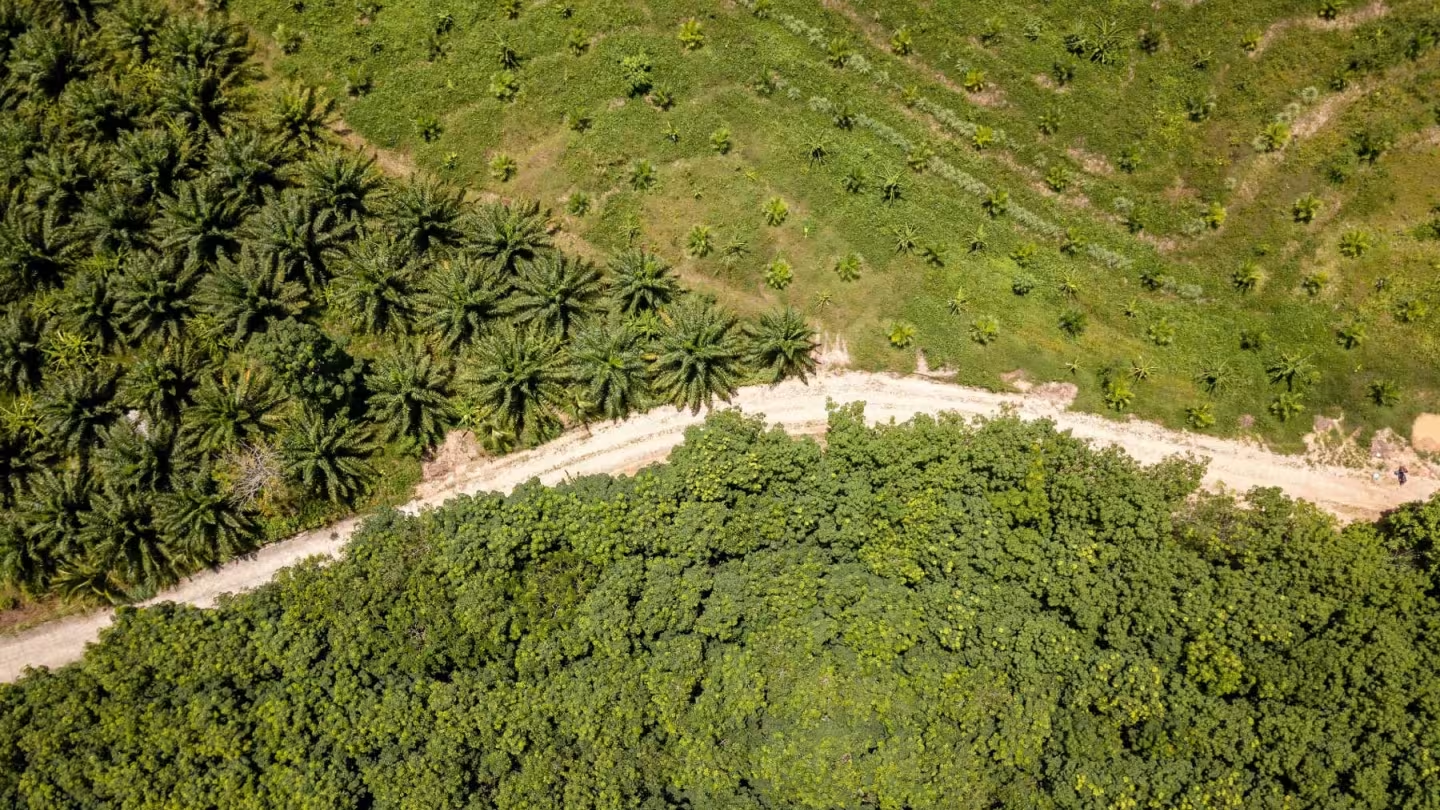
Malaysia’s natural landscapes include extensive tropical rainforests, peatlands and mangrove systems that support biodiversity, watershed functions, carbon storage, and rural livelihoods. Forest and land-use dynamics are influenced by commercial forestry, plantations and agricultural commodities, notably palm oil, rubber and timber. Logging and palm oil production have historically been major drivers of deforestation in Malaysia; however, deforestation rates have declined significantly in recent years thanks to initiatives focusing on sustainable production. Balancing development with environmental protection, Malaysia has integrated forest and biodiversity conservation into national policy frameworks, and incentivises states to preserve and restore forests.
Our approach
EFI supports Malaysia in strengthening deforestation-free commodity value chains and ensuring smallholder inclusion, with a focus on the palm oil and rubber sectors. We provide technical support to certification and other systems for collecting geospatial and legality data for monitoring, risk assessment, and due diligence. Our work contributes to enhanced traceability, smallholder participation and inclusion in international markets, and overall readiness for evolving global market requirements.
EFI collaborates with government agencies, industry associations, smallholders, civil society, and the private sector to pilot smallholder inclusion strategies, support enhancements to certification and traceability systems, and boost transparent, traceable supply chains. By facilitating technical assistance, multi-stakeholder dialogue, and capacity building, EFI contributes to responsible commodity production pathways in Malaysia.
Projects in Malaysia
Malaysia Smallholder Project
We work on improving the livelihoods of rubber and palm oil smallholders through increased global market access.
- Inclusive governance

KAMI
The KAMI project provided support for dialogue between EU, Malaysian and Indonesian stakeholders on the sustainability of the palm oil value chain.
- Inclusive governance
EU FLEGT Asia Programme
We worked to improve forest governance and promote legal trade of timber across Asia.
- Inclusive governance
EU FLEGT Facility
We supported the EU and timber-producing countries in the implementation of the FLEGT Action Plan with a focus on Voluntary Partnership Agreements.
- Inclusive governance
Latest Malaysia news
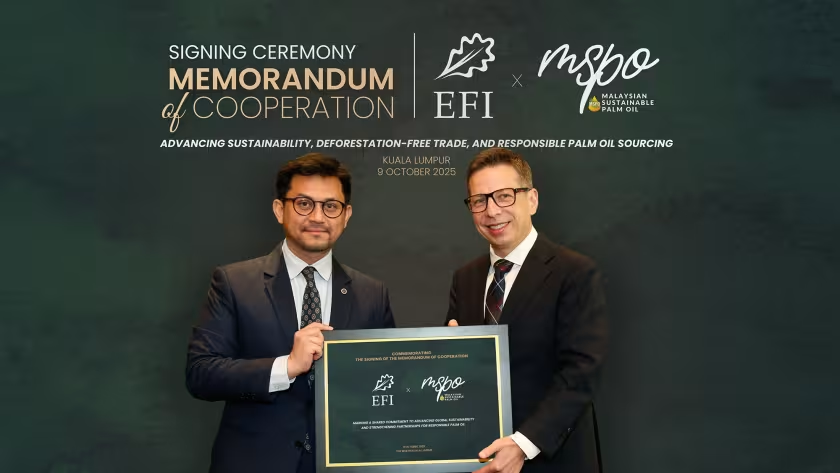
EFI and MSPO partner to boost sustainability, traceability and credibility of Malaysian sustainable palm oil
Strategic cooperation agreement to strengthen sustainability, reinforce traceability, and ensure that Malaysian palm oil remains a trusted choice.
- Sustainable economy
Latest Malaysia publications
EU Deforestation Regulation: Early responses in producer countries
Early evidence shows how producer countries are adapting to the EU Deforestation Regulation through traceability, legal reviews, and coordination.
- Inclusive governance

Insights from EUDR preparedness exercise in the palm oil sector
The voluntary exercise simulated checks on the operators’ due diligence system and related palm oil shipments from Indonesia and Malaysia.
- Sustainable economy
