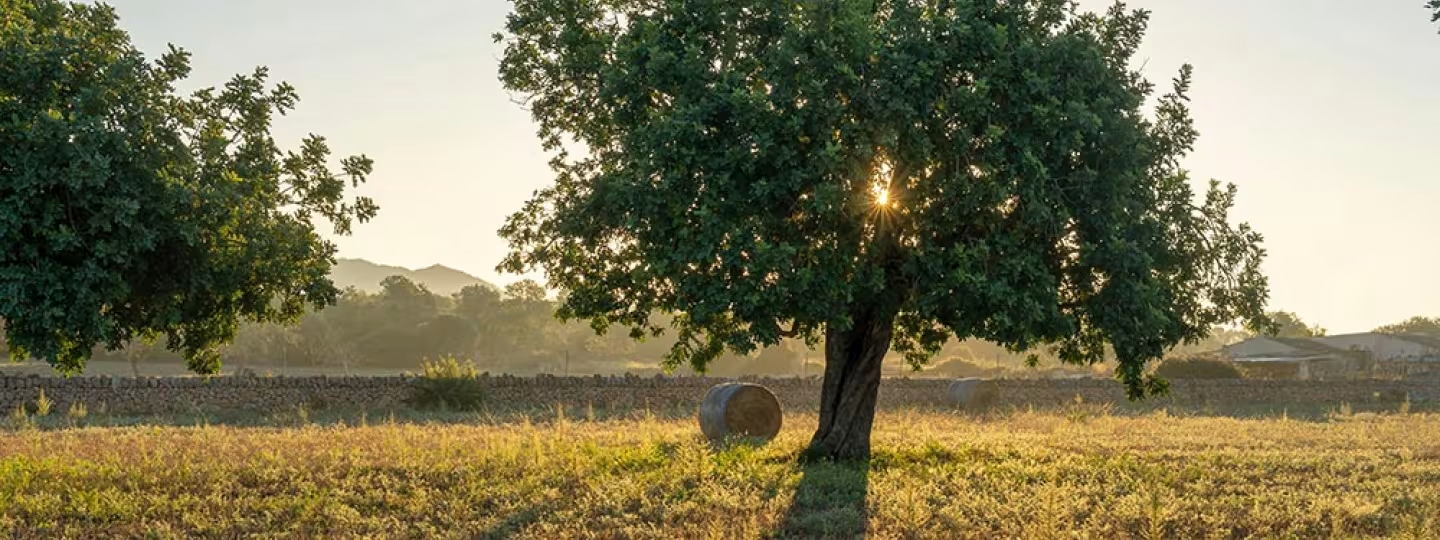
Carob Days workshop celebrates a most Mediterranean tree
The carob tree (Ceratonia siliqua), will be at the centre of international exchange and collaboration during a dedicated three-day workshop focusing on its ecological, cultural, and economic relevance. Carob Days (25–27 March) takes place in Valencia, Spain, as part of The EFI Mediterranean Network Forum 2026 which is organised by the European Forest Institute (EFI) in collaboration with the Spanish Agency for International Development Cooperation (AECID) through the Masar al’an programme for regional cooperation with the Arab World, the Centre for Forestry Research and Experimentation (CIEF), Universitat Politècnica de València (UPV), and with the support of the Foundation for the Internationalization of Public Administrations (FIAP).
The carob is one of the most resilient tree species in the Mediterranean region and a symbol deeply rooted in the traditions of many communities. As carob gains renewed attention in global markets, driven by its recognition as a nutrient rich superfood and its potential for the pharmaceutical and food industries, the challenges of building a sustainable and inclusive carob value chain are crucial.
“Carob is a climate-resilient resource with significant potential for Mediterranean rural economies, however, no single country can unlock this potential alone. The Carob Days create a space for key stakeholders to come together, address existing barriers, and develop joint solutions to shared challenges”.
The Carob Days programme highlights the carob tree’s cultural, ecological, and economic value, bringing together value-chain actors through scientific sessions, field visits and a collaborative hackathon, involving farmers, cooperatives, researchers and entrepreneurs, jointly exploring its resource potential, market development, and trade opportunities.
The programme also features a field visit to carob agroforestry systems, including a stop at the monumental carob trees of Chiva. Participants will gain an overview of key cultivation methods and varieties, visit a modern carob processing factory, and explore the ecological, cultural, and historical significance of these remarkable trees. The visit highlights their importance for sustainable agriculture, the ecosystems they support, and the deep cultural roots that make them living monuments of Mediterranean landscapes.
Santiago Morán Medina, coordinator of AECID’s Masar al’an programme for regional cooperation with the Arab world, described the opportunity offered by the workshop.“By supporting the Carob Days, AECID brings together farmers, researchers and entrepreneurs from across the region as development cooperation is ultimately about building the partnerships that turn shared opportunities into lasting impact”.
On March 27th from 16pm, the carob will also be at the centre of cultural sessions at Jardín Botánico de Valencia, with free access to performances, lectures, music, and an immersive exhibition. A gastronomic tasting of carob-based products from across the Mediterranean will celebrate the diversity and richness of the region. By discovering the many ways different cultures transform the same resource, participants will experience how creativity, tradition, and shared heritage turn carob into a symbol of Mediterranean diversity and resilience.
About EFI Mediterranean Network Forum 2026
EFI Mediterranean Network Forum 2026 is an international event on Mediterranean forests bringing together experts from across the Mediterranean region to foster interdisciplinary dialogue, knowledge exchange and international cooperation in response to shared global challenges such as climate change, sustainable forest management, biodiversity loss and landscape resilience.
Related content
Wildfires are Europe’s new normal: why we urgently need to act
EFI experts urge moving from managing each fire as an isolated emergency to managing fire risk across landscapes and throughout the year.
- Resilient forests
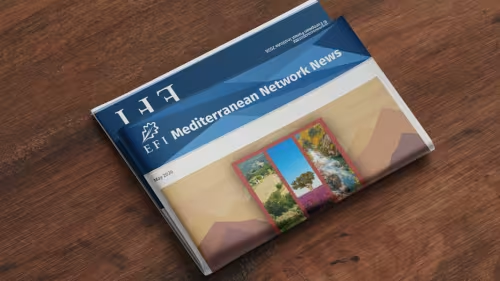
EFI Mediterranean Network News: advancing landscape resilience from case studies to carob value chains
May 2026 EFIMED Network News highlights cooperation and carob stories for resilient, climate-ready Mediterranean landscapes.
- Resilient forests
ResAlliance
Engaging with farmers and foresters to share knowledge and increase landscape resilience in the Mediterranean.
- Resilient forests