Traded goods also need check-in luggage, for their data!
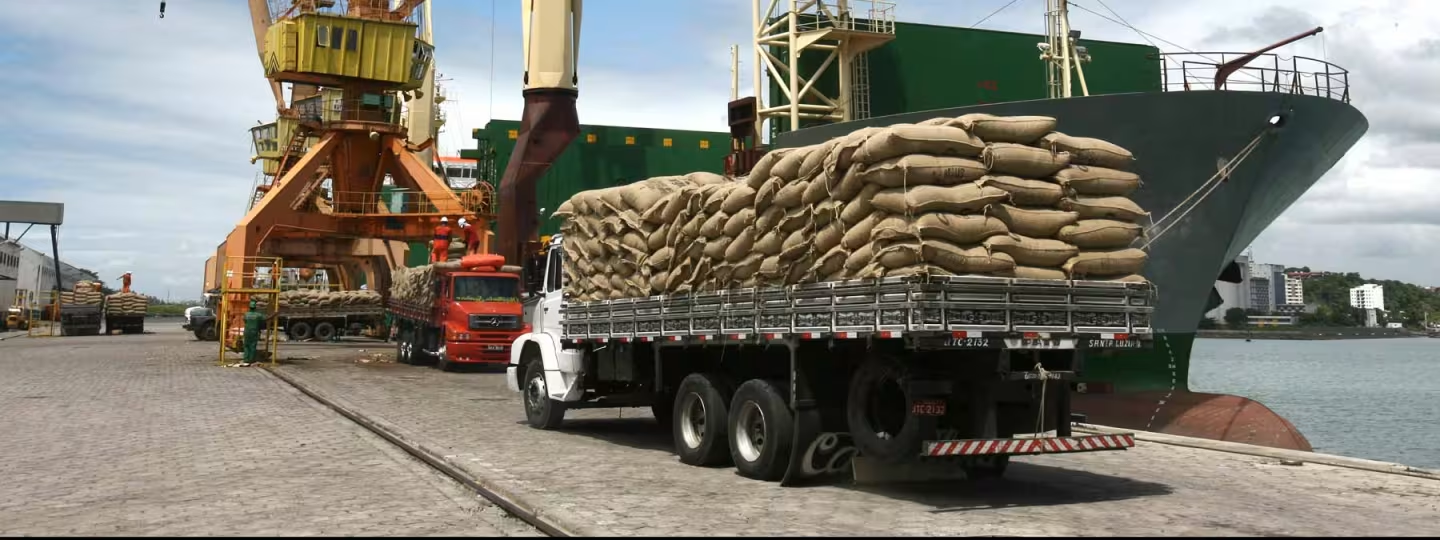
How WHIMO supports supply-chain traceabilityAgricultural supply chains can be difficult to follow. Cocoa, coffee, rubber, palm oil and their derived products, to mention just a few, exchange hands several times before reaching their destination market. These commodities are collected, sold, transported, processed, mixed with other volumes and sold again. At each step, there is a risk that information about the product is lost or misplaced.
This creates a practical challenge. Downstream buyers, public institutions and other actors need to understand where products come from, but the information they need is usually held by different actors at different points along the supply chain. In some cases, geolocation data may exist but not travel with the commodity. In other cases, transaction records may be incomplete or difficult to retrieve.
WHIMO — “What Is My Origin” — addresses one part of this challenge. It is an open-source digital tool designed to help supply-chain actors record transactions and share basic traceability information as commodities move from origin to destination.
A tool focused on transactions
WHIMO does not try to physically track individual products. Instead, it focuses on transactions: the moments when goods change hands.
Each time a commodity is bought, collected, sold or delivered, the user records the transaction in WHIMO. The record includes information such as the commodity, product type, volume, date and available geolocation data. As goods move further along the chain, this information is transferred to the next actor.
This transaction-based approach reflects how many agricultural supply chains work in practice. Volumes are often aggregated, split, processed or mixed. WHIMO does not remove that complexity, but it provides a structured way to document it.
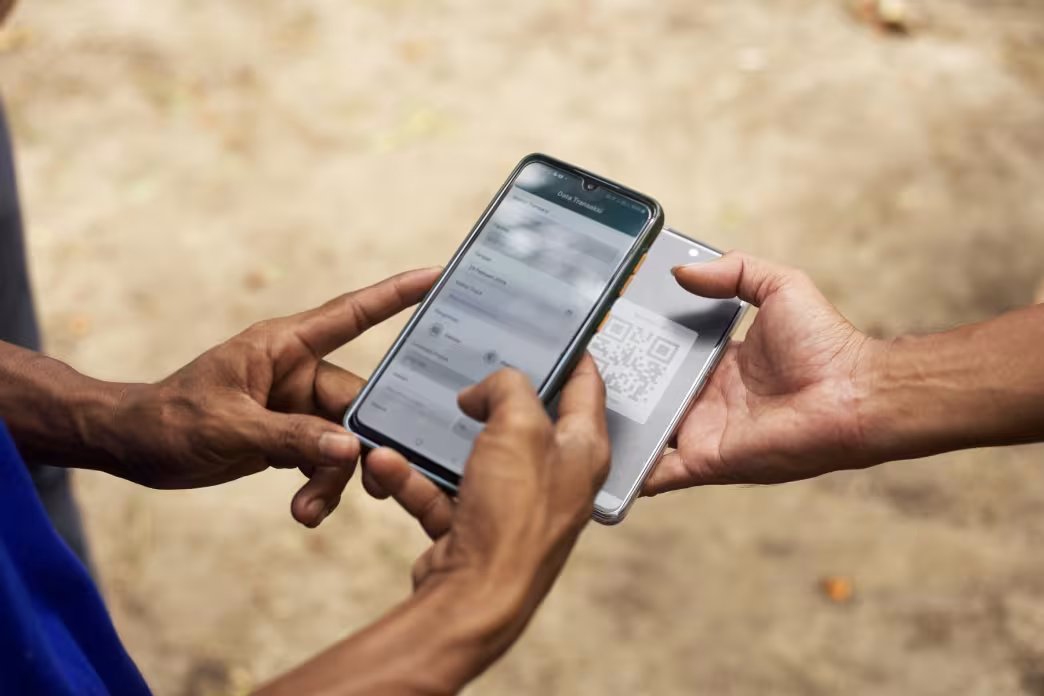
Each transaction is an opportunity to pass origin information forward, helping maintain traceability as commodities change hands.
Who is WHIMO for?
WHIMO is intended for supply-chain actors who handle commodities and exchange information with buyers or suppliers. This includes cooperatives, local aggregators, transporters, processors, traders and exporters.
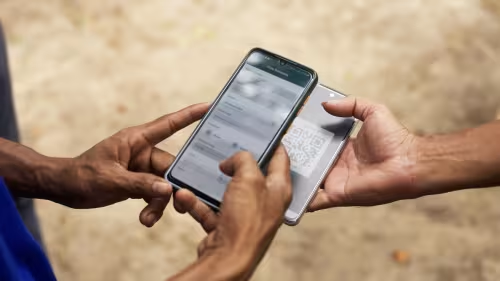
Farmers are not required to use the app directly. However, they can contribute geolocation information that is in their possession, by presenting a QR code that can be scanned by a cooperative or buyer. This distinction is important: WHIMO is designed to support actors who record and transfer traceability data along the chain, not to place additional digital responsibilities on farmers.
Building traceability step by step
In many contexts, full information is not available from the start. WHIMO is designed to allow users to begin recording transactions even when some data is missing.
For example, a user may have transaction information but no farm geolocation data. Or geolocation may be available in different forms, such as a QR code, GPS coordinates or an uploaded file. WHIMO records whatever data is available and applies traceability statuses to make the quality and the source of information visible to actors along the chain.
This helps users understand where traceability information is strong and where gaps remain. It also reflects the reality that supply chains often improve gradually. Rather than requiring perfect information from the beginning, WHIMO supports a step-by-step approach.
What WHIMO does not do
Clear boundaries are important. WHIMO is not a deforestation risk assessment tool. It does not evaluate whether a product is legal, sustainable or compliant with any specific regulation. It does not guarantee regulatory compliance.
Its purpose is narrower: to support the collection, exchange and review of traceability data. This data can be useful for due diligence processes, but users remain responsible for deciding how the information is used and for meeting any legal or market requirements that apply to them.
This distinction helps avoid overclaiming. WHIMO can make traceability information easier to organise and share, but it does not replace analysis, verification or decision-making.
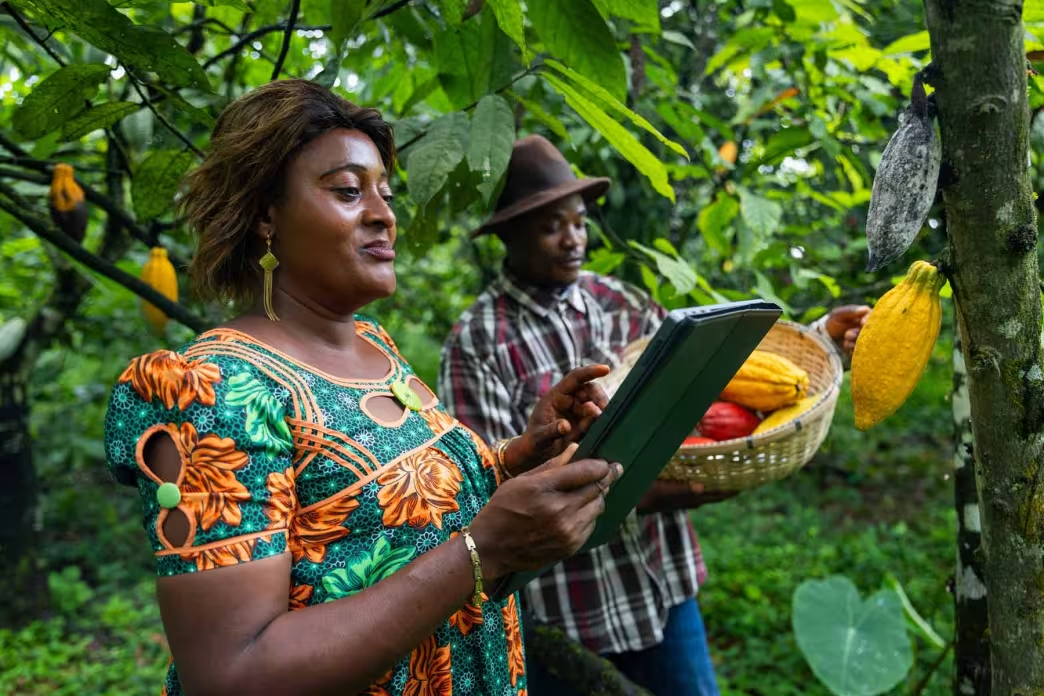
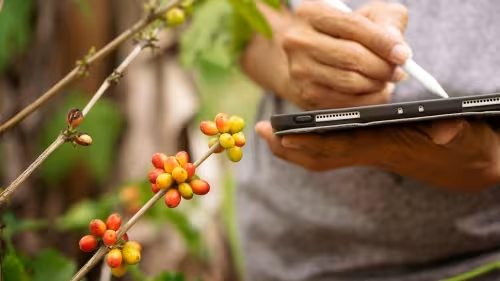
Recording origin data at the source: digital tools can help keep information connected to commodities as they move through the supply chain.
Data sharing and visibility
Supply-chain data can be sensitive. WHIMO is designed to support data exchange while limiting unnecessary exposure. The tool transfers transaction and traceability information, such as volumes, dates and geolocation data. It does not make users’ personal contact details visible across the entire chain.
When two WHIMO users interact, transactions are validated by both parties. This helps improve the consistency of transaction records and supports volume accounting. Transactions involving actors who do not use WHIMO can also be recorded, helping users reflect real supply-chain participation rather than only ideal digital workflows.
Mobile and web components
WHIMO includes both mobile and web components. The mobile app is used to record transactions. The web platform allows users to review data, explore simple analytics and download information for further use.
This combination is intended to support both field-level recording and broader data management. Users can record information as commodities move through the supply chain, then review and analyse their traceability coverage through the web interface.
Open source and adaptable
WHIMO is open source. This means that institutions, public bodies or organisations can access the source code and adapt it to develop their own traceability systems, where appropriate. This may be relevant for countries or institutional actors that need to manage their own data governance arrangements or develop versions suited to local contexts.
The ready-to-use version and the open-source option respond to different needs. Some users may want to start with an existing tool. Others may need to host, adapt or manage their own version.
WHIMO is available in four languages: English, French, Spanish and Portuguese.
Learning more
Additional tutorials are also available, covering how to record initial transactions, manage downstream transactions, share data and export information.
WHIMO is not a complete answer to all traceability challenges. But it offers a practical way to make supply-chain information easier to record, transfer and review — one transaction at a time.

Related content
Technical facility on deforestation-free value chains
We collaborate with commodity-producing countries to assist in transitioning to legal and deforestation-free value chains.
- Sustainable economy
WHIMO: a practical tool for sharing traceability information across agricultural supply chains
Learn how WHIMO app helps supply-chain actors transfer origin and transaction data along agricultural value chains.
- Inclusive governance
EUDR Community of Practice session in Barcelona explores legality due diligence in practice
The third EUDR CoP Core Group session brought together stakeholders to examine how legality due diligence can be approached in operational contexts.
- Inclusive governance