
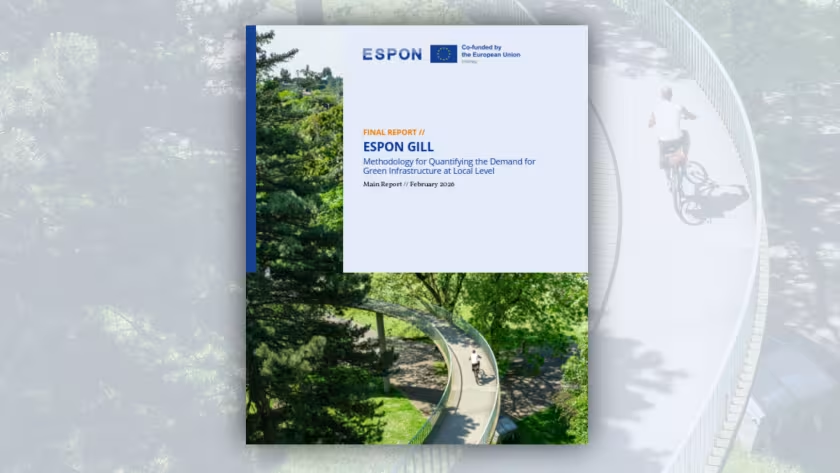
ESPON GILL
Methodology for quantifying the demand for green infrastructure at local levelThe ESPON GILL Final Report – Methodology for Quantifying the Demand for Green Infrastructure at Local Level, provides local authorities with a practical framework to assess the demand for green infrastructure (GI) and support its integration into planning and decision-making. The methodology responds to growing policy needs linked to climate adaptation, biodiversity conservation and nature restoration across Europe.
The report has been developed in the context of evolving European policy, including the European Green Deal, the EU Biodiversity Strategy and the Nature Restoration Regulation, all of which place increasing emphasis on the role of green infrastructure in creating more resilient, sustainable and liveable places. According to the report, local authorities require robust and practical approaches to understand where green infrastructure is needed and how it can best contribute to addressing local environmental and societal challenges.
The ESPON GILL methodology provides a structured, step-by-step approach to quantify the demand for green infrastructure at the local level. It combines policy objectives, spatial data and ecosystem services assessments to help identify where green infrastructure can contribute most effectively to local priorities. The methodology has been designed to be modular, scalable and flexible, allowing its application across different territorial contexts and varying levels of data availability and technical capacity.
Beyond presenting a technical methodology, the report highlights the importance of evidence-based planning in supporting local authorities to align green infrastructure investments with local needs and wider European policy objectives. By helping identify where green infrastructure can deliver the greatest benefits, the methodology aims to support more informed planning processes and strengthen the evidence base for future investment decisions.
For detailed project outputs see:
ESPON GILL publications
ESPON GILL methodology for quantifying the demand for green infrastructure at local level
A practical, step-by-step methodology to help local authorities quantify the demand for green infrastructure and integrate it into planning.
- Cities
Related content
Urban Nature Plans+
UNPplus helps European cities develop Urban Nature Plans, integrating biodiversity and green infrastructure into urban policies.
- Cities

CLEARINGHOUSE
Collaborative learning in research, information-sharing and governance on how urban forests support Sino-European urban futures.
- Cities

UFOREST
Promoting Europe’s innovation capacity among universities, cities and businesses to deliver a new approach to Urban Forestry.
- Cities