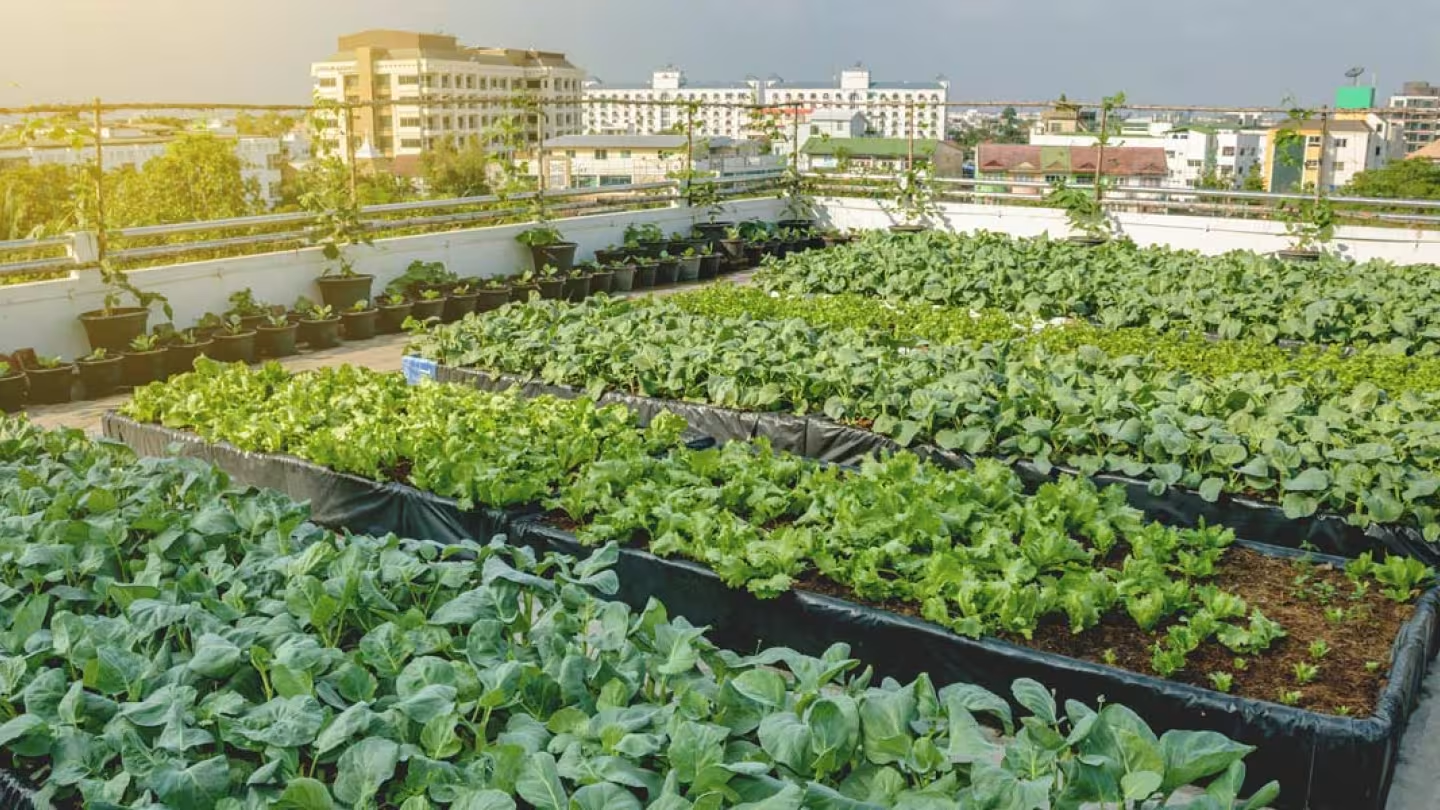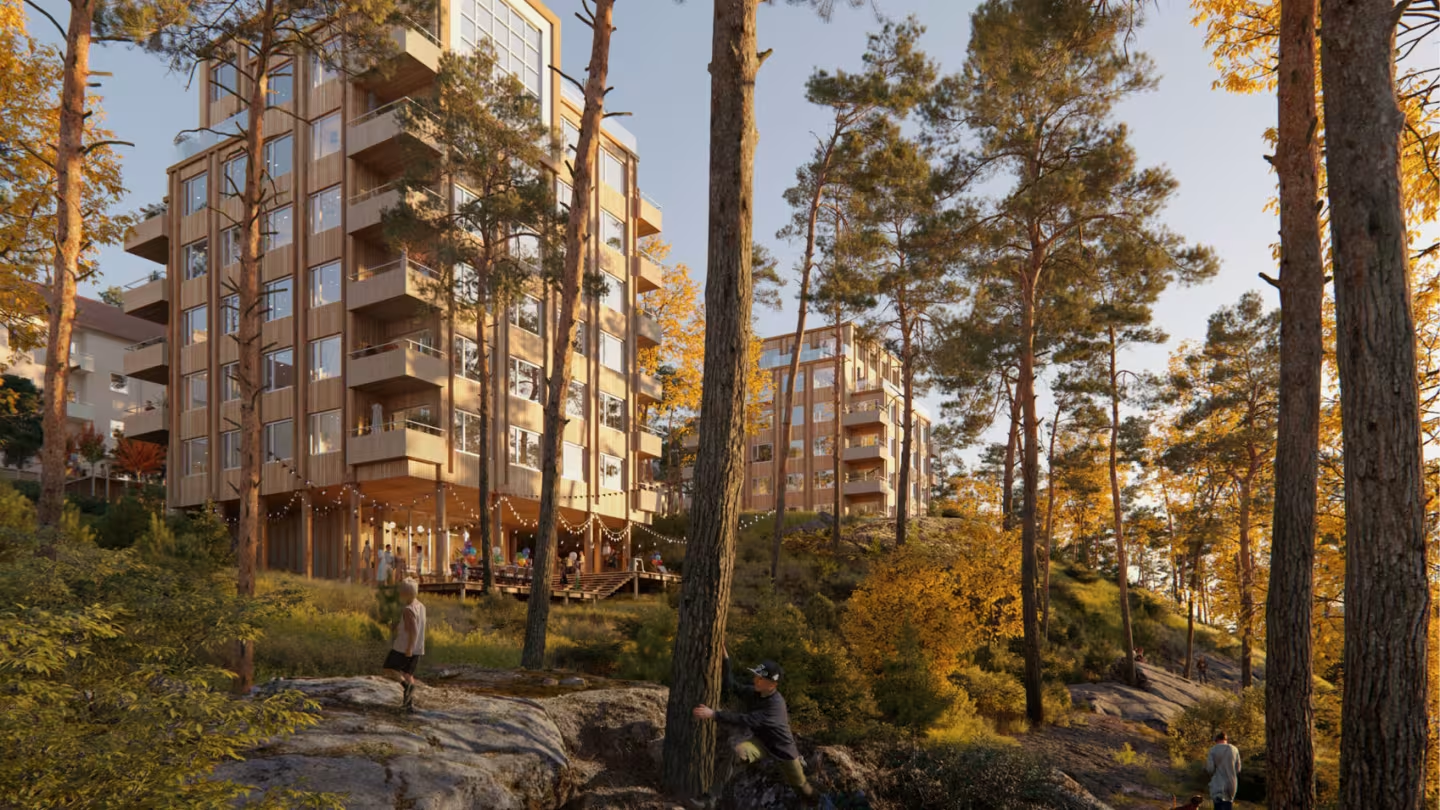
Photo by:
Courtesy of Fritzell & Pantzar/Folkhem trä/Land arkitektur/HISM
Bringing nature back into the heart of our cities
Cities, with their dense populations and mounting climate pressures, hold strong potential to become more sustainable and resilient through forest-based solutions and green infrastructure that tackle shared global challenges.
Nature as cities' cooling infrastructure: EFI Biocities webinar explores urban forests for climate adaptation
Experts at EFI Biocities' second webinar shared how urban forests and nature-based solutions can help cities adapt to extreme heat.
- Cities

EFI and Italy host high-level discussion on forest finance
EFI and the Government of Italy hosted a high-level discussion on forest financing, focusing on restoration and biodiversity conservation.
- Sustainable economy

EFI Biocities webinar: Urban forests for climate change adaptation
Urban heat is rising, and green infrastructure is part of the answer. Explore how at the next EFI Biocities webinar on 30 September.
30 September 2026, 17:00–18:30
- Cities

EFI Biocities webinar: Urban forests for climate change adaptation
Urban heat is rising, and green infrastructure is part of the answer. Explore how at the next EFI Biocities webinar. Register now!
- Cities
What is a biocity?
A biocity is a new term created to describe a city that is “hosted by nature”.
- Cities
What is urban forestry?
Urban forestry involves the management and establishment of trees and forests across a city
- Cities
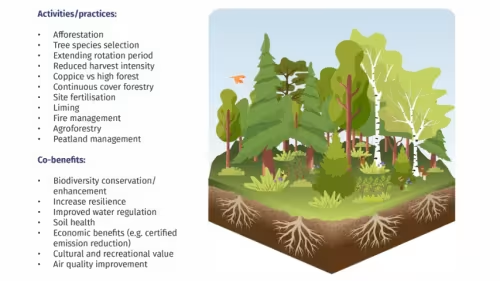
What is carbon farming in forests?
Explore carbon farming activities, practices and co-benefits
- Resilient forests
Our work
The Biocities Network addresses the following priority topic:
- Circular Biocities: from concept to a new urban reality
The Network implements the following key activities:
- Science-policy-business reports that connect the dots between the disciplines and sectors that can catalyse transformational change in urban environments.
- Science-policy-business events that raise awareness and foster a new, informed debate on Circular Biocities across key sectors.
- Awareness-raising communication activities that engage journalists and use a range of platforms and tools, from blogs and exhibitions to awards.
Recommended
Publications
- van der Bosch et al. 2024. The evolution and future of research on Nature-based Solutions to address societal challenges. https://doi.org/10.1038/s43247-024-01308-8
- Scarascia-Mugnozza et al. 2023. Transforming Biocities: Designing Urban Spaces Inspired by Nature. https://doi.org/10.1007/978-3-031-29466-2
- Wilkes-Allemann et al. 2022. Research Agenda – Biocities of the future. https://doi.org/10.36333/rs4
- Ten key ideas for Biocities
- Pathways for transition to Biocities
- Antoniella et al. 2024. Do poplar plantations enhance organic carbon stocks in arable soils? A comprehensive study from Northern Italy. Journal of Environmental Management, 370, 122882. https://doi.org/10.1016/j.jenvman.2024.122882
- De Carolis et al. 2024 First insights of cotton intercropping with peach trees under Mediterranean conditions. Agroforesty Systems. https://doi.org/10.1007/s10457-024-01084-6
- Chiti et al. 2024. How can carbon farming in forests contribute to carbon neutrality? Policy Brief 10. European Forest Institute. https://doi.org/10.36333/pb10
- Chiti et al. 2024. Come può il carbon farming nel settore forestale contribuire alla neutralità carbonica? Policy Brief 10. Istituto Forestale Europeo. https://doi.org/10.36333/pb10it
- Garofalo et al. 2024. Explainable Artificial Intelligence to Predict the Water Status of Cotton (Gossypium hirsutum L., 1763) from Sentinel-2 Images in the Mediterranean Area. Plants, 13(23), 3325. https://doi.org/10.3390/plants13233325
Biocities projects
Urban Nature Plans+
UNPplus helps European cities develop Urban Nature Plans, integrating biodiversity and green infrastructure into urban policies.
- Cities
ESPON GILL
ESPON GILL offers local authorities a practical way to pinpoint where green infrastructure delivers the greatest benefits.
- Cities

UFOREST
Promoting Europe’s innovation capacity among universities, cities and businesses to deliver a new approach to Urban Forestry.
- Cities
CLEARINGHOUSE
Collaborative learning in research, information-sharing and governance on how urban forests support Sino-European urban futures.
- Cities