
LIFE SPAN
Saproxylic Habitat Network: planning and management for European forestsTraditional forest management, focused on the maximization of continuous wood production, has brought the reduction of structural heterogeneity, deadwood volume and microhabitat availability, and as a consequence species diversity. Efforts to preserve forest biodiversity have mostly included segregative approaches (i.e. setting aside areas), creating isolated sanctuaries embedded in a matrix of productive forest, often intensively managed. The lack of connectivity of protected areas make the integration of conservation measures in productive forests essential. Strategies to integrate conservation of saproxylic biodiversity (dead wood-associated species, which altogether constitute at least 30% of forest biodiversity) in forest management have been developed before, but their effectiveness has never been demonstrated.
Our goal is to implement an economically sustainable management framework that will contribute to the effective to reach the following objectives: 1) demonstrate an innovative and economically sustainable forest planning and management approach to conserve biodiversity and increase structural heterogeneity in productive forests of the Natura 2000 network, applicable in other productive forests as well, through the implementation of specially designed management plans. This will improve the conservation status of habitat types and species of Community Interest targeting Natura 2000 sites; 2) transfer the approach to the managers of Natura 2000 sites and to other practitioners through training activities and guidelines drafting; 3) disseminate the approach to the public to increase awareness on the importance of forest biodiversity conservation and integrated approaches.
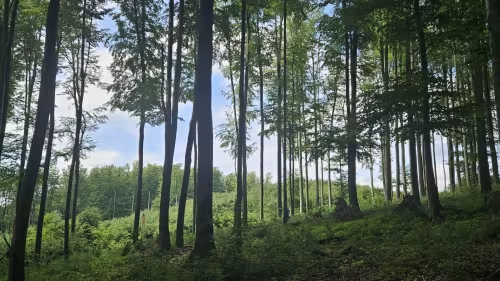
EFI is responsible for technical dissemination activities, and has set up three marteloscopes in the Cansiglio Forest and University Forest Sailershausen demonstration areas, two in Italy and one in Germany. The marteloscopes are part of the Integrate Network.
Related content
FOREXT Fridays: Closer-to-nature Forestry
Join us to explore tools and field examples that can help advisors promote sustainable management practices.
30 October 2026, 13:00–14:00, CET
- Resilient forests

Forests of the Future: Research and forest management in an era of change
Contemporary approaches to forest ecology, close-to-nature silviculture, biodiversity, monitoring, and long-term research.
17 September 2026 – 20 September 2026
- Resilient forests
EFI Mediterranean Network News: advancing landscape resilience from case studies to carob value chains
May 2026 EFIMED Network News highlights cooperation and carob stories for resilient, climate-ready Mediterranean landscapes.
- Resilient forests