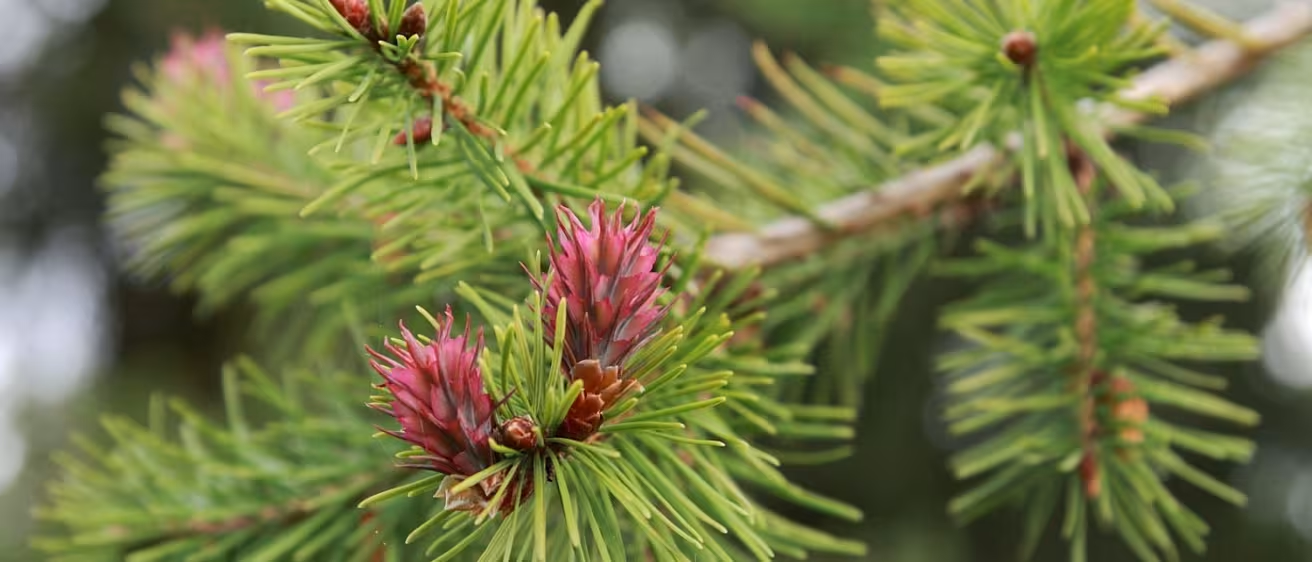
In 2019 Douglas-fir was the second most common non-native tree species in European forests where it covers more than 800,000 hectares. The largest area of Douglas-fir was found in France, followed by Germany where it had rapidly become the most widespread non-native tree species.
The main reason for growing Douglas-fir is its high productivity and desirable wood properties. The value chain of Douglas-fir provides thousands of jobs and tens of millions of euros worth of income and employment. Today, other factors have to be considered as well. These may be positive, such as Douglas-fir’s capacity to adapt and mitigate to climate change, or negative, such as public perceptions concerning detrimental effects on native ecosystems and their biodiversity.
This report provides science-based support for decision-making by synthesizing relevant research results on various aspects of growing non-native tree species in Europe using Douglas-fir as an example.
Citation
Spiecker, H., Lindner, M. and Schuler, J. (eds.). 2019. Douglas-fir – an option for Europe. EFI What Science Can Tell Us 9. European Forest Institute.
Number of pages 121
ISBN 978-952-5980-66-0 (pdf)


Related content
Protecting old growth forests in Europe - a review of scientific evidence to inform policy implementation
Review of scientific literature on the topic of old-growth forests.
- Resilient forests

Living with bark beetles: impacts, outlook and management options
This report aims to help European and national policy makers understand the complex roles bark beetles play in our forests.
- Resilient forests
Let’s get a grip on future shapers creating forest futures
Join this EFI Annual Conference side event to understand the opportunities and challenges of horizon scanning within the forest-based sector.
15 September 2026
- Resilient forests