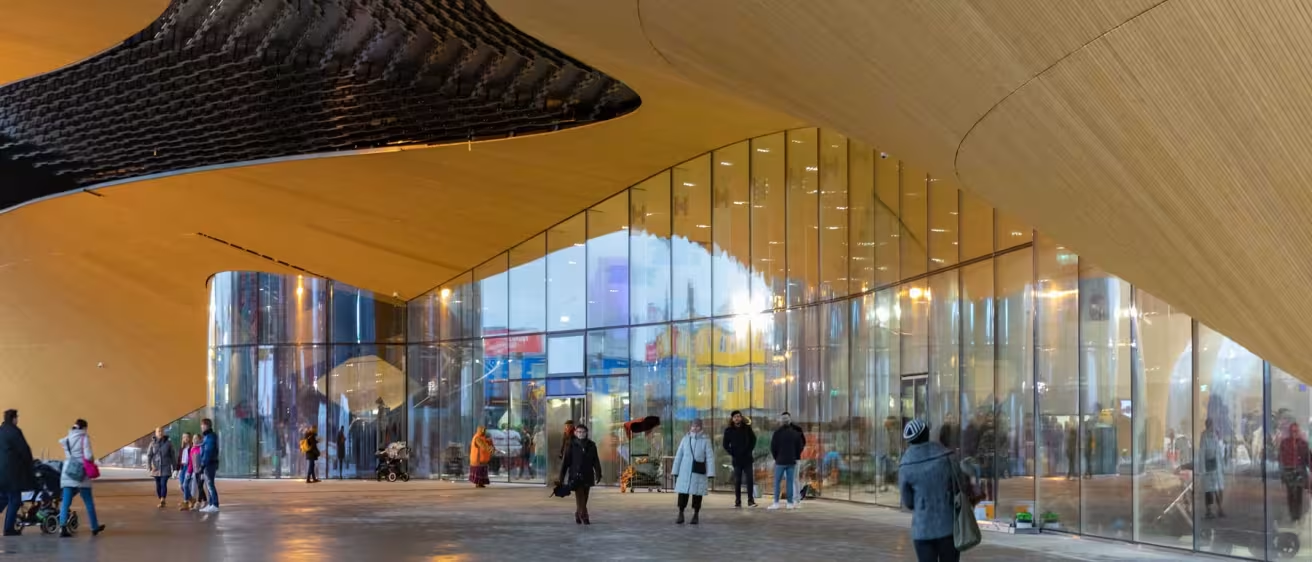
Oodi, Central Library, Helsinki, Finland
Photo by:
Ninara
The report assesses how much wood we are likely to have now and in the future to support a transformational change towards a circular bioeconomy, and explores the potential and implications for its uses.
It considers the structural changes affecting the use of wood globally and the potential for innovation in forest-based product markets, from engineered wood products in the construction sector, pulp used for textiles, chemicals, bioplastics and energy, to the growing number of small niche markets, including cosmetics, food additives and pharmaceuticals. It explores the future demand for roundwood under business-as-usual scenarios and when contemplating trends which curb the use of wood while foreseeing increased demand for other forest bioproducts.
Finally, it describes the need for investment in research to synthesise current knowledge and assess future environmental, economic, social and policy prospects, which will support a truly sustainable development of the circular bioeconomy.
More information
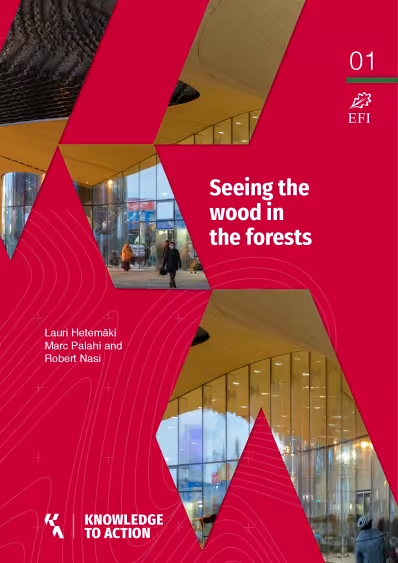
Recommended citation: Hetemäki, L., Palahí, M. and Nasi, R. 2020. Seeing the wood in the forests. Knowledge to Action 1, European Forest Institute.
Number of pages: 20
ISBN 978-952-5980-86-8 (printed)
ISBN 978-952-5980-87-5 (online)
-
Lauri Hetemäki

Marc Palahí
Robert Nasi
Related content
Forest Innovation Readiness
A self-assessment catalogue for innovators, start-ups, self-disrupting companies, and researchers-turned-entrepreneurs in the forest-based bioeconomy.
- Sustainable economy
ROSEWOOD4.0
ROSEWOOD4.0 harnesses digital solutions and boosts knowledge transfer to reinforce the sustainability of wood mobilisation in Europe.
- Sustainable economy
Forest bioenergy for Europe
Forest bioenergy has historically been one of the oldest and most lasting uses of forests by humans.
- Sustainable economy