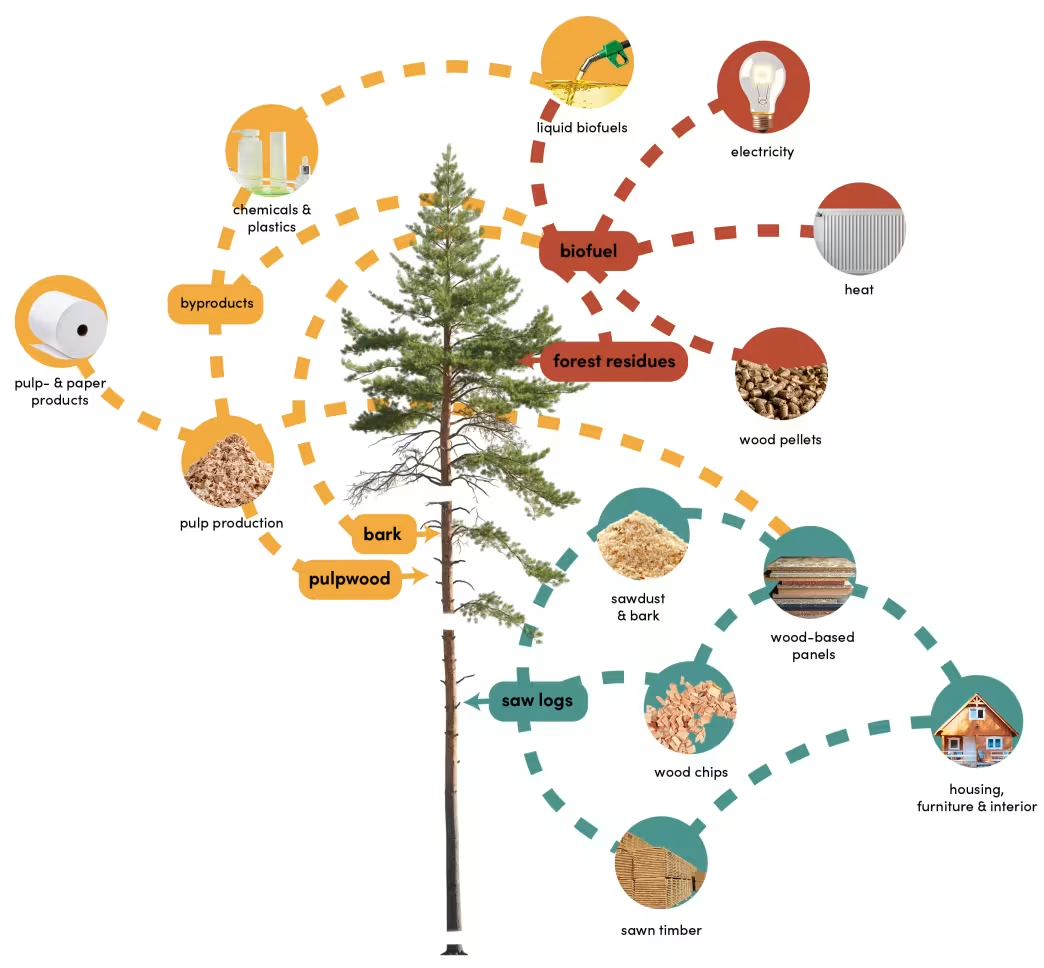
Harvested wood products (HWPs) consist of bio-based materials, primarily wood sourced from forests. These materials are ultimately directed towards channels intended for product utilisation like furniture, panels, and paper or energy generation. HWPs, based on their application, can capitalise on their function as a renewable resource, carbon sequestration medium, and alternative to fossil-based materials, particularly when employed for long-term purposes (e.g., wooden buildings). Recognizing their role, countries must report annually on the carbon stock and stock changes in HWPs. In the EU, the carbon sink from harvested wood products represents roughly 10 % of the total forest carbon sink. With the bioeconomy expanding, there is potential to enhance this role, especially since nearly half of the biomass extracted from forests is utilized for energy purposes. Unfortunately, the official statistics on wood product utilisation are currently characterised by uncertainty and inconsistency, making it challenging to estimate their actual contribution and their potential role in climate change mitigation.
Further reading
Bozzolan et al. 2023. Options to improve the carbon balance of the harvested wood products sector in four EU countries. GCB Bioenergy, 16, e13104. https://doi. org/10.1111/gcbb.13104


Related content
Building the Future: Wood, Bioeconomy and the New Bauhaus
This ThinkForest event explores how wood and other bio-based materials can contribute to a sustainable and climate-neutral European built environment.
19 November 2026, 09:00–11:30
- Sustainable economy
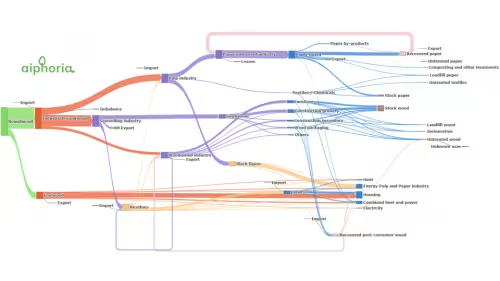
aiphoria: A Python package for dynamic wood material flow and carbon stock analysis
aiphoria is an open-source Python package for dynamic material flow analysis (DMFA) of wood.
- Sustainable economy
What is forest bioeconomy?
Forest bioeconomy promotes resilient, circular and climate-smart forestry within ecological boundaries and for wellbeing.
- Sustainable economy