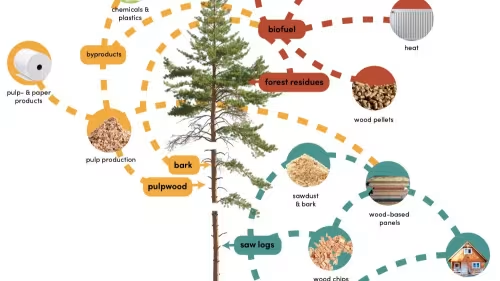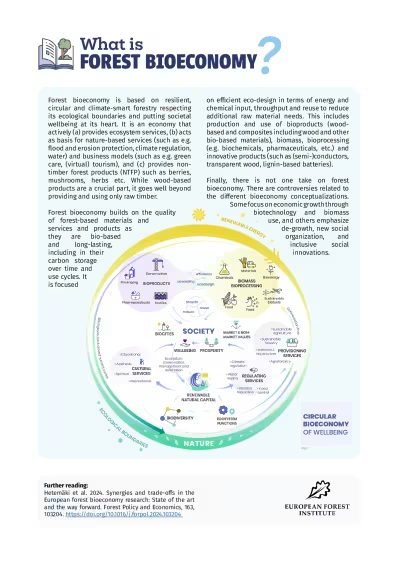
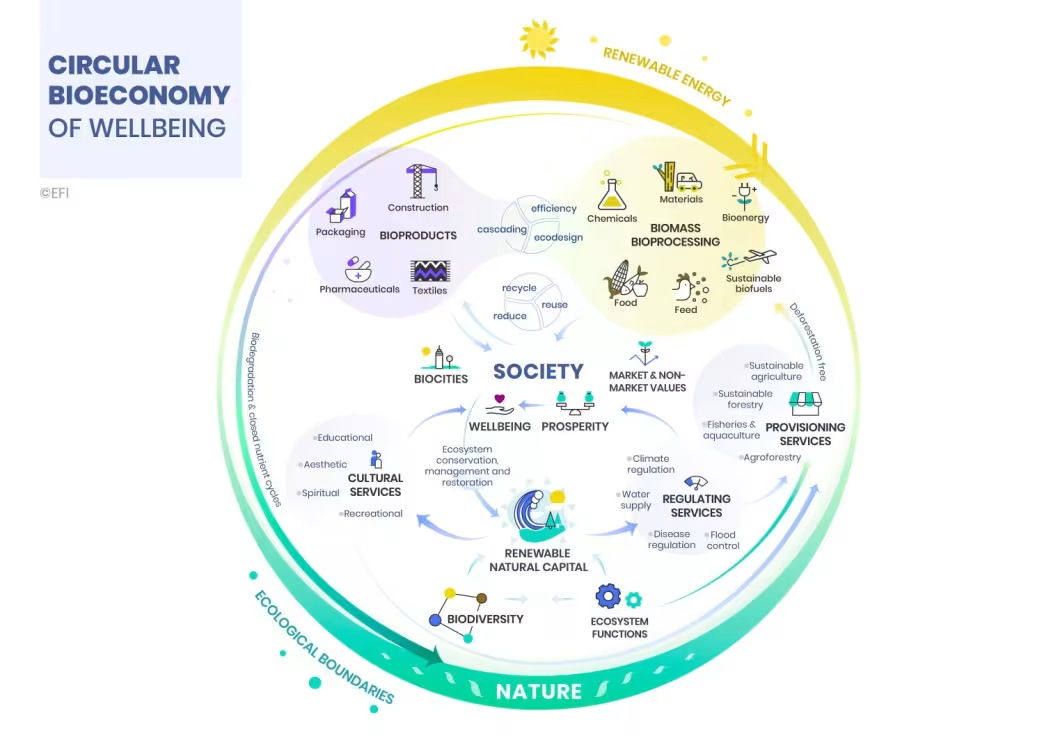
Forest bioeconomy is based on resilient, circular and climate-smart forestry respecting its ecological boundaries and putting societal wellbeing at its heart. It is an economy that actively (a) provides ecosystem services, (b) acts as basis for nature-based services (such as e.g. flood and erosion protection, climate regulation, water) and business models (such as e.g. green care, (virtual) tourism), and (c) provides nontimber forest products (NTFP) such as berries, mushrooms, herbs etc. While wood-based products are a crucial part, it goes well beyond providing and using only raw timber.
Forest bioeconomy builds on the quality of forest-based materials and services and products as they are bio-based and long-lasting, including in their carbon storage over time and use cycles. It is focused on efficient eco-design in terms of energy and
chemical input, throughput and reuse to reduce additional raw material needs. This includes production and use of bioproducts (wood-based and composites including wood and other bio-based materials), biomass, bioprocessing (e.g. biochemicals, pharmaceuticals, etc.) and innovative products (such as (semi-)conductors, transparent wood, lignin-based batteries).
Finally, there is not one take on forest bioeconomy. There are controversies related to the different bioeconomy conceptualizations. Some focus on economic growth through biotechnology and biomass use, and others emphasize de-growth, new social
organization, and inclusive social innovations.
Further reading
Hetemäki et al. 2024. Synergies and trade-offs in the European forest bioeconomy research: State of the art and the way forward. Forest Policy and Economics, 163, 103204. https://doi.org/10.1016/j.forpol.2024.103204


Related content
Session ecosystem services assessment and biodiversity footprinting at SETAC Europe 27th LCA Symposium
Anyone working on ecosystem services, biodiversity metrics, LCA, or sustainability assessment in bio‑based value chains is invited to join.
18 October 2026 – 21 October 2026
- Sustainable economy

CircHive webinar: connecting the textile sector and biodiversity
Join the first in a series of CircHive BEEHive webinars that explore topics and case studies from the BEEHive sectoral hubs.
23 June 2026, 13:30–15:30, CEST
- Sustainable economy
What are harvested wood products?
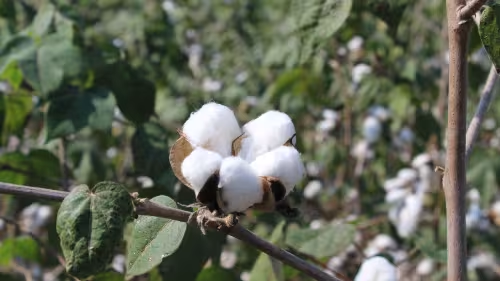
Harvested wood products (HWPs) consist of biobased materials, primarily wood sourced from forests.
- Sustainable economy