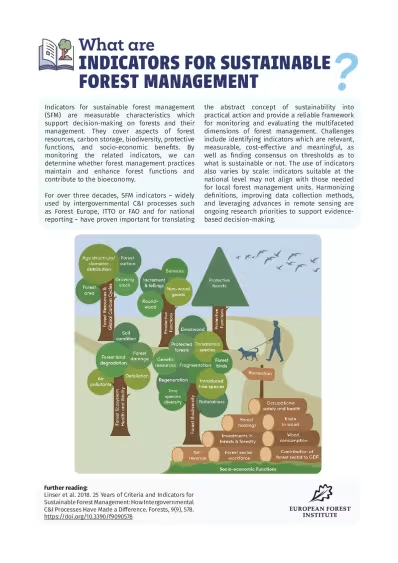
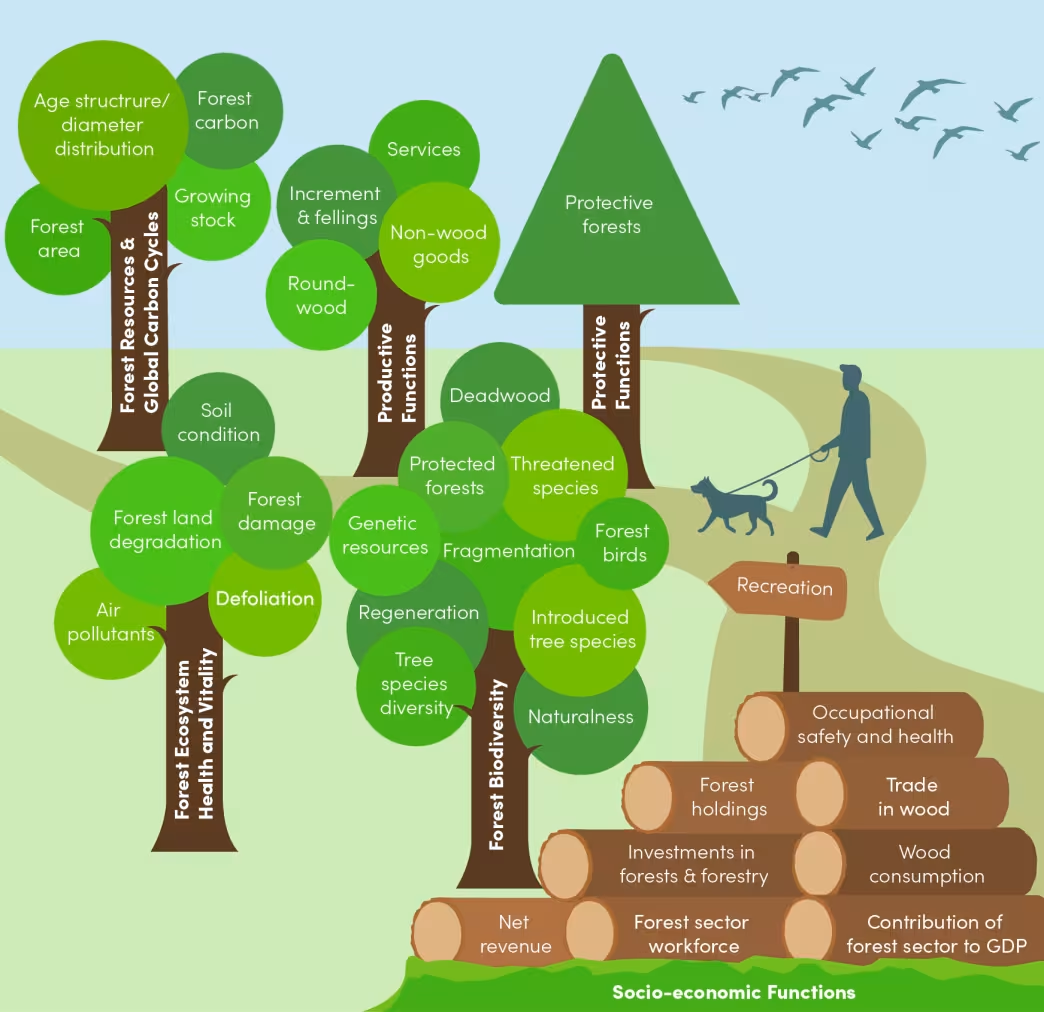
Indicators for sustainable forest management (SFM) are measurable characteristics which support decision-making on forests and their management. They cover aspects of forest resources, carbon storage, biodiversity, protective functions, and socio-economic benefits. By monitoring the related indicators, we can determine whether forest management practices maintain and enhance forest functions and contribute to the bioeconomy.
For over three decades, SFM indicators – widely used by intergovernmental C&I processes such as Forest Europe, ITTO or FAO and for national reporting – have proven important for translating the abstract concept of sustainability into practical action and provide a reliable framework for monitoring and evaluating the multifaceted dimensions of forest management. Challenges include identifying indicators which are relevant, measurable, cost-effective and meaningful, as well as finding consensus on thresholds as to what is sustainable or not. The use of indicators also varies by scale: indicators suitable at the national level may not align with those needed for local forest management units. Harmonizing definitions, improving data collection methods, and leveraging advances in remote sensing are ongoing research priorities to support evidence-based decision-making.
Further reading
Linser et al. 2018. 25 Years of Criteria and Indicators for Sustainable Forest Management: How Intergovernmental C&I Processes Have Made a Difference. Forests, 9(9), 578. https://doi.org/10.3390/f9090578

Related content
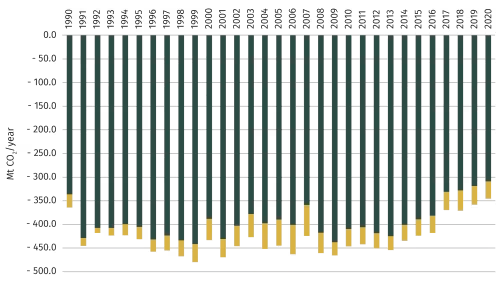
How has the forest-based carbon sink and stock evolved in the European Union?
Contrary to the ongoing deforestation at global level, forest area and growing stock in the EU 27 have expanded continuously since the 1950s.
- Resilient forests
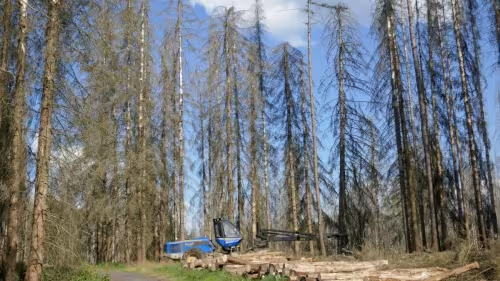
How bark beetles became a forest crisis?
Bark beetle outbreaks have become a powerful symbol of forest crisis and a visible sign of climate change reshaping Europe’s forests.
- Resilient forests
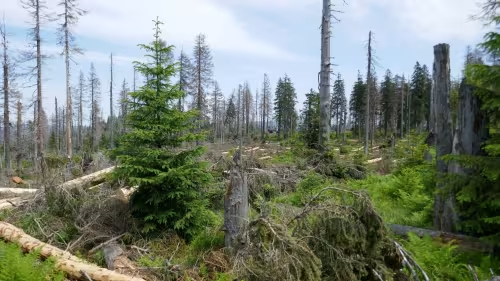
How to live with bark beetles in a warming climate?
Bark beetle outbreaks expose tensions between conservation, forest resilience, timber production and economic interests.
- Resilient forests