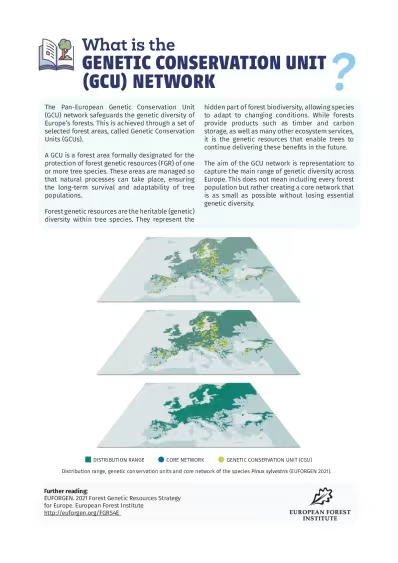
The Pan-European Genetic Conservation Unit (GCU) network safeguards the genetic diversity of Europe’s forests. This is achieved through a set of selected forest areas, called Genetic Conservation Units (GCUs).
A GCU is a forest area formally designated for the protection of forest genetic resources (FGR) of one or more tree species. These areas are managed so that natural processes can take place, ensuring the long-term survival and adaptability of tree populations.
Forest genetic resources are the heritable (genetic) diversity within tree species. They represent the hidden part of forest biodiversity, allowing species to adapt to changing conditions. While forests provide products such as timber and carbon storage, as well as many other ecosystem services, it is the genetic resources that enable trees to continue delivering these benefits in the future.
The aim of the GCU network is representation: to capture the main range of genetic diversity across Europe. This does not mean including every forest population but rather creating a core network that is as small as possible without losing essential
genetic diversity.
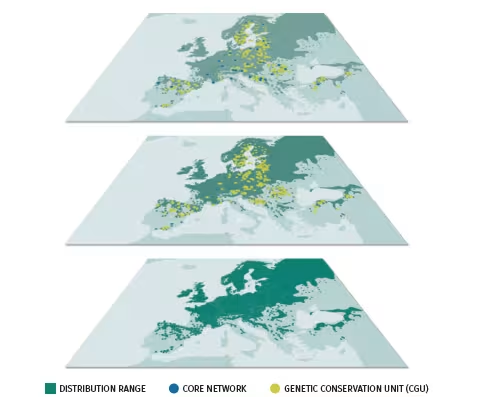
Distribution range, genetic conservation units and core network of the species Pinus sylvestris (EUFORGEN 2021).
Photo by:
euforgen.org
Further reading
EUFORGEN. 2021 Forest Genetic Resources Strategy for Europe. European Forest Institute. http://euforgen.org/FGRS4E

Related content
What is genetic monitoring and is it important for forest(ry)?
Genetic monitoring is the measurement of changes in genetic variation & structure within populations over time, based on selected genetic…
- Resilient forests

What are the key steps for planning biodiversity monitoring in forest restoration?
Structured monitoring is essential not only to demonstrate restoration success but to guide and improve ongoing efforts.
- Resilient forests
Forests of the Future: Research and forest management in an era of change
Contemporary approaches to forest ecology, close-to-nature silviculture, biodiversity, monitoring, and long-term research.
17 September 2026 – 20 September 2026
- Resilient forests