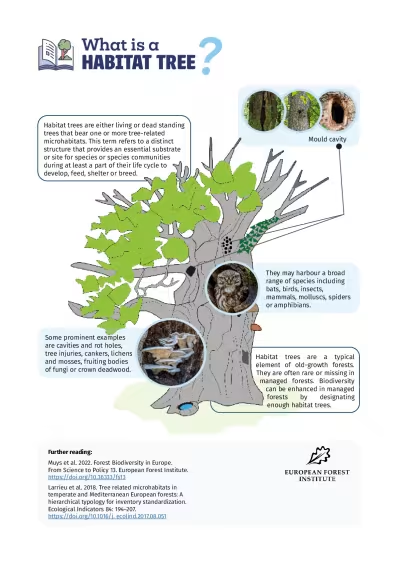
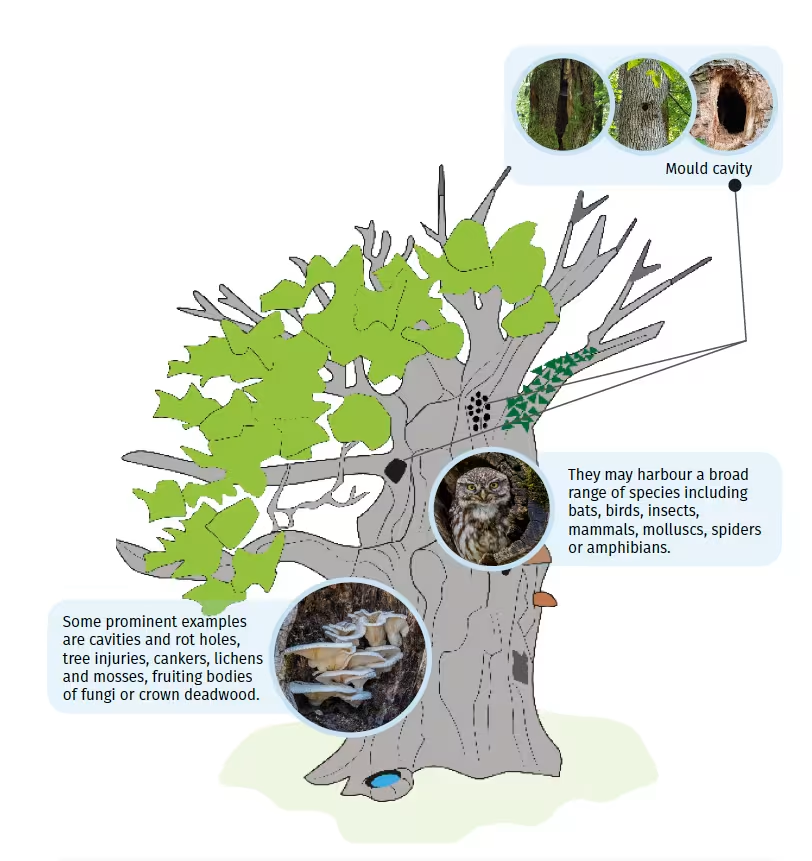
Habitat trees are either living or dead standing trees that bear one or more tree-related microhabitats. This term refers to a distinct structure that provides an essential substrate or site for species or species communities during at least a part of their life cycle to develop, feed, shelter or breed.
Habitat trees are a typical element of old-growth forests. They are often rare or missing in managed forests. Biodiversity can be enhanced in managed forests by designating enough habitat trees.
Further reading
Muys et al. 2022. Forest Biodiversity in Europe. From Science to Policy 13. European Forest Institute. https://doi.org/10.36333/fs13
Larrieu et al. 2018. Tree related microhabitats in temperate and Mediterranean European forests: A hierarchical typology for inventory standardization. Ecological Indicators 84: 194–207. https://doi.org/10.1016/j.ecolind.2017.08.051

Related content
What is the Genetic Conservation Unit (GCU) Network?
Europe’s forest genetic diversity is safeguarded by the Pan-European GCU network through designated Genetic Conservation Units.
- Resilient forests

What are the key steps for planning biodiversity monitoring in forest restoration?
Structured monitoring is essential not only to demonstrate restoration success but to guide and improve ongoing efforts.
- Resilient forests
What is forest biodiversity?
Forest biodiversity includes not only species diversity, but also the variety of functions they perform, from genes to landscapes.
- Resilient forests