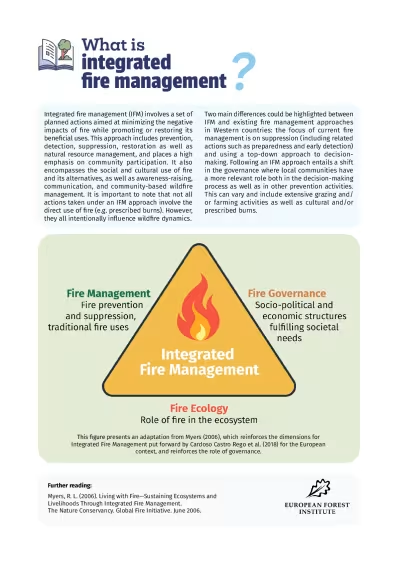
Integrated fire management (IFM) involves a set of planned actions aimed at minimizing the negative impacts of fire while promoting or restoring its beneficial uses. This approach includes prevention, detection, suppression, restoration as well as natural resource management, and places a high emphasis on community participation. It also encompasses the social and cultural use of fire and its alternatives, as well as awareness-raising, communication, and community-based wildfire management. It is important to note that not all actions taken under an IFM approach involve the direct use of fire (e.g. prescribed burns). However, they all intentionally influence wildfire dynamics.
Two main differences could be highlighted between IFM and existing fire management approaches in Western countries: the focus of current fire management is on suppression (including related actions such as preparedness and early detection) and using a top-down approach to decision-making. Following an IFM approach entails a shift in the governance where local communities have a more relevant role both in the decision-making process as well as in other prevention activities. This can vary and include extensive grazing and/or farming activities as well as cultural and/or prescribed burns.
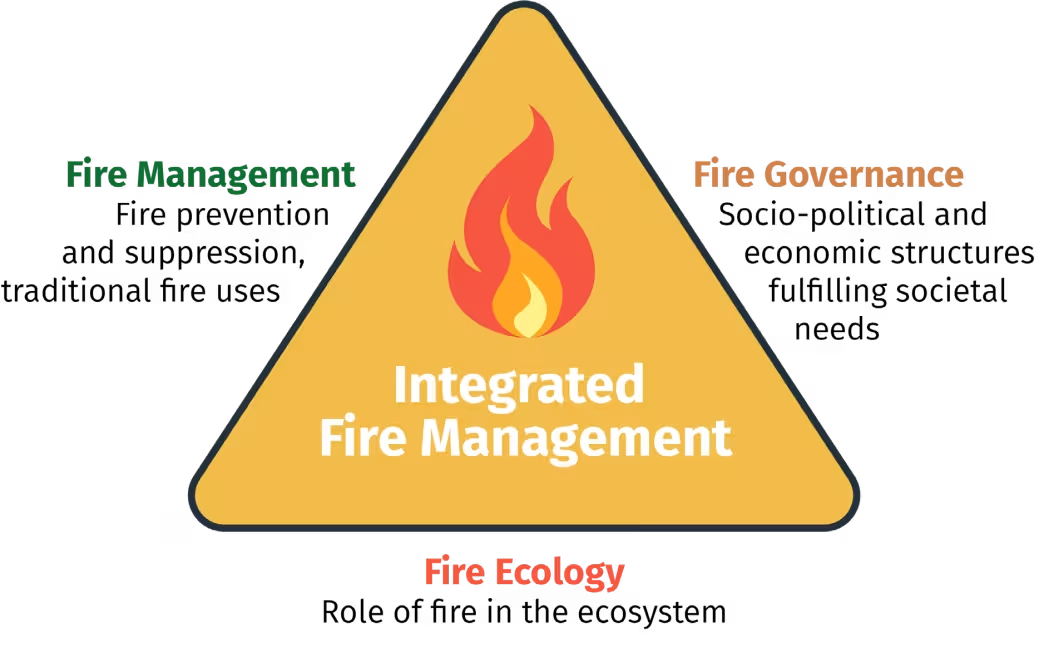
This figure presents an adaptation from Myers (2006), which reinforces the dimensions for Integrated Fire Management put forward by Cardoso Castro Rego et al. (2018) for the European context, and reinforces the role of governance.
Further reading
Myers, R. L. (2006). Living with Fire—Sustaining Ecosystems and Livelihoods Through Integrated Fire Management. The Nature Conservancy. Global Fire Initiative. June 2006.

Related content
FoRISK recognised in EU Council Recommendation on Integrated Wildfire Management
FoRISK is recognised in a new EU Council Recommendation as a key initiative advancing cooperation and capacity building on forest risks.
- Resilient forests
Integrated wildfire management and forest resilience take centre stage in the 10th FOREST EUROPE Ministerial Conference
FoRISK highlighted wildfire prevention, resilient forest management and cross-sector cooperation at the FOREST EUROPE 2026 Ministerial Conference.
- Resilient forests
Integrated Fire Management – empowering action for a fire-resilient Europe
The mitigation of wildfire impacts in Europe necessitates moving beyond reactive suppression towards Integrated Fire Management.
- Resilient forests