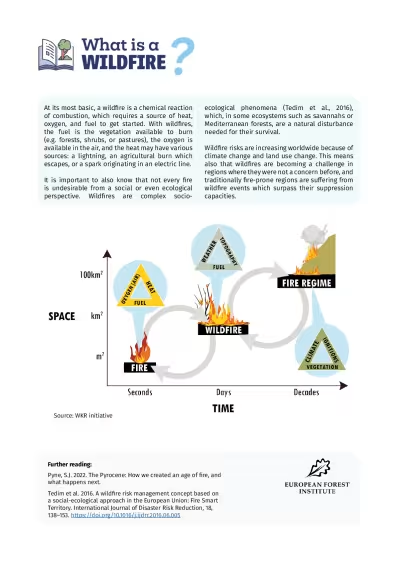
At its most basic, a wildfire is a chemical reaction of combustion, which requires a source of heat, oxygen, and fuel to get started. With wildfires, the fuel is the vegetation available to burn (e.g. forests, shrubs, or pastures), the oxygen is available in the air, and the heat may have various sources: a lightning, an agricultural burn which escapes, or a spark originating in an electric line.
It is important to also know that not every fire is undesirable from a social or even ecological perspective. Wildfires are complex socioecological phenomena (Tedim et al., 2016), which, in some ecosystems such as savannahs or Mediterranean forests, are a natural disturbance needed for their survival.
Wildfire risks are increasing worldwide because of climate change and land use change. This means also that wildfires are becoming a challenge in regions where they were not a concern before, and traditionally fire-prone regions are suffering from wildfire events which surpass their suppression capacities.
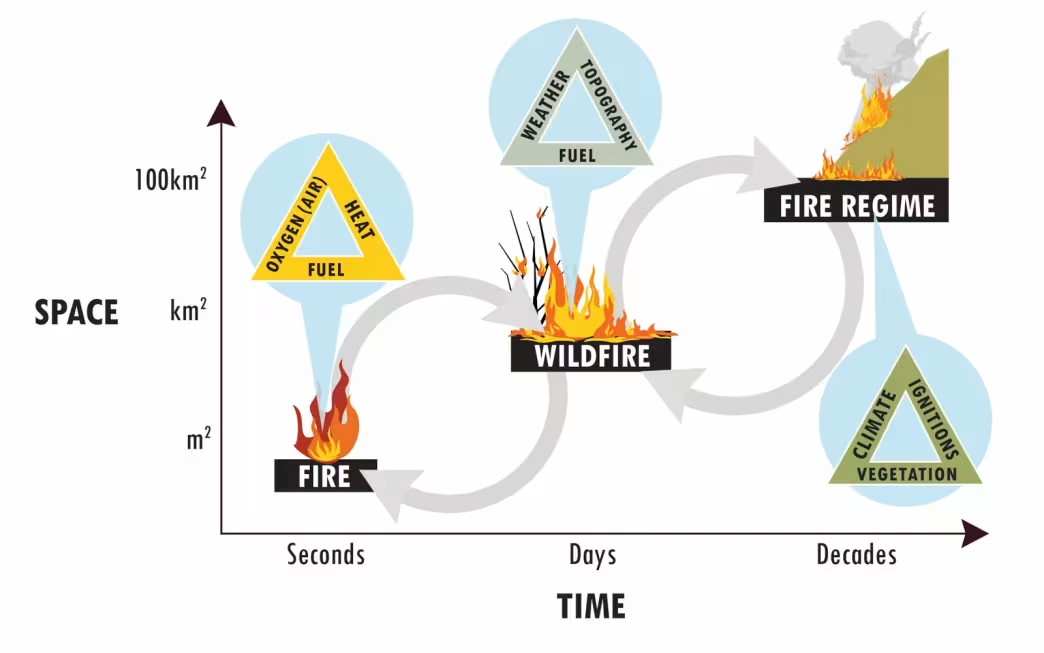
Photo by:
WKR Initiative
Further reading
Pyne, S.J. 2022. The Pyrocene: How we created an age of fire, and what happens next.
Tedim et al. 2016. A wildfire risk management concept based on a social-ecological approach in the European Union: Fire Smart
Territory. International Journal of Disaster Risk Reduction, 18, 138–153. https://doi.org/10.1016/j.ijdrr.2016.06.005
Related content
Acciones para la resiliencia de los paisajes mediterráneos: 10 casos prácticos
Diez casos muestran cómo gestores mediterráneos se adaptan al cambio climático mediante colaboración y mejor gestión agrícola y forestal.
- Resilient forests
Actions for the resilience of Mediterranean landscapes: 10 case studies
Ten case studies highlight how Mediterranean land managers adapt to climate change through collaboration and better governance of farms and forests.
- Resilient forests
Accions per a la resiliència dels paisatges mediterranis: 10 casos pràctics
Deu casos d’estudi mostren com els gestors del territori mediterrani s’adapten al canvi climàtic mitjançant la col·laboració i una millor governança…
- Resilient forests