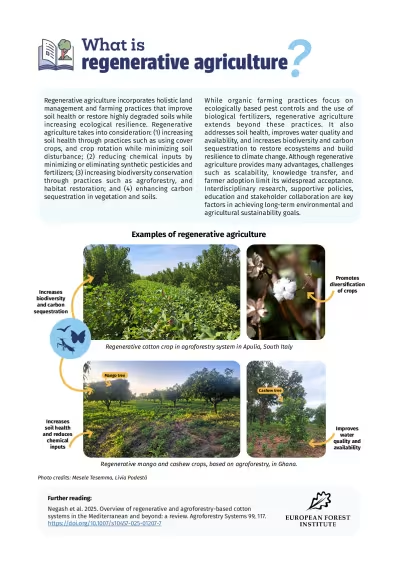
Regenerative agriculture incorporates holistic land management and farming practices that improve soil health or restore highly degraded soils while increasing ecological resilience. Regenerative agriculture takes into consideration:
- increasing soil health through practices such as using cover crops, and crop rotation while minimizing soil disturbance;
- reducing chemical inputs by minimizing or eliminating synthetic pesticides and fertilizers;
- increasing biodiversity conservation through practices such as agroforestry, and habitat restoration; and
- enhancing carbon sequestration in vegetation and soils.
While organic farming practices focus on ecologically based pest controls and the use of biological fertilizers, regenerative agriculture extends beyond these practices. It also addresses soil health, improves water quality and availability, and increases biodiversity and carbon sequestration to restore ecosystems and build resilience to climate change. Although regenerative agriculture provides many advantages, challenges such as scalability, knowledge transfer, and farmer adoption limit its widespread acceptance. Interdisciplinary research, supportive policies, education and stakeholder collaboration are key factors in achieving long-term environmental and agricultural sustainability goals.
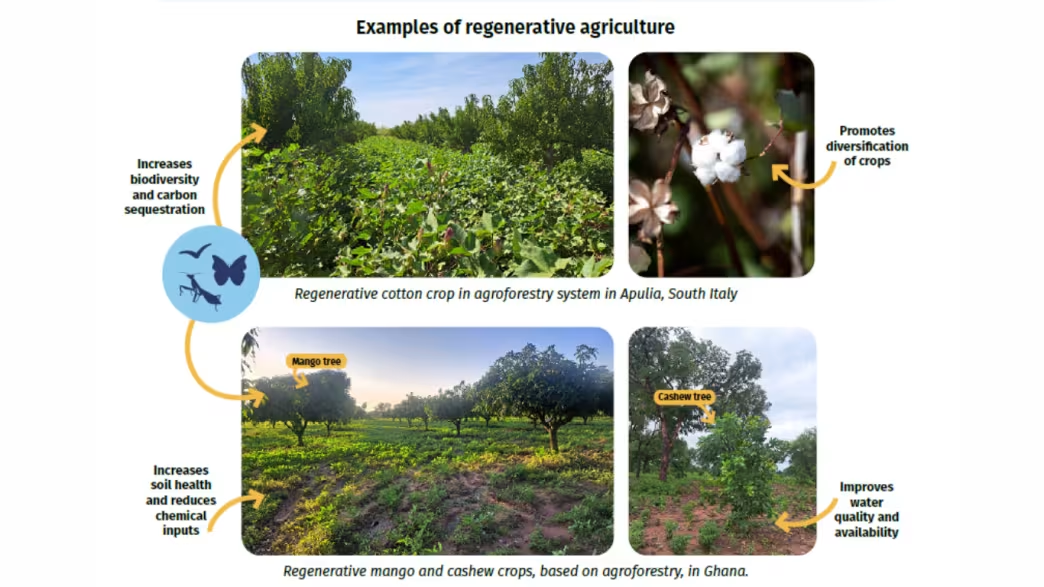
Photo by:
Mesele Tesemma & Livia Podestà
Further reading
Negash et al. 2025. Overview of regenerative and agroforestry-based cotton systems in the Mediterranean and beyond: a review. Agroforestry Systems 99, 117. https://doi.org/10.1007/s10457-025-01207-7


Related content
How are forest soils monitored and what are the challenges?
Forest soil monitoring uses repeated sampling and indicators to assess carbon storage, soil health and ecosystem change.
- Resilient forests
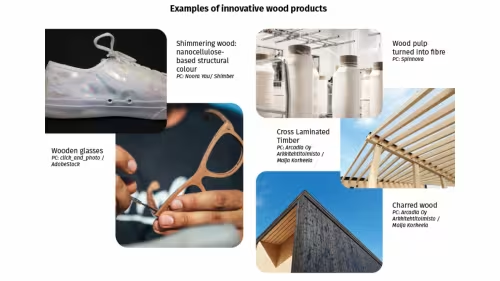
What are innovative wood products?
Innovative wood products use advanced processing and bioengineering to create more sustainable, functional, high-value materials from wood.
- Co-created solutions
What is the Index of Biodiversity Potential?
The Index of Biodiversity Potential (IBP) is an (indirect) biodiversity evaluation tool co-designed by foresters and researchers.
- Co-created solutions