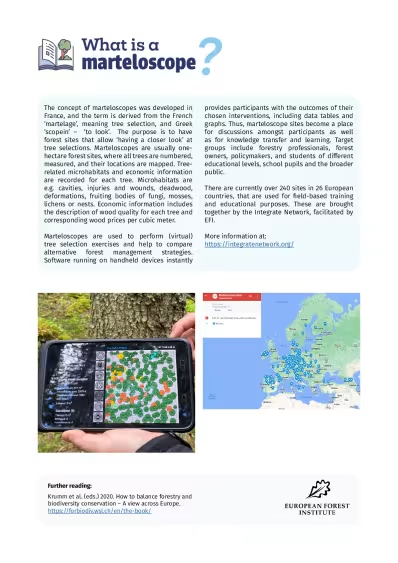
The concept of marteloscopes was developed in France, and the term is derived from the French ‘martelage’, meaning tree selection, and Greek ‘scopein’ – ‘to look’. The purpose is to have forest sites that allow ‘having a closer look’ at tree selections. Marteloscopes are usually one hectare forest sites, where all trees are numbered, measured, and their locations are mapped. Tree related microhabitats and economic information are recorded for each tree. Microhabitats are e.g. cavities, injuries and wounds, deadwood, deformations, fruiting bodies of fungi, mosses, lichens or nests. Economic information includes the description of wood quality for each tree and corresponding wood prices per cubic meter.
Marteloscopes are used to perform (virtual) tree selection exercises and help to compare alternative forest management strategies. Software running on handheld devices instantly provides participants with the outcomes of their chosen interventions, including data tables and graphs. Thus, marteloscope sites become a place for discussions amongst participants as well as for knowledge transfer and learning. Target groups include forestry professionals, forest owners, policymakers, and students of different educational levels, school pupils and the broader public.
There are currently over 240 sites in 26 European countries, that are used for field-based training and educational purposes. These are brought together by the Integrate Network, facilitated by EFI.
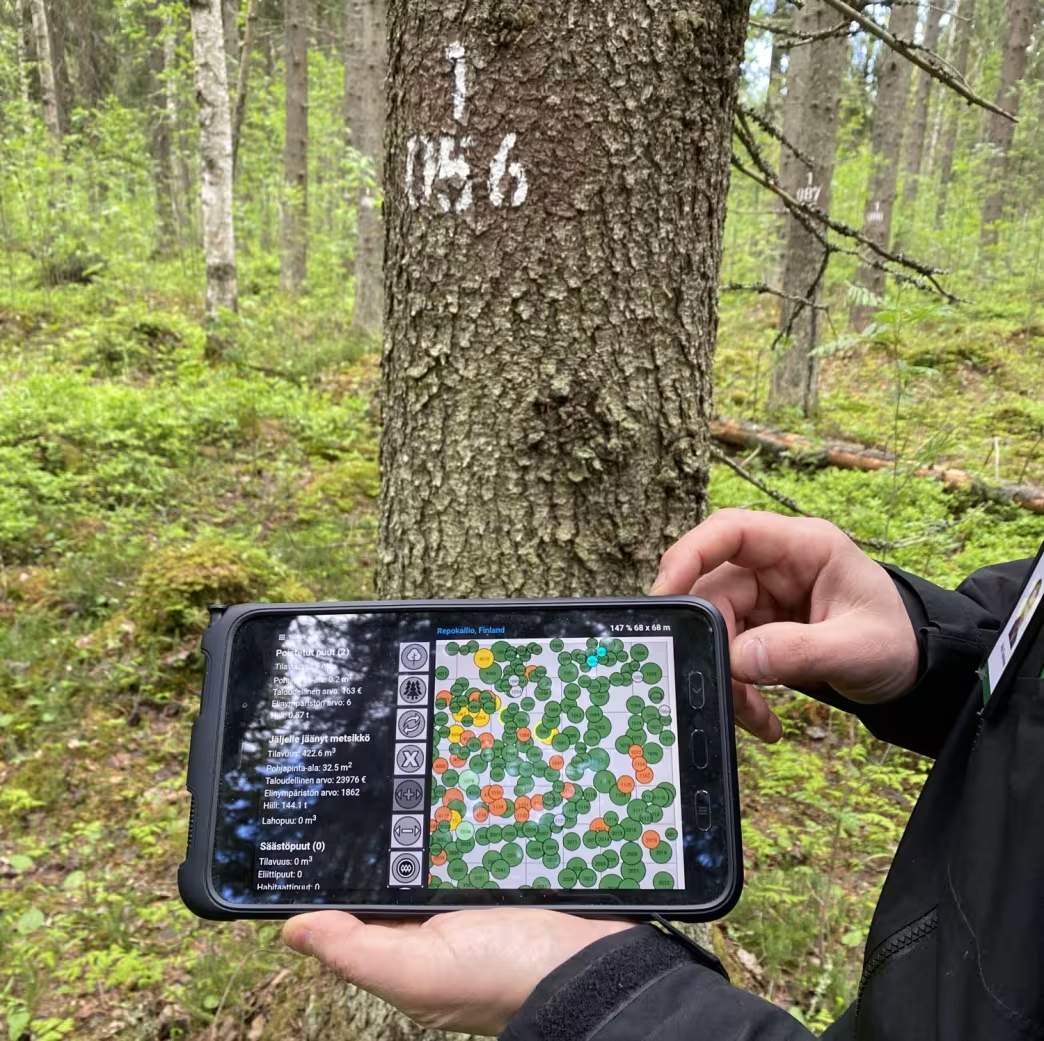
Photo by:
Minna Korhonen, EFI
Further reading
Krumm et al. (eds.) 2020. How to balance forestry and biodiversity conservation – A view across Europe. https://forbiodiv.wsl.ch/en/the-book/

Related content
What is the Index of Biodiversity Potential?
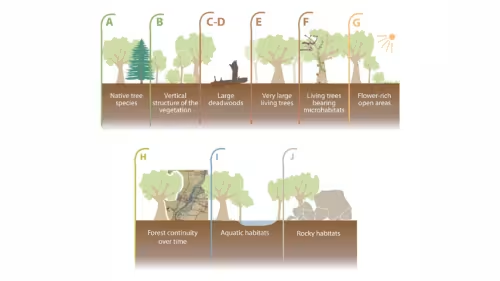
The Index of Biodiversity Potential (IBP) is an (indirect) biodiversity evaluation tool co-designed by foresters and researchers.
- Co-created solutions
From strategy to action: EUFORE’s legacy gains momentum
EUFORE's final stakeholder event focused on the project's legacy with its SRIA and new FOREST Partnership.
- Co-created solutions
Forest Momentum: From Strategy to Action
Forest Momentum brings together EUFORE, MoniFun, and FOREST Partnership for dialogue, exchange, and collaboration for the future of Europe’s forests.
28 September 2026 – 30 September 2026
- Co-created solutions