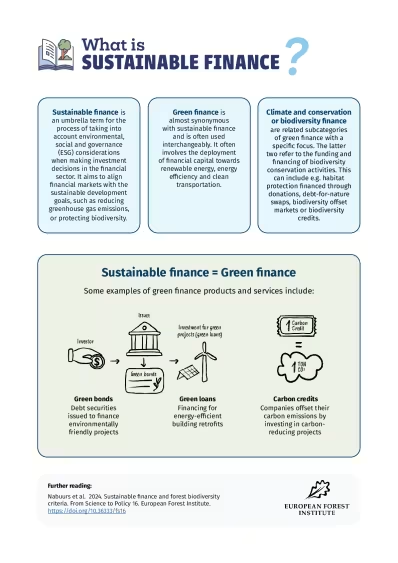
Sustainable finance is an umbrella term for the process of taking into account environmental, social and governance (ESG) considerations when making investment decisions in the financial sector. It aims to align financial markets with the sustainable development goals, such as reducing greenhouse gas emissions, or protecting biodiversity.
Green finance is almost synonymous with sustainable finance and is often used interchangeably. It often involves the deployment of financial capital towards renewable energy, energy efficiency and clean transportation.
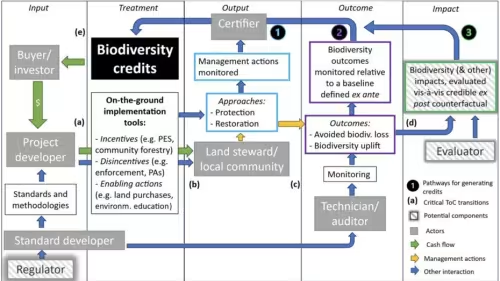
Climate and conservation or biodiversity finance are related subcategories of green finance with a specific focus. The latter two refer to the funding and financing of biodiversity conservation activities. This can include e.g. habitat protection financed through donations, debt-for-nature swaps, biodiversity offset markets or biodiversity credits.
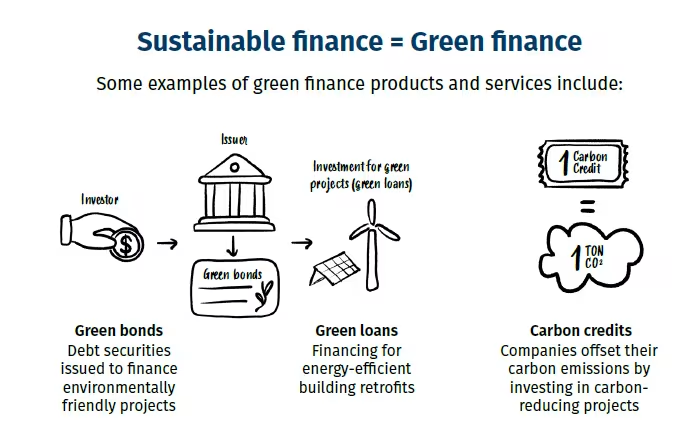
Further reading
Nabuurs et al. 2024. Sustainable finance and forest biodiversity criteria. From Science to Policy 16. European Forest Institute. https://doi.org/10.36333/fs16
Related content
How is forest biodiversity funded, now and in the future?
Forest financing still linked to timber
- Sustainable economy
Trase
Trase empowers users with data and insight to eliminate deforestation and transition towards more sustainable agricultural supply chains.
- Sustainable economy
EFI and Italy host high-level discussion on forest finance
EFI and the Government of Italy hosted a high-level discussion on forest financing, focusing on restoration and biodiversity conservation.
- Sustainable economy