Why are biotic disturbances becoming a bigger threat to Europe’s forests?
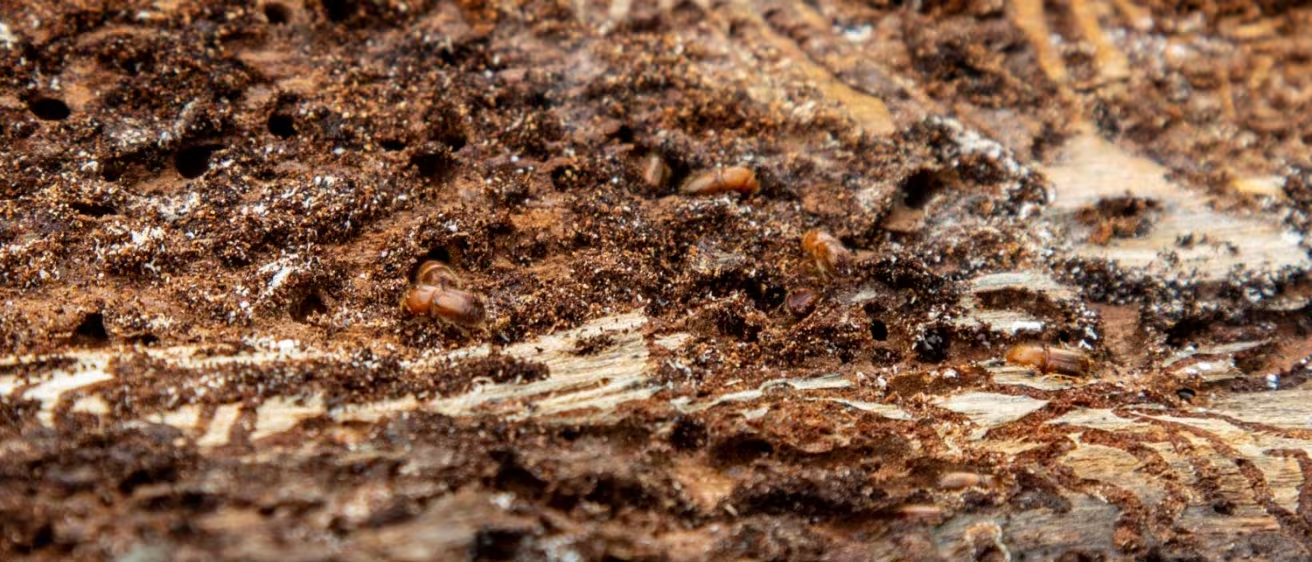
Photo by:
Rosa Castañeda
Natural disturbances are an integral part of forest ecosystems. For instance, a windstorm that kills some trees in a forest makes light available at the forest floor for other young trees to establish, rejuvenating the ecosystem. At the same time, dead trees offer habitats where biodiversity thrive, and the decomposing wood makes its chemicals available in the soil, nourishing life and biogeochemical cycles (Turner, 2010).
However, rising temperatures and extreme events due to unraveling climate change are prompting a strong natural disturbances’ increase in European forests (Patacca et al., 2023). These effects are amplified by forest structure and composition influenced by past forest management, which interact with disturbance impacts (Seidl & Senf, 2025). Disturbance increasing impacts have large consequences at economical (Mohr et al., 2025) and societal level (Lecina-Diaz et al., 2024), while also hampering the role forests have in mitigating climate change (Pugh et al., 2019).
Biotic disturbances: what are they and what is their current impact
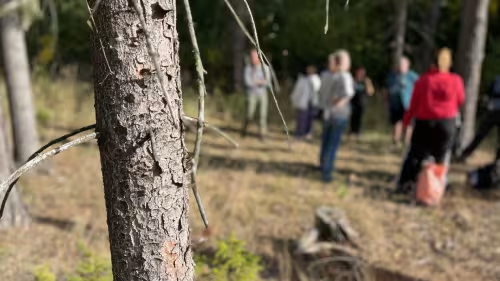
Biotic agents are represented by insect pests and pathogens (e.g. fungi, virus). Insect pests can be further divided into two groups: wood borers and herbivorous defoliators. Borers dig galleries in the stems of trees, impeding them to transport carbohydrates from the leaves to the roots, starving trees to death. Defoliators affect the canopy of trees, reducing their ability to make photosynthesis, but not always leading to trees’ death. Pathogens can spread through direct root contact (e.g. fungi of the genera Phytophthora), through a vector (e.g. wind like for the Ash dieback disease) or both (e.g. through both root contact and a vector insect, like in the case of the Dutch Elm disease).
Despite the main damage cause in European forests is represented by windstorms (46% of damage between 1950–2019), the strongest increase in damage was due to the increase of tree mortality caused by biotic agents (i.e. insect pests and pathogens, average increase of 318,000 m3/year damage), representing the 25% of the total damage (Patacca et al., 2023). Focusing on the last decade only, the extent of damage caused by biotic agents has exceeded damage by abiotic causes, highlighting a potential shift towards a novel disturbance regime driven by climate change (Das et al., 2025).
The highest share of damage among biotic agents is caused by wood borers (also known as bark beetles). In 2000–2022 bark-beetles damaged 684 million m3 of wood, of which 98.4% was caused to conifer tree species, and 92.3% on Norway spruce (P. abies), the most important European wood source (Hlásny et al., 2025). The oldest and carbon richest stands of Norway spruce were disproportionally affected (Besnard et al., 2026).
The role of climate change in biotic disturbance increase
Because biotic disturbances are caused by living organisms, the direct impacts of climate change on their dynamics have a dual nature.
On the one hand, increasing temperature and longer, milder growing seasons allow for those organisms to proliferate by reducing winter mortality and increasing the number of generations they can reproduce per year. For instance, the main bark beetle feeding on Norway spruce – Ips typographus – recently passed from reproducing two generations to four/five generations per year in central Europe. Warmer and wetter conditions have also been found to foster pathogens' activity, especially fungi.
On the other hand, increasing heatwaves and droughts debilitate the resistance of the host tree species to biotic pressure. When under stress, trees have less resources to defend themselves from attacks, resulting therefore more vulnerable and having higher chances of mortality.
Because of these factors, biotic pressure is also expanding geographically in places that were not suitable for biotic agents before. Recent data indicate increasing biotic damage at higher elevations and northern latitudes, tapping into large reservoirs of host tree species that were unreachable before (Hartmann et al., 2025). New research shows how the previous understanding of decreasing insect disturbances with latitude is not supported anymore, as local climate extremes influenced by topography and the local context overrule the latitudinal gradient (Hlásny et al., 2025). Models project a further increase of biotic disturbance damages in the future (Grϋnig et al., 2026).
The role of humans in biotic disturbance increase
Anthropogenic activities are also influencing biotic disturbance increase in different ways. The more direct way is due to the introduction of alien biotic agents in new ecosystems. This has been favoured by the globalisation of economic markets. Together with exported or imported goods biotic agents have been accidentally introduced in ecosystems where they lack their natural competitors, and are able to freely spread. This has been observed in many cases affecting important European tree species, like the above-mentioned Elm and Ash disease, or the sweet chestnut (C. sativa), heavily affected by the Asian chestnut gall wasp. Strong controls are needed to avoid other episodes, but their implementation is difficult.
References
Besnard, S., Viana-Soto, A., Hartmann, H., Patacca, M., Heinrich, V. H., Kowalski, K., ... & Senf, C. (2026). Natural disturbances from bark beetle outbreaks and windthrow increasingly affect Europe's most mature and carbon-rich forests. Biogeosciences, 23(17), 5983–6002. https://doi.org/10.5194/bg-23-5983-2026
Das, A. K., Baldo, M., Dobor, L., Seidl, R., Rammer, W., Modlinger, R., ... & Hlásny, T. (2025). The increasing role of drought as an inciting factor of bark beetle outbreaks can cause large-scale transformation of Central European forests. Landscape ecology, 40(6), 108. https://doi.org/10.1007/s10980-025-02125-w
Grünig, M., Rammer, W., Senf, C., Albrich, K., André, F., Augustynczik, A. L., ... & Seidl, R. (2026). Climate change will increase forest disturbances in Europe throughout the 21st century. Science, 391(6789), eadx6329. https://doi.org/10.1126/science.adx6329
Hartmann, H., Battisti, A., Brockerhoff, E. G., Bełka, M., Hurling, R., Jactel, H., ... & Fischer, R. (2025). European forests are under increasing pressure from global change-driven invasions and accelerating epidemics by insects and diseases. Journal für Kulturpflanzen, 77(02), 6–24. https://doi.org/10.5073/JfK.2025.02.02
Hlásny, T., Modlinger, R., Gohli, J., Seidl, R., Krokene, P., Bernardinelli, I., ... & Liebhold, A. M. (2025). Divergent trends in insect disturbance across Europe's temperate and boreal forests. Global change biology, 31(11), e70580. https://doi.org/10.1111/gcb.70580
Lecina‐Diaz, J., Senf, C., Grünig, M., & Seidl, R. (2024). Ecosystem services at risk from disturbance in Europe's forests. Global change biology, 30(3), e17242. https://doi.org/10.1111/gcb.17242
Mohr, J. S., Bastit, F., Grünig, M., Knoke, T., Rammer, W., Senf, C., ... & Seidl, R. (2025). Rising cost of disturbances for forestry in Europe under climate change. Nature Climate Change, 15(10), 1078–1083. https://doi.org/10.1038/s41558-025-02408-9
Patacca, M., Lindner, M., Lucas‐Borja, M. E., Cordonnier, T., Fidej, G., Gardiner, B., ... & Schelhaas, M. J. (2023). Significant increase in natural disturbance impacts on European forests since 1950. Global change biology, 29(5), 1359–1376. https://doi.org/10.1111/gcb.16531
Pugh, T. A., Arneth, A., Kautz, M., Poulter, B., & Smith, B. (2019). Important role of forest disturbances in the global biomass turnover and carbon sinks. Nature geoscience, 12(9), 730–735. https://doi.org/10.1038/s41561-019-0427-2
Seidl, R., & Senf, C. (2024). Changes in planned and unplanned canopy openings are linked in Europe’s forests. Nature Communications, 15(1), 4741. https://doi.org/10.1038/s41467-024-49116-0
Turner, M. G. (2010). Disturbance and landscape dynamics in a changing world. Ecology, 91(10), 2833–2849. https://doi.org/10.1890/10-0097.1

Related content
The future of European forest disturbance regimes
The increase of forest disturbances in Europe is projected to continue, reaching unprecedented levels in the second half of the 21st century.
- Resilient forests
How has climate change affected EU forests and what might happen next?
Extreme weather events and other disturbances have been amplified, often connected to climate change.
- Resilient forests

The forest that refused the rulebook
Journalists, scientists and forest experts explore how different perspectives shape decisions on forest health and post-disturbance management in…
- Forests and people