Forest context
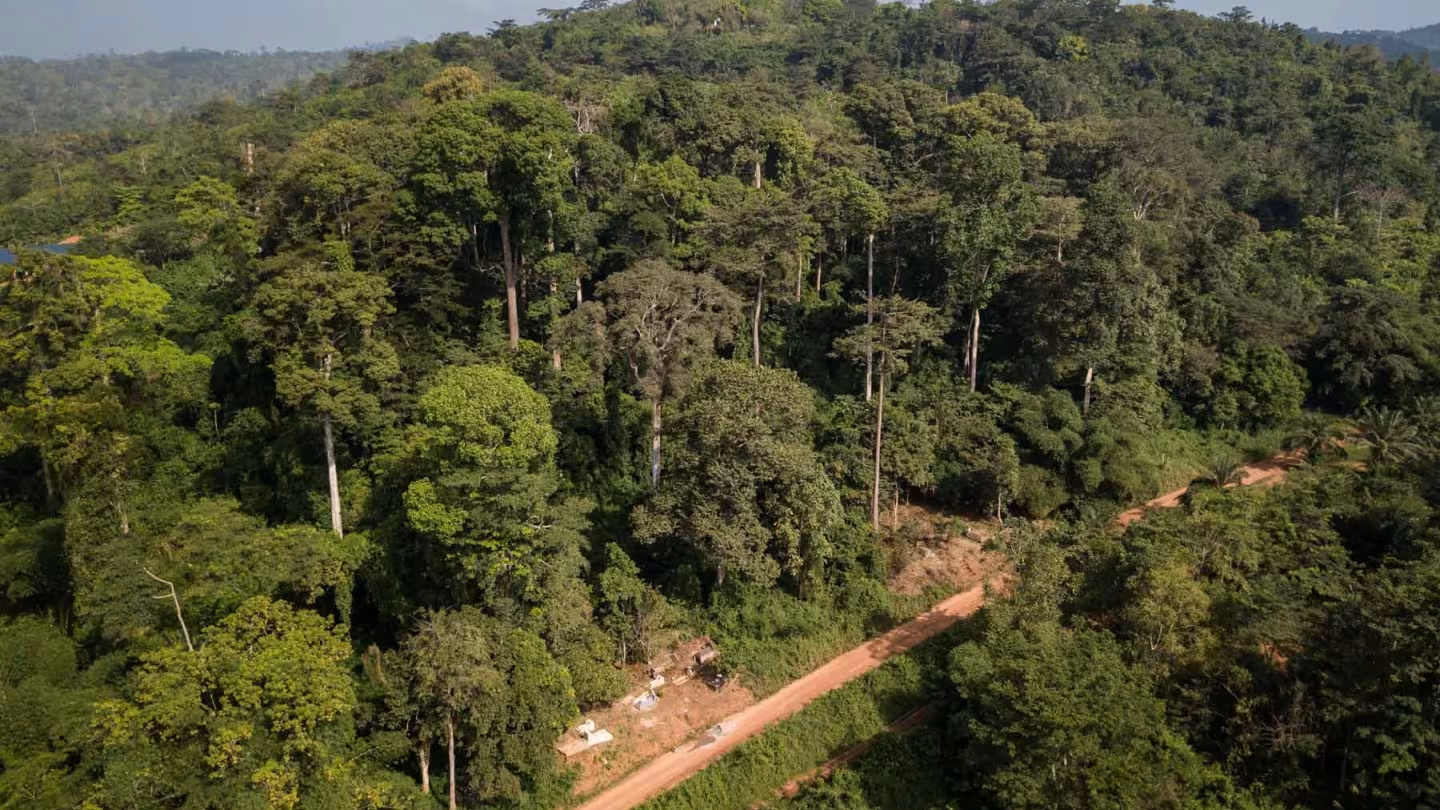
Ghana’s forests are a cornerstone of its cultural heritage, biodiversity, and economy. The country has a diverse mix of landscapes, with three main ecological zones: savannah, high forest and transition zones. Across these zones, agriculture shapes land use with various food and cash crops being produced, including cocoa, rubber and timber, and is in some cases driving forest loss. Deforestation continues to take place due to agricultural expansion, logging, illegal mining (galamsey), wildfires, charcoal production, and livestock grazing. In response to these challenges, Ghana has built robust governance and policy frameworks to promote forest restoration and ensure commodity production is deforestation-free and legal.
Our Approach
EFI collaborates with stakeholders including government, producer associations, civil society, and the private sector in Ghana. Our work is structured around several key areas:
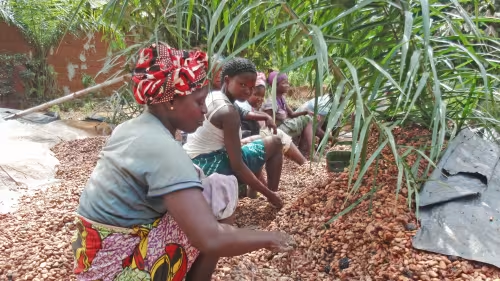
- Cocoa sector – we support COCOBOD, Forestry Commission and other actors to integrate geolocation and spatial data, legality information, and deforestation risk assessment tools to promote deforestation-free, traceable, and sustainable cocoa supply chains. We also support implementation of the African Regional Standard for Sustainable Cocoa (ARS 1000) in Ghana.
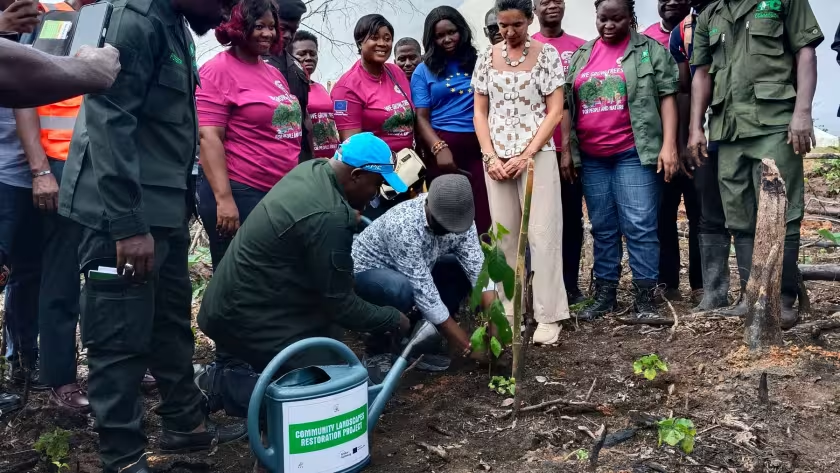
- Forest restoration – we support CSOs and other local actors by sharing best practices and building capacity for forest restoration. Through our grant scheme, NGOs restore degraded forests and strengthen community-led resource management. Results from these projects inform policy discussions to strengthen Ghana’s long-term restoration strategy.
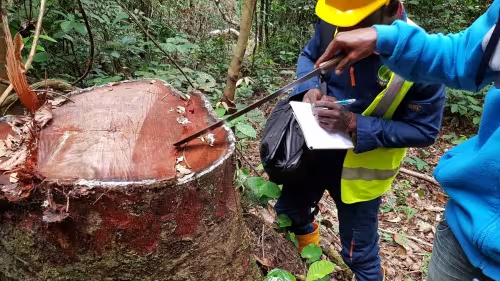
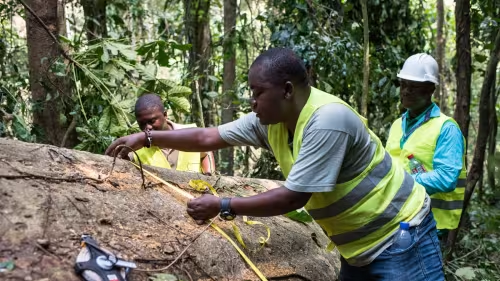
- Forest Law Enforcement, Governance and Trade (FLEGT) – we support the Forestry Commission in strengthening its timber tracking and legality verification system, building capacity on FLEGT licensing, and raising awareness in international markets. We also support multistakeholder platforms to monitor the timber sector for illegal activities and advance dialogue on tree tenure, thereby strengthening forest governance.
Projects in Ghana
Technical facility on deforestation-free value chains
We collaborate with commodity-producing countries to assist in transitioning to legal and deforestation-free value chains.
- Sustainable economy
EU Sustainable Forest and Cocoa Programme
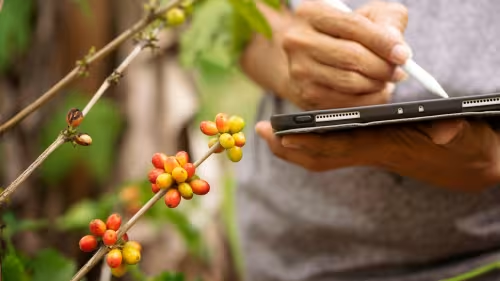
The programme supports sustainable cocoa production, forest governance, and forest restoration in Ghana.
- Inclusive governance
EFI Rapid Response Programme
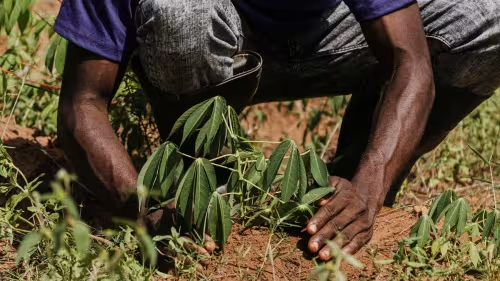
We support countries to strengthen forest governance and address land-use and climate challenges.
- Inclusive governance
Sustainable Cocoa Programme
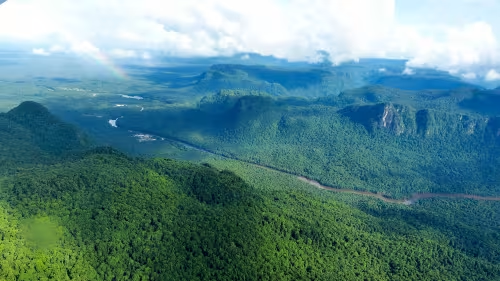
We support the EU Flagship Initiative on Sustainable Cocoa, in Cote d’Ivoire, Ghana and Cameroon.
- Inclusive governance
VPA Africa - Latin America Facility
We worked with partners in Africa and Latin America engaged in FLEGT Voluntary Partnership Agreements.
- Inclusive governance
EU FLEGT Facility
We supported the EU and timber-producing countries in the implementation of the FLEGT Action Plan with a focus on Voluntary Partnership Agreements.
- Inclusive governance
Latest Ghana news
Showcase of Ghana forest restoration grant projects
Celebrating the early successes of four forest restoration projects towards restoring degraded landscapes and supporting community livelihoods.
- Forests and people
Latest Ghana publications
Farmer-managed natural regeneration: Helping trees regrow naturally on your land
This infographic outlines the steps farmers can take to help naturally regrowing trees on their lands to survive and thrive.
- Forests and people

EU Deforestation Regulation: Early responses in producer countries
Early evidence shows how producer countries are adapting to the EU Deforestation Regulation through traceability, legal reviews, and coordination.
- Inclusive governance
