Photo by:
Freepik
EU Sustainable Forest and Cocoa Programme
Forest context
The Ghanaian cocoa sector is a main driver of economic growth in the country, supporting more than 800,000 farmers and providing further indirect employment throughout the value chain. The forest sector is another important contributor to the economy, leading to Ghana becoming the second country worldwide to issue FLEGT licences certifying the legality of its timber. Ghana’s forests face pressures from agricultural expansion, illegal logging and mining, and other factors. Forest and landscape restoration is guided by national policies and put into action through partnerships between government, civil society, and the private sector.
Our objective: improve sustainable cocoa production and forest management
The programme supports sustainable cocoa production, forest governance, and forest restoration in Ghana. In the cocoa sector, we facilitate international dialogue on sustainable cocoa and promote traceability and transparency in the cocoa value chain to reinforce the credibility of the sector. In the forest sector, we facilitate multi-stakeholder dialogue platforms for information sharing, capacity building and monitoring, allowing civil society, local communities, businesses, and government to collaborate on enforcing rules and shaping reforms to combat illegal logging. We also support local organisations and farmers to restore degraded forests, thereby enhancing governance and improving the management within priority landscapes.
Our work: supporting stakeholders to achieve deforestation-free cocoa supply chains, and restore and protect forests
Through the programme, we collaborate with stakeholders in the cocoa and timber sectors including COCOBOD, the Forestry Commission, the private sector, civil society organisations, and academia to advance sustainable cocoa production, promote responsible forest management and encourage community-led forest restoration. The programme is funded by the EU Delegation to Ghana and runs from 2023-2028.
Our work is structured around three main components:
Sustainable cocoa
We provide technical support to the development and refinement of tools and systems for traceability and deforestation risk monitoring, in addition to supporting international multistakeholder dialogues on sustainable cocoa. Activities of this component are part of the regional Sustainable Cocoa Programme.
Forest governance
We help civil society organisations and the private sector to actively participate in Forest Law Enforcement, Governance and Trade (FLEGT) decision-making spaces, and support these actors as the FLEGT Voluntary Partnership Agreement (VPA) operational phase begins. Training, information, and practical support allows them to more effectively engage on issues relating to timber legality, and forest governance and monitoring. We also help civil society track how the timber legality system is working, including observing audits, monitoring forest cover, investigating illegal logging, and sharing success stories on reforestation and improved governance. Our work emphasises the role of women and youth.
Restoration
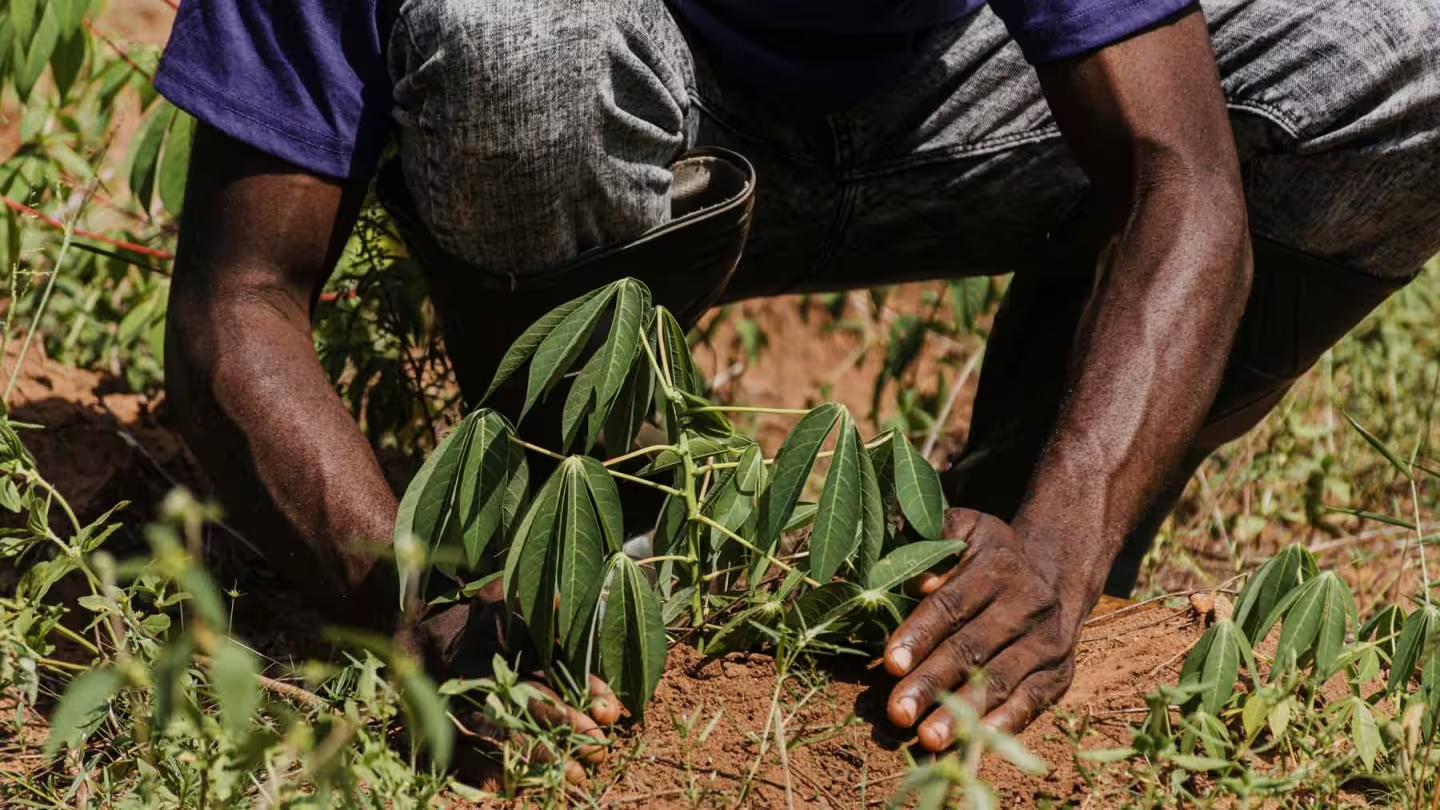
We support non-governmental and community-based organisations to implement restoration activities in degraded forest lands in Ghana’s High Forest and Savanna ecological zones. Through grants, we support tree planting, natural regeneration, agroforestry, livelihood enhancements, and capacity building tailored to respond to local ecological and socio-economic conditions. We encourage innovation and the use of best practices to strengthen restoration impacts.
Latest news
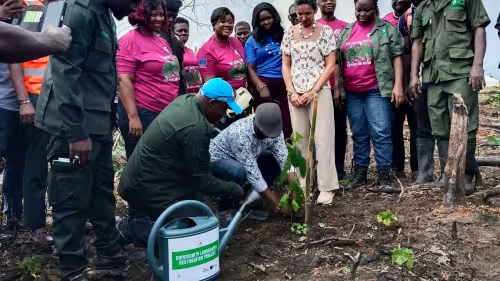
Showcase of Ghana forest restoration grant projects
Celebrating the early successes of four forest restoration projects towards restoring degraded landscapes and supporting community livelihoods.
- Forests and people
Latest publications
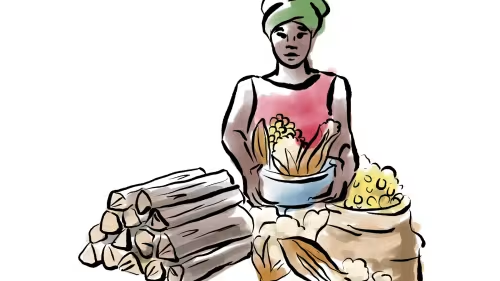
Farmer-managed natural regeneration: Helping trees regrow naturally on your land
This infographic outlines the steps farmers can take to help naturally regrowing trees on their lands to survive and thrive.
- Forests and people




Communications contact

Related content
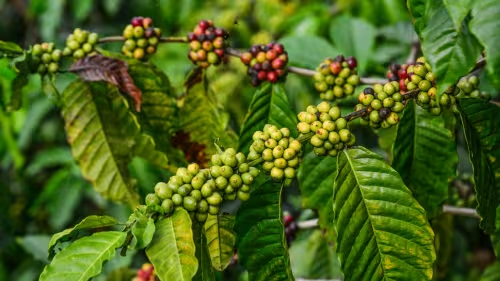
Advancing jurisdictional sustainability in the Central Highlands region of Viet Nam
Developing a jurisdictional sustainability framework and an associated monitoring system in Viet Nam to promote sustainable land use and coffee…
- Inclusive governance
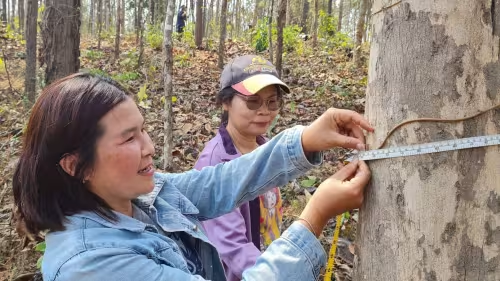
Forest Smallholders Project
We tested solutions to smallholders’ key challenges in pilot projects and shared lessons from these pilots nationally, regionally and internationally.
- Inclusive governance
NEWGO!
The project provides scientific insights on REDD+, FLEGT, and emerging policies on zero deforestation, forest restoration, and sustainable forest…
- Inclusive governance