Farmer-managed natural regeneration: Helping trees regrow naturally on your land
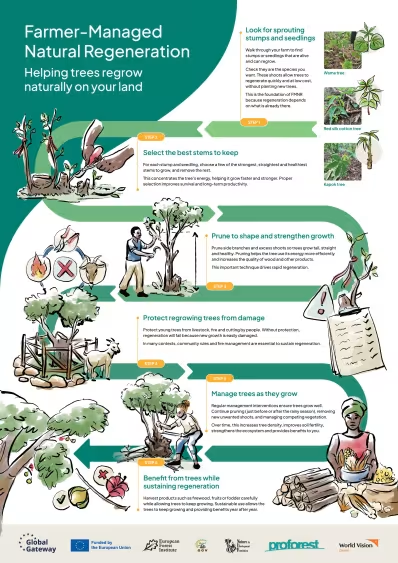
Planting trees is perhaps the most well-known method of restoring forests on degraded land, but there are also other methods – including encouraging natural regeneration. Spotting new trees that are naturally starting to regrow on deforested or degraded lands, identifying these small shoots as important trees to nurture, and supporting their growth are important steps of natural regeneration.
Encouraging farmers to identify and care for naturally regrowing trees on their lands is one strategy for forest restoration, known as ‘farmer-managed natural regeneration’ or FMNR. It also provides other benefits including improved soil fertility, increased crop yields, and additional income sources for farmers and rural communities.
This infographic outlines the steps farmers should take to support natural regeneration on their lands, using trees indigenous to tropical forests in Ghana as examples. It draws on expertise and best practices in FMNR from across the country, and can be applied more broadly to degraded agricultural land environments.
Aimed at a range of users including cooperatives, local and regional authorities and civil society organisations, this infographic is intended to help raise awareness of FMNR best practices and act as a practical ‘how-to’ guide for farmers engaged in natural forest regeneration.
Related content
Overview of some commonly used mobile apps for collecting geolocation information
An overview of key features, accessibility and usability of six commonly used free tools for collecting plot-level geolocation information.
- Forests and people

Geolocating plots of land
A guide for cooperatives and other actors on supporting the collection of geolocation information of farmers – covering why, how, and data ownership.
- Forests and people

Know your plot: the importance of geolocation for farmers
Why farmers should know the exact geolocation of their plots, and how this data can be collected.
- Forests and people