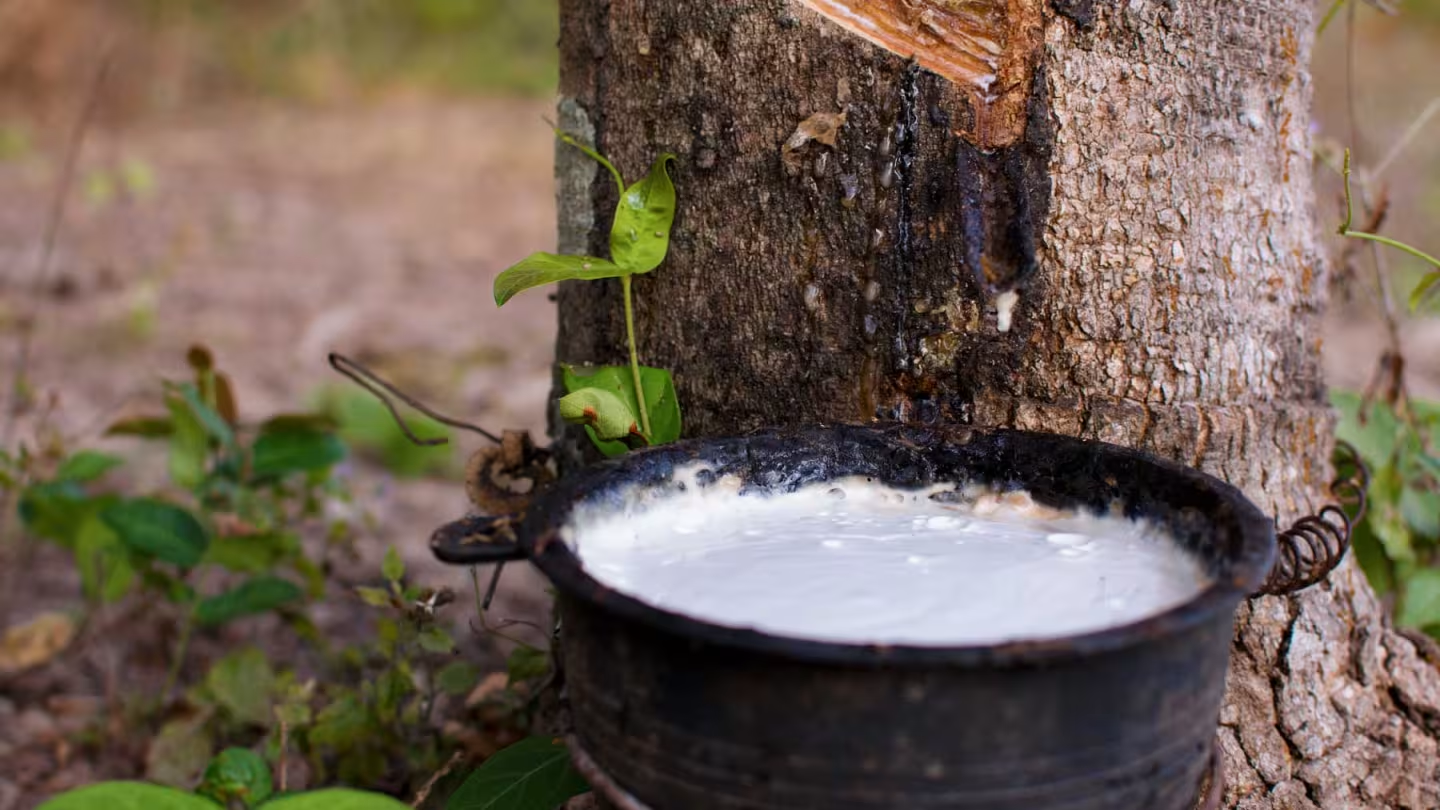
Tapping latex from a rubber tree.
Photo by:
Forest context
Thailand’s forests and woodlands form a mosaic of important ecosystems that underpin biodiversity, watershed functions and rural livelihoods. Forest and land-use dynamics are shaped by agricultural systems and production, including natural rubber, timber and fruit orchards. Although deforestation has declined considerably in recent years, agricultural expansion continues to cause forest loss – particularly the growth of rubber and oil palm plantations – with infrastructure development and illegal logging also contributing. National forest policy frameworks and community forest initiatives play a central role in supporting sustainable forest management, forest restoration and landscape resilience.
Our approach
EFI supports Thailand in improving agricultural and environmental practices and facilitating global market access. Our work focuses on smallholder inclusion, increasing awareness of traceability requirements, and improving smallholder livelihoods. Our approach includes support to capacity building and training, technical assessments, and multi-stakeholder engagement. The aim is to foster sustainable, transparent supply chains for forest-risk commodities, such as natural rubber and timber.
In Thailand, EFI engages primarily with government authorities, smallholders and cooperatives to enhance understanding of and compliance with emerging deforestation-free global market standards, and increase adoption of agricultural practices that reinforce sustainable production and market access. Through work at carefully selected pilot sites, we support the strengthening of traceability systems and procedures, and training smallholders and cooperatives on best agricultural and environmental practices. Our work ultimately contributes to resilient, inclusive value chains linked to Thailand’s forests and rural economies.
Projects in Thailand
Thai Smallholder Rubber Project
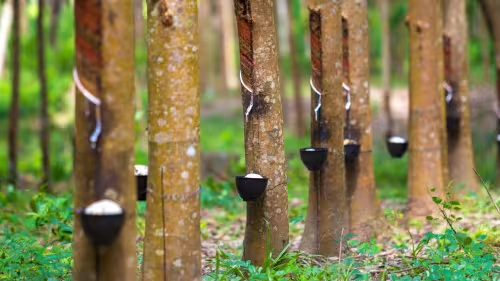
We support smallholder rubber producers in Thailand to improve agricultural and environmental practices and strengthen value‑chain management.
- Inclusive governance
Forest Smallholders Project
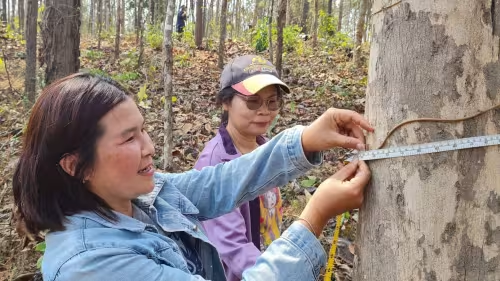
We tested solutions to smallholders’ key challenges in pilot projects and shared lessons from these pilots nationally, regionally and internationally.
- Inclusive governance
EU FLEGT Asia Programme
We worked to improve forest governance and promote legal trade of timber across Asia.
- Inclusive governance

EU FLEGT Facility
We supported the EU and timber-producing countries in the implementation of the FLEGT Action Plan with a focus on Voluntary Partnership Agreements.
- Inclusive governance
Latest Thailand publications
EU Deforestation Regulation: Early responses in producer countries
Early evidence shows how producer countries are adapting to the EU Deforestation Regulation through traceability, legal reviews, and coordination.
- Inclusive governance

Lessons from the timber sector for natural rubber in Thailand
This brief examines lessons learnt from the Thai timber sector and how they could be applied to the rubber sector.
- Inclusive governance

Thailand’s natural rubber producers are preparing for new market requirements
The brief describes current efforts, challenges, and opportunities for the Thai rubber sector.
- Inclusive governance
