Lessons from the timber sector for natural rubber in Thailand
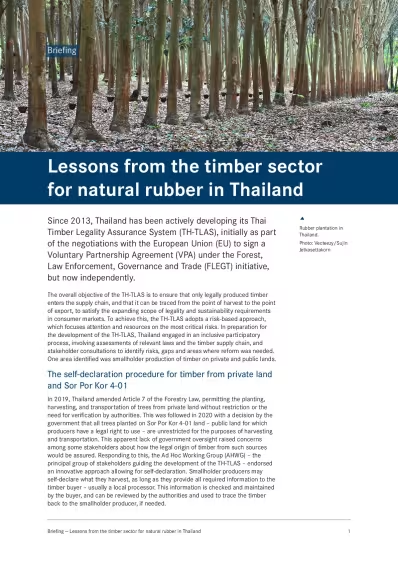
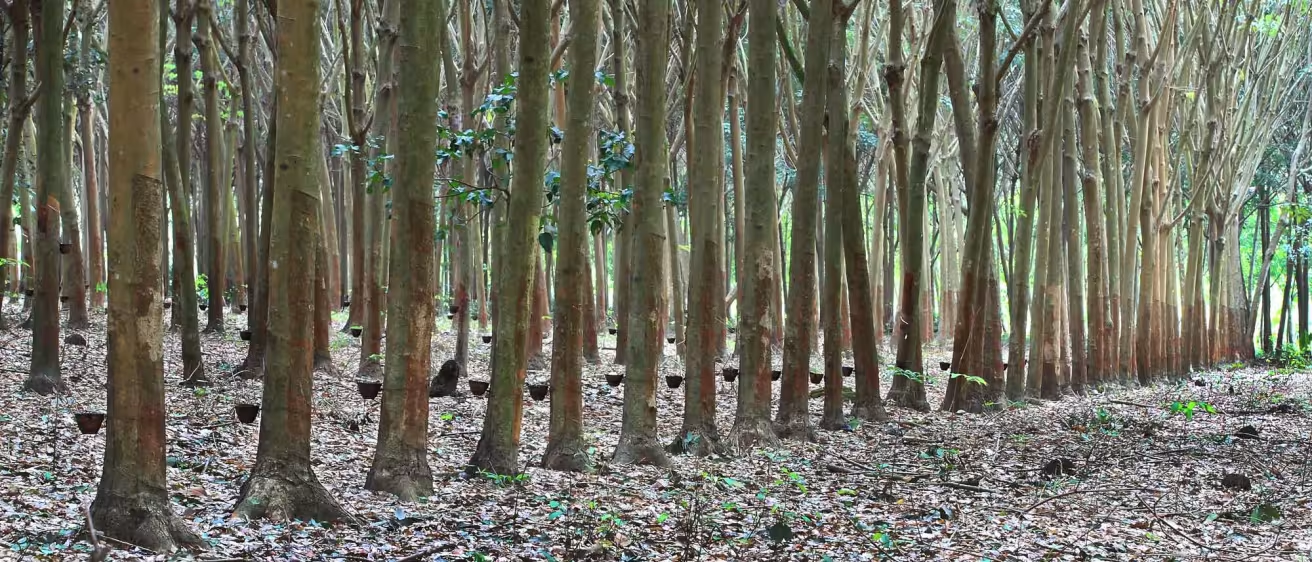
Rubber plantation in Thailand.
Photo by:
Vecteezy/Sujin Jetkasettakorn
The EU Deforestation Regulation (EUDR) requires that operators placing commodities, including rubber, on the EU market conduct due diligence to demonstrate their products meet the EUDR’s legal and deforestation-free requirements. Operators will therefore require access to information which can support their due diligence procedures.
Thailand is the world’s largest producer of natural rubber, and the second largest exporter of natural rubber and rubber products. The sector faces challenges in providing EUDR-relevant information, including a lack of formal land titles for smallholders, collection of geolocation data, and difficulties tracing rubber back to the plot due to mixing.
Fortunately, Thailand has experience with systems which could facilitate access to the information needed by operators for due diligence. Thailand’s timber legality assurance system (TH-TLAS) includes a self-declaration procedure which supports smallholder timber producers to collect geolocation data and information needed to demonstrate legal compliance.
This brief examines lessons learnt from the Thai timber sector and how they could be applied to the rubber sector to enhance EUDR-relevant information collection and availability. It is based on the results of a study completed under the EU-funded FLEGT Asia Programme to look at how the TH-TLAS could inform the structuring of the natural rubber value chain to respond to the EUDR.
The brief was developed together with the Rubber Authority of Thailand (RAOT).
Related content
Thailand’s natural rubber producers are preparing for new market requirements
The brief describes current efforts, challenges, and opportunities for the Thai rubber sector.
- Inclusive governance
EU Deforestation Regulation: Early responses in producer countries
Early evidence shows how producer countries are adapting to the EU Deforestation Regulation through traceability, legal reviews, and coordination.
- Inclusive governance
Thai Smallholder Rubber Project
We support smallholder rubber producers in Thailand to improve agricultural and environmental practices and strengthen value‑chain management.
- Inclusive governance