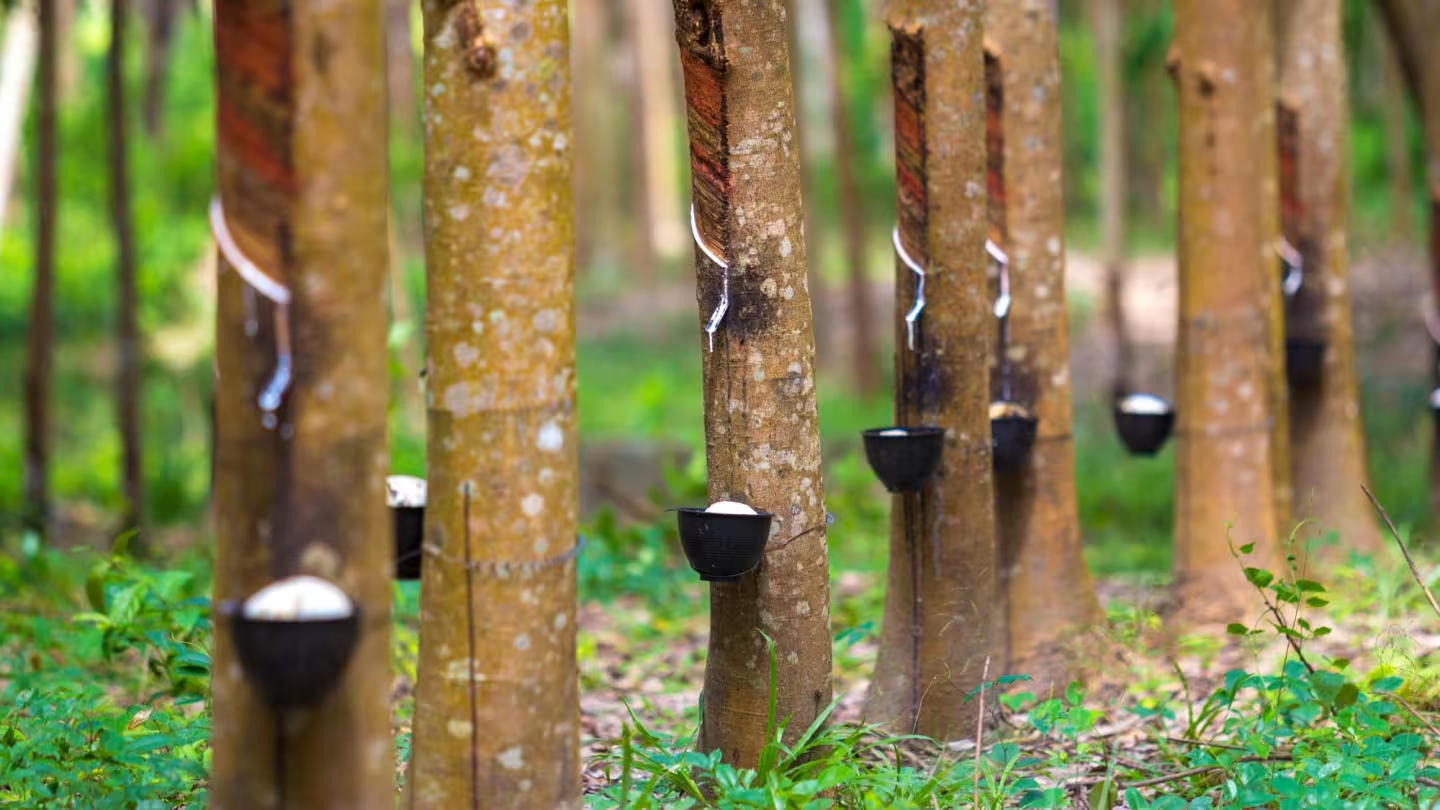
Collecting latex from rubber trees.
Photo by:
Freepik/jcomp
Thai Smallholder Rubber Project
Thailand is the world’s largest producer of natural rubber, with the overwhelming majority produced by smallholders. Natural rubber is also Thailand’s leading agricultural commodity for export. However, the rubber sector in Thailand – and smallholder producers in particular – are being adversely impacted by low prices, declining plantation productivity, scarcity of skilled labour, and new regulatory requirements in consumer markets. To address these challenges, smallholder producers need support to remain productive, adopt sustainable practices, and access responsible markets that pay a fair price.
Our objective: supporting Thai smallholder rubber producers to adopt improved agricultural and environmental practices and to access the EU market
The project will develop practical approaches that can be used by smallholder rubber producers to improve their agricultural and environmental practices, and the management of their value chains, with the aim of facilitating access to the EU market in the context of the EU Deforestation Regulation (EUDR).
This is to be achieved by supporting Good Agricultural Practices; improving the management of the natural rubber value chain between smallholder producers and collection centres; and ensuring that smallholder producers and collection centers understand the information they will need to provide to operators under the EUDR.
Our work: engaging with cooperatives in pilot sites to inform national policy
The project is funded by the Delegation of the European Union to Thailand and is being implemented in close collaboration with the Rubber Authority of Thailand (RAOT) and runs from January 2025 – December 2026. Project activities will take place at two pilot sites in the country – one in the Northeast, and one in the South.
Work commenced with initial assessments of smallholder concerns, challenges, and current agricultural and environmental practices; consultations to better understand how the rubber value chain functions and the challenges to ensuring traceability; and the development of training curricula and materials.
Following these assessments, training will be conducted on Good Agricultural Practices for smallholder producers, and on improved management of the value chain for both smallholder producers and collection centers.
Technical advice and assistance will also be provided to RAOT regarding its Network Rubber Market, which aims to assist smallholder producers to provide all the necessary documentation to operators, so they can then confirm deforestation-free and legal production.
Latest project publications
Lessons from the timber sector for natural rubber in Thailand
This brief examines lessons learnt from the Thai timber sector and how they could be applied to the rubber sector.
- Inclusive governance
Thailand’s natural rubber producers are preparing for new market requirements
The brief describes current efforts, challenges, and opportunities for the Thai rubber sector.
- Inclusive governance
Featured experts

Communications contact

Related content
Malaysia Smallholder Project
We work on improving the livelihoods of rubber and palm oil smallholders through increased global market access.
- Inclusive governance

KAMI
The KAMI project provided support for dialogue between EU, Malaysian and Indonesian stakeholders on the sustainability of the palm oil value chain.
- Inclusive governance
Technical facility on deforestation-free value chains
We collaborate with commodity-producing countries to assist in transitioning to legal and deforestation-free value chains.
- Sustainable economy