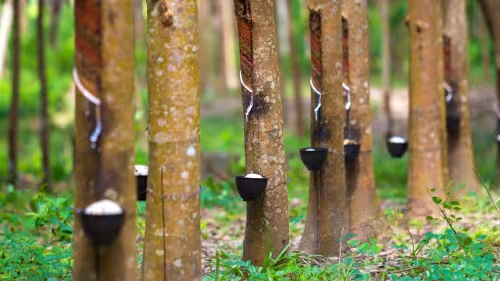
Thailand’s natural rubber producers are preparing for new market requirements
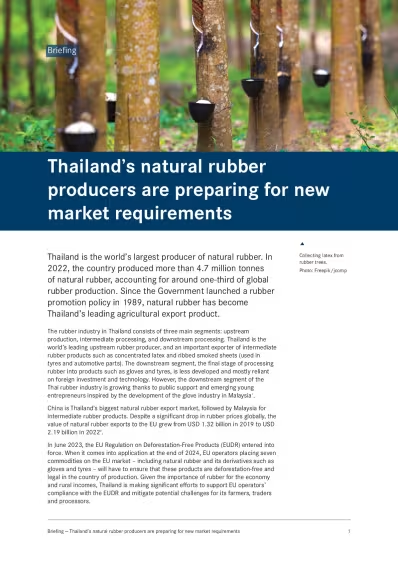
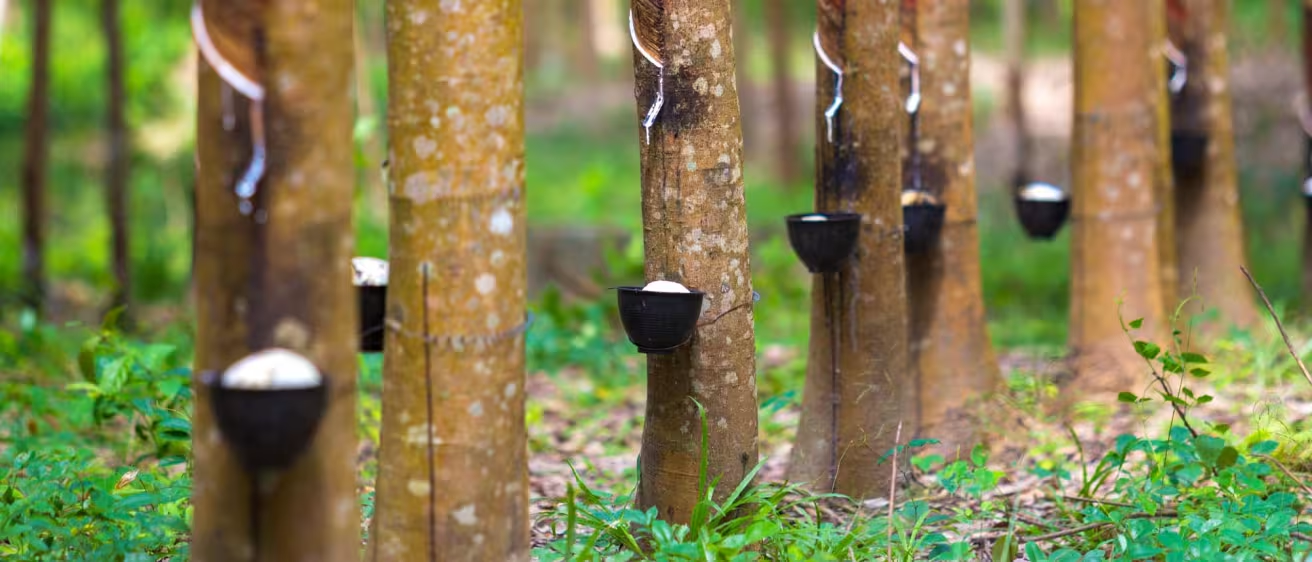
Collecting latex from rubber trees.
Photo by:
Freepik/jcomp
Thailand is the world’s largest producer of natural rubber. In 2022, the country produced more than 4.7 million tonnes of natural rubber, accounting for around one-third of global rubber production.
Nearly all of Thailand’s natural rubber – 90% – is produced by smallholders: there are 1.68 million smallholders engaged in rubber production on 3.9 million hectares of plantation area. This is significant from an economic and livelihood perspective, as almost 25% of all households engaged in the agricultural sector in Thailand are producing rubber.
Given the importance of rubber for the economy and rural incomes, Thailand is making significant efforts to support EU operators’ compliance with the European Union Deforestation Regulation (EUDR) and mitigate potential challenges for its farmers, traders, and processors.
The brief describes current efforts, challenges, and opportunities for the Thai rubber sector. It looks at mapping natural rubber production, registering smallholder rubber farmers, tracing natural rubber supply chains, building capacity, and sharing information.
The brief was developed together with the Rubber Authority of Thailand (RAOT).
Related content
Lessons from the timber sector for natural rubber in Thailand
This brief examines lessons learnt from the Thai timber sector and how they could be applied to the rubber sector.
- Inclusive governance
EU Deforestation Regulation: Early responses in producer countries
Early evidence shows how producer countries are adapting to the EU Deforestation Regulation through traceability, legal reviews, and coordination.
- Inclusive governance
Thai Smallholder Rubber Project
We support smallholder rubber producers in Thailand to improve agricultural and environmental practices and strengthen value‑chain management.
- Inclusive governance