From chocolate bars to cocoa beans: what’s the raw commodity behind the product?
Processed agricultural products are part of everyday life. Chocolate, instant coffee, animal feed, tyres, paper products — all of these originate from raw agricultural or forest commodities. Yet once products are processed, blended, or refined, it becomes harder to see how much raw material they contain.
This is where EFI’s Commodity Converter comes in. The tool helps translate processed agricultural products back into their raw commodity equivalents and provides estimates of the planted area needed to produce them. Its purpose is not to assess impacts or performance, but to clarify quantities and relationships that are often difficult to trace.
At its core, the Commodity Converter answers two practical questions:
- How much raw commodity is behind a given amount of a processed product?
- Based on available yield data, how much planted area might be needed to produce that amount?
Why conversions matter
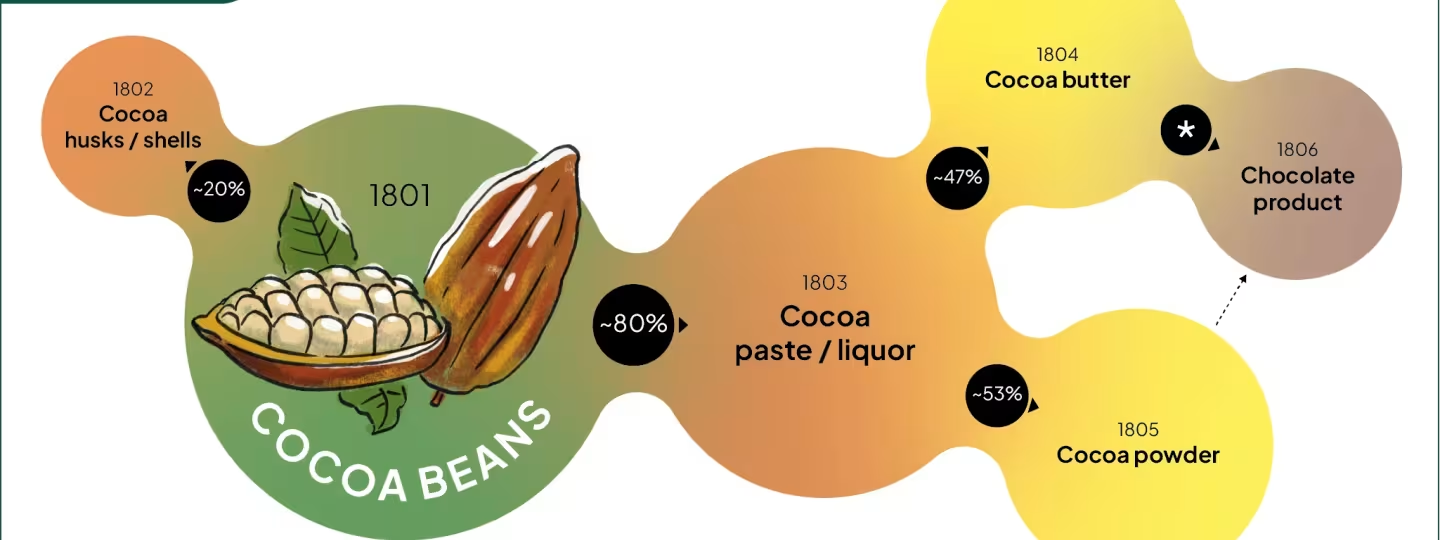
In trade statistics, company reporting, and policy discussions, figures are often expressed in processed product volumes. However, these figures are not always comparable across products or value chains. A tonne of cocoa butter, for example, does not correspond directly to a tonne of cocoa beans.
Without a transparent way to convert between processed products and raw commodities, estimates of land use or production volumes can vary widely depending on the assumptions used. This makes it difficult to compare information across sources or assess what data really represents.
The Commodity Converter applies a standardised conversion approach, allowing users to see and understand how calculations are made.
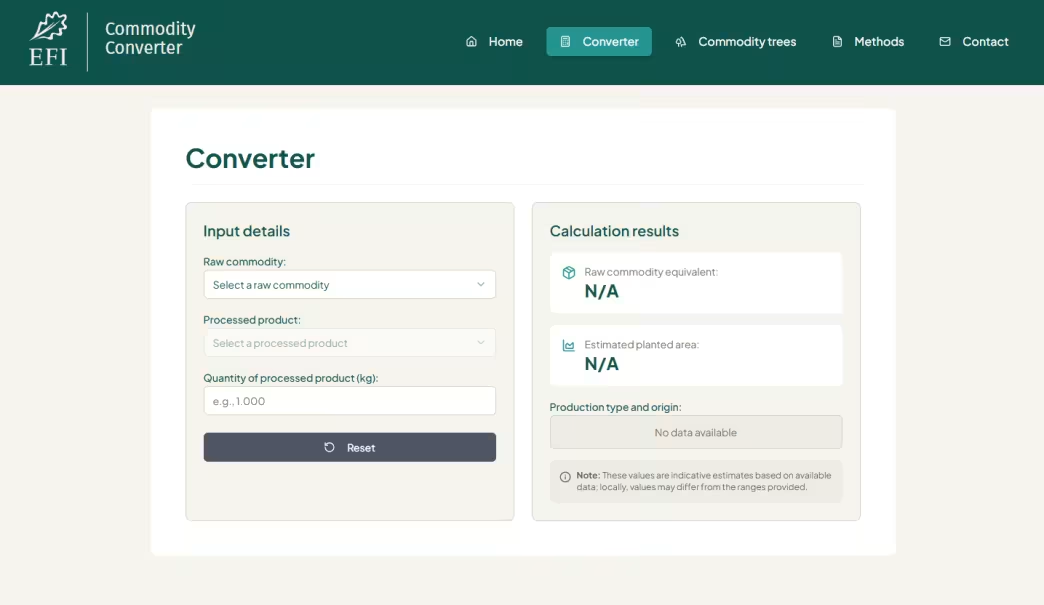
Screenshot of the EFI Commodity Converter website.
What the tool does
The tool includes:
- Conversion pathways (“commodity trees”) that show how raw commodities are processed into different products.
- A conversion engine that translates quantities of processed goods back into raw commodity equivalents.
- A planted area estimator, using available yield data to estimate land requirements.
- Downloadable reports that summarise results in a consistent format.
All components are openly accessible, and users can follow the logic behind each result.
Who the tool is for
The Commodity Converter is used by a diverse group of actors: companies handling agricultural commodities, public authorities responsible for oversight in regulated markets, civil society organisations analysing supply chains, and auditors or certification bodies. Each group may use the outputs differently, but all rely on the same underlying calculations.
What the tool does not do
The tool does not assess sustainability, legality, or compliance. It does not rank actors or make policy recommendations. Its role is to support shared understanding and informed decisions.
Why this matters for public debate and policy
Discussions around land use and supply chains often hinge on numbers. When those numbers are based on different or unclear assumptions, debates risk becoming confusing or misleading. By making conversions explicit and comparable, the Commodity Converter helps ground discussions in clearly defined quantities.
This contributes to more informed dialogue, whether in reporting, analysis, or policymaking, about how processed products link back to agricultural production and land use.


Related content
New online tool helps clarify the raw commodities behind processed products
The EFI Commodity Converter translates processed goods into raw commodity equivalents and estimates planted area, transparently and openly.
- Sustainable economy

What tools are available to comply with the EUDR?
Discover what free and/or open-source tools are available to supply chain actors to comply with the EU Deforestation Regulation.
- Sustainable economy
¿Qué herramientas existen para cumplir con el EUDR?
Descubra qué herramientas gratuitas y de código abierto están disponibles para los actores de la cadena de suministro ante el EUDR.
- Sustainable economy